

Hiring a professional house cleaner can make life easier, especially when you’re balancing work, family schedules, errands, and everything else that comes with maintaining a home.
But one question often comes up before a cleaning appointment:
What does a house cleaner not clean?
It’s an important question because not every cleaning service includes the same tasks. Some areas are part of routine maintenance, others require additional time or specialized equipment, and certain jobs fall outside the scope of residential house cleaning altogether.
For Charlotte homeowners, understanding these differences can help prevent surprises, make scheduling easier, and ensure the right service is booked from the beginning.
At My Clean Charlotte Maids (MCCM), we believe clear expectations are part of a dependable cleaning experience.
In this guide, we’ll explain common house cleaning exclusions, why they exist, which services may require additional arrangements, and what to ask before your appointment.
1. Why Do Professional House Cleaners Have Exclusions?
Professional house cleaning focuses on maintaining and refreshing the interior spaces of a home using established cleaning procedures, appropriate supplies, and a clearly defined service scope.
However, some tasks require more time, specialized equipment, different safety precautions, or services beyond normal residential cleaning.
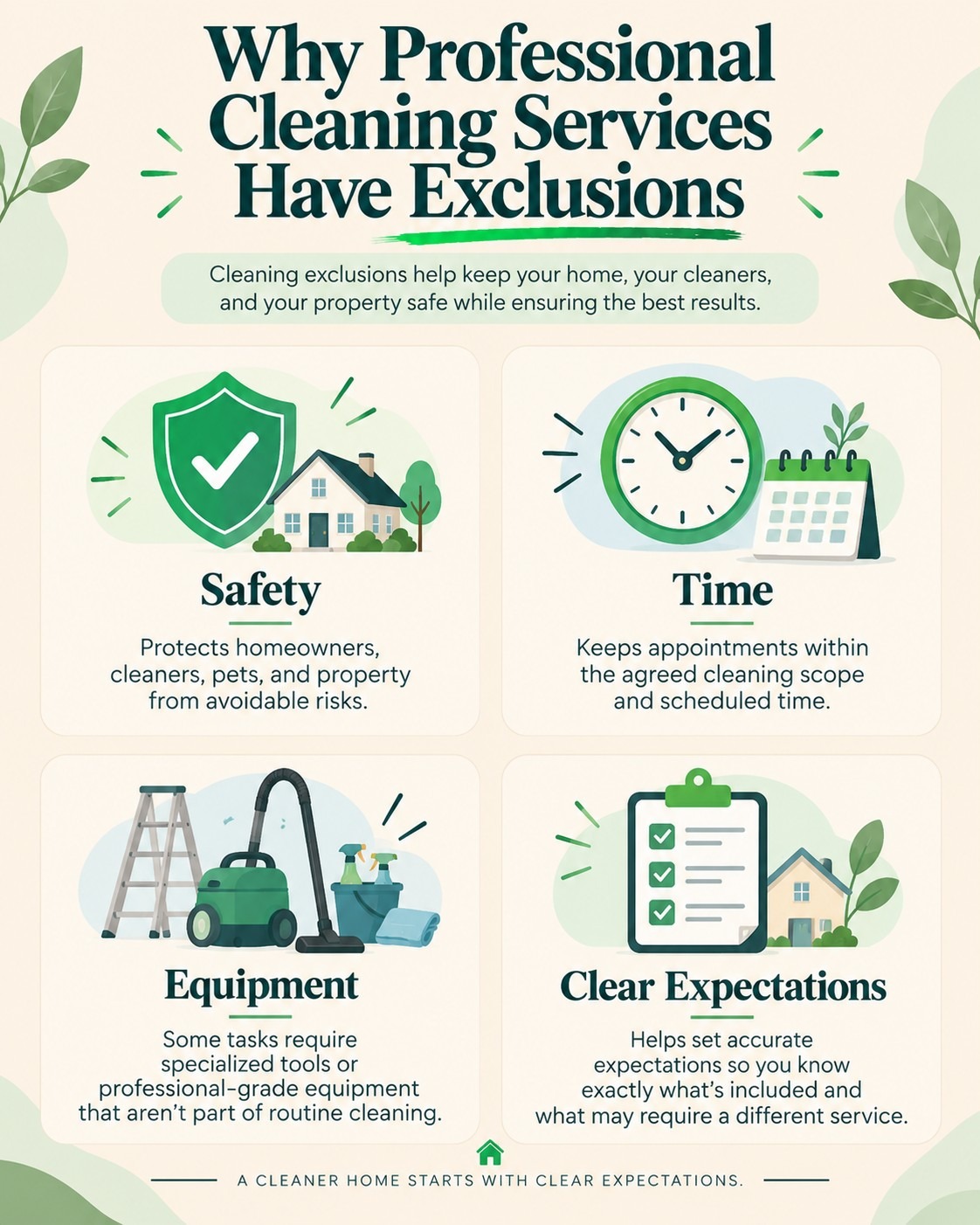
Cleaning exclusions generally exist for several reasons:
- Safety: Protecting homeowners, cleaners, pets, and property from avoidable risks.
- Equipment: Certain tasks require specialized machinery or professional-grade tools.
- Time: Routine appointments are scheduled around an agreed cleaning scope.
- Training: Some jobs require technical knowledge beyond standard house cleaning.
- Service accuracy: Clear inclusions and exclusions help customers understand what they are paying for.
For example, wiping accessible kitchen countertops is very different from moving a heavy refrigerator, treating extensive mold contamination, or removing construction adhesive from newly installed flooring.
These tasks involve different levels of effort and risk.
The important distinction: A cleaning exclusion doesn’t necessarily mean the task can never be completed. It may mean the task requires a different service, an approved add-on, or a specialized professional.
For a detailed breakdown of MCCM’s listed cleaning tasks, visit our House Cleaning Service Checklist.
2. Heavy Lifting and Moving Large Furniture
One common misunderstanding is that professional cleaners will move every piece of furniture to clean underneath or behind it.
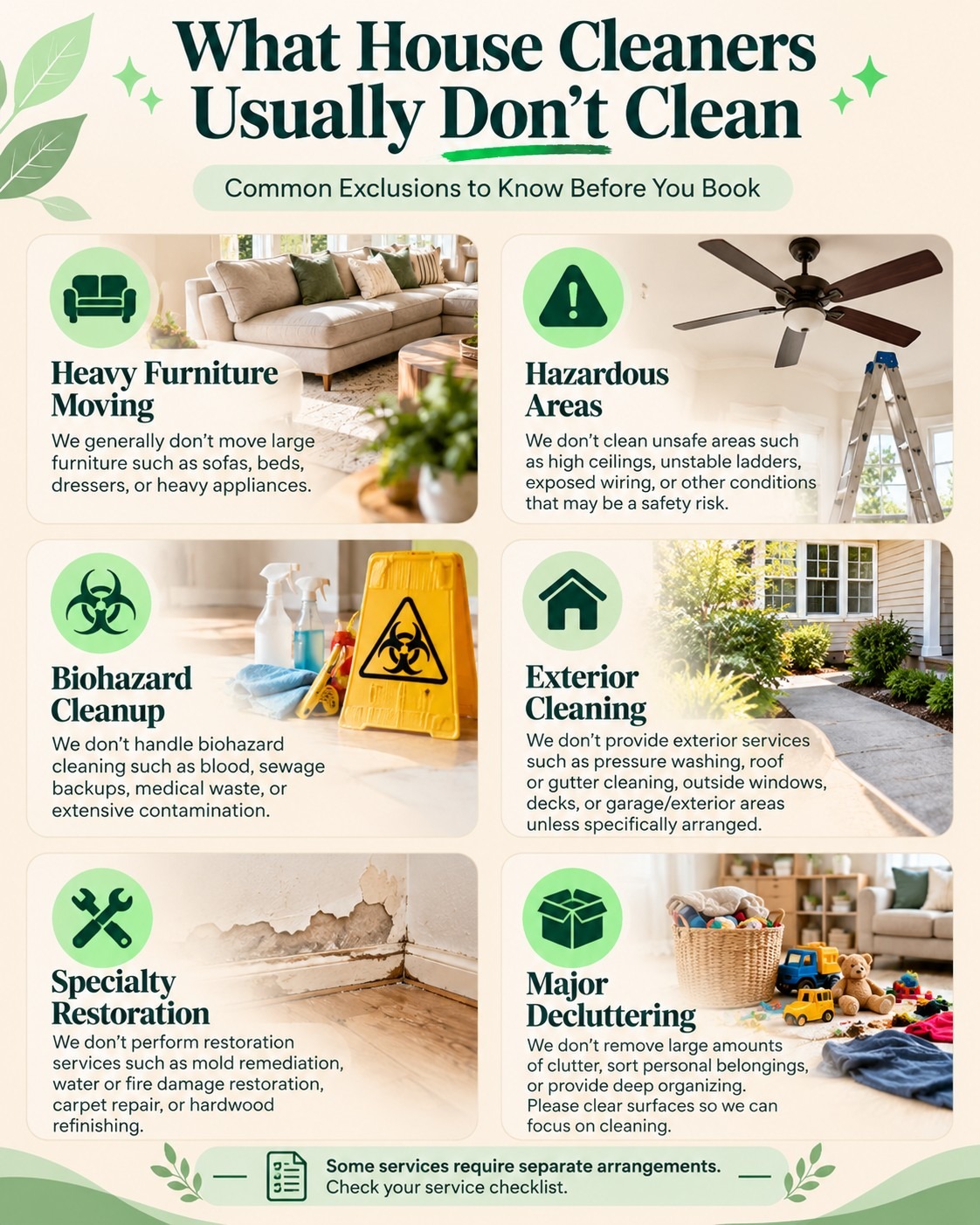
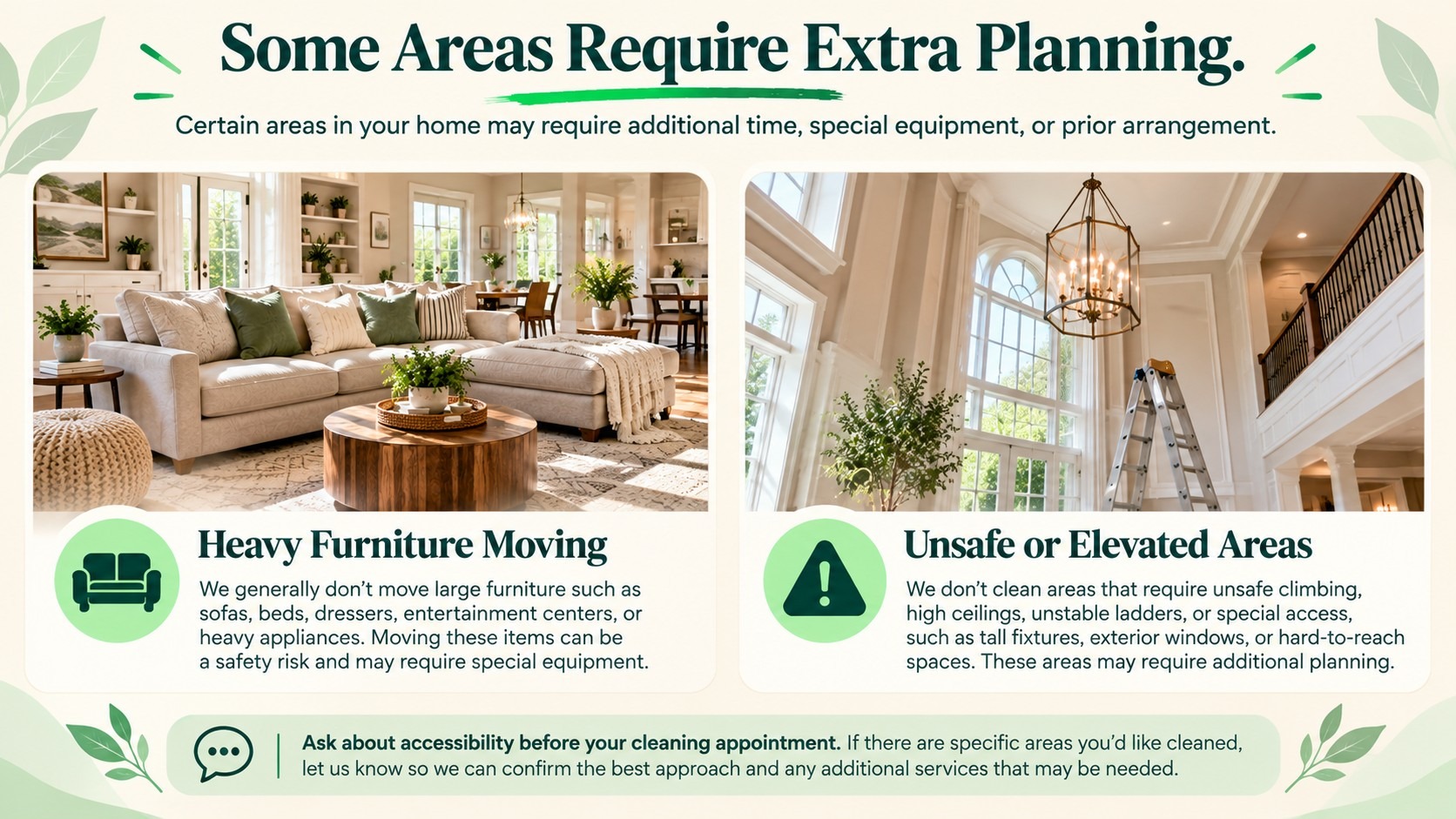
In most residential cleaning appointments, heavy lifting and moving large furniture are not part of the standard cleaning scope.
Examples include:
- Moving large sectional sofas or heavy entertainment centers.
- Relocating beds, dressers, or wardrobes.
- Moving refrigerators, stoves, or washing machines.
- Lifting heavy storage boxes or large household items.
- Rearranging furniture throughout the home.
These tasks can create risks of injury, floor damage, and accidental damage to furniture or appliances.
What can homeowners do instead?
If you want the area beneath a heavy piece of furniture cleaned, consider moving the item to a safe, accessible position before the appointment.
Smaller, lightweight items may be handled as appropriate, but homeowners should not assume that furniture moving is included.
MCCM tip: If there is a specific area behind or underneath furniture that needs attention, mention it when requesting your cleaning quote.
3. Unsafe Areas and Hazardous Conditions
Professional house cleaners are trained to handle routine residential cleaning tasks, but they should not be expected to work in unsafe conditions.
Common examples include:
- Unstable ladders or elevated areas requiring unsafe climbing.
- Exposed electrical wiring or damaged electrical fixtures.
- Broken glass mixed with debris.
- Structural damage that creates falling or collapse hazards.
- Active leaks near electrical equipment.
- Areas containing unidentified chemicals or potentially hazardous materials.
These situations may require a qualified contractor or another specialist before cleaning can safely begin.
What about high ceilings and ceiling fans?
Accessible surfaces may be included in an agreed cleaning service, but high ceilings, elevated fixtures, and areas requiring specialized access equipment should be discussed beforehand.
If you’re unsure whether an area can be safely cleaned, ask before scheduling rather than assuming it is included.
You can review common service questions through the MCCM Help Center.
4. Biohazards and Hazardous Waste
Routine bathroom cleaning is an important part of residential cleaning.
However, there is a significant difference between removing everyday bathroom grime and handling biological hazards.
Tasks that generally require specialized biohazard cleaning include:
- Blood or other bodily fluid spills requiring remediation.
- Human or animal waste contamination beyond routine household cleaning.
- Sewage backups.
- Used needles or medical sharps.
- Extensive contamination from pests or rodents.
- Materials potentially contaminated with infectious substances.
These situations may require specialized protective equipment, disinfection procedures, and disposal methods.
Is cleaning a toilet considered biohazard cleaning?
Not under normal household conditions.
Routine toilet cleaning is a standard residential cleaning task when included in the service checklist.
The difference is the level and type of contamination.
Cleaning an ordinarily used bathroom is not the same as remediating a sewage overflow or another hazardous incident.
MCCM recommendation: If your home has experienced sewage damage, significant biological contamination, or another hazardous event, arrange an assessment by an appropriate remediation specialist before booking routine house cleaning.
5. Exterior Cleaning Is Different From Interior House Cleaning
Many homeowners associate professional cleaning with everything inside and outside the property.
However, exterior cleaning is generally a separate service category.
Tasks commonly outside routine interior house cleaning include:
- Pressure washing driveways and sidewalks.
- Cleaning exterior siding or brickwork.
- Roof and gutter cleaning.
- Washing second-story exterior windows.
- Cleaning outdoor patios and decks.
- Removing algae or heavy exterior buildup.
- Cleaning garages or outdoor storage areas beyond an agreed scope.
These jobs often require different equipment, access methods, and safety procedures.
What about windows?
Window cleaning is an important area to clarify.
Accessible interior glass, window sills, tracks, and full window washing are not necessarily the same service.
At MCCM, window-related cleaning can be quoted as an additional service depending on the requested scope and accessibility.
Before your appointment, specify whether you need interior glass, window tracks, or another type of window cleaning.
6. Inaccessible Areas and Hard-to-Reach Spaces
Even the most thorough cleaning appointment depends on whether the area can be safely reached.
Examples of inaccessible spaces include:
- Surfaces blocked by large amounts of stored belongings.
- Closets packed with boxes or furniture.
- Areas behind heavy appliances.
- High shelving that requires unsafe access.
- Locked rooms or storage spaces.
- Attics and crawl spaces.
- Areas blocked by renovation materials.
Professional cleaners generally work on accessible areas within the agreed cleaning scope.
If an area cannot be reached without moving heavy objects, dismantling fixtures, or entering an unsafe space, it may need to be excluded.
How to prepare hard-to-reach areas
Before your cleaning appointment, consider clearing items from surfaces you want cleaned, making sure rooms are accessible, and identifying any spaces that require special attention.
A little preparation can help your cleaning team spend more time cleaning rather than navigating obstacles.
7. Specialty Restoration Is Not Regular House Cleaning
Another important distinction is the difference between routine cleaning and restoration.
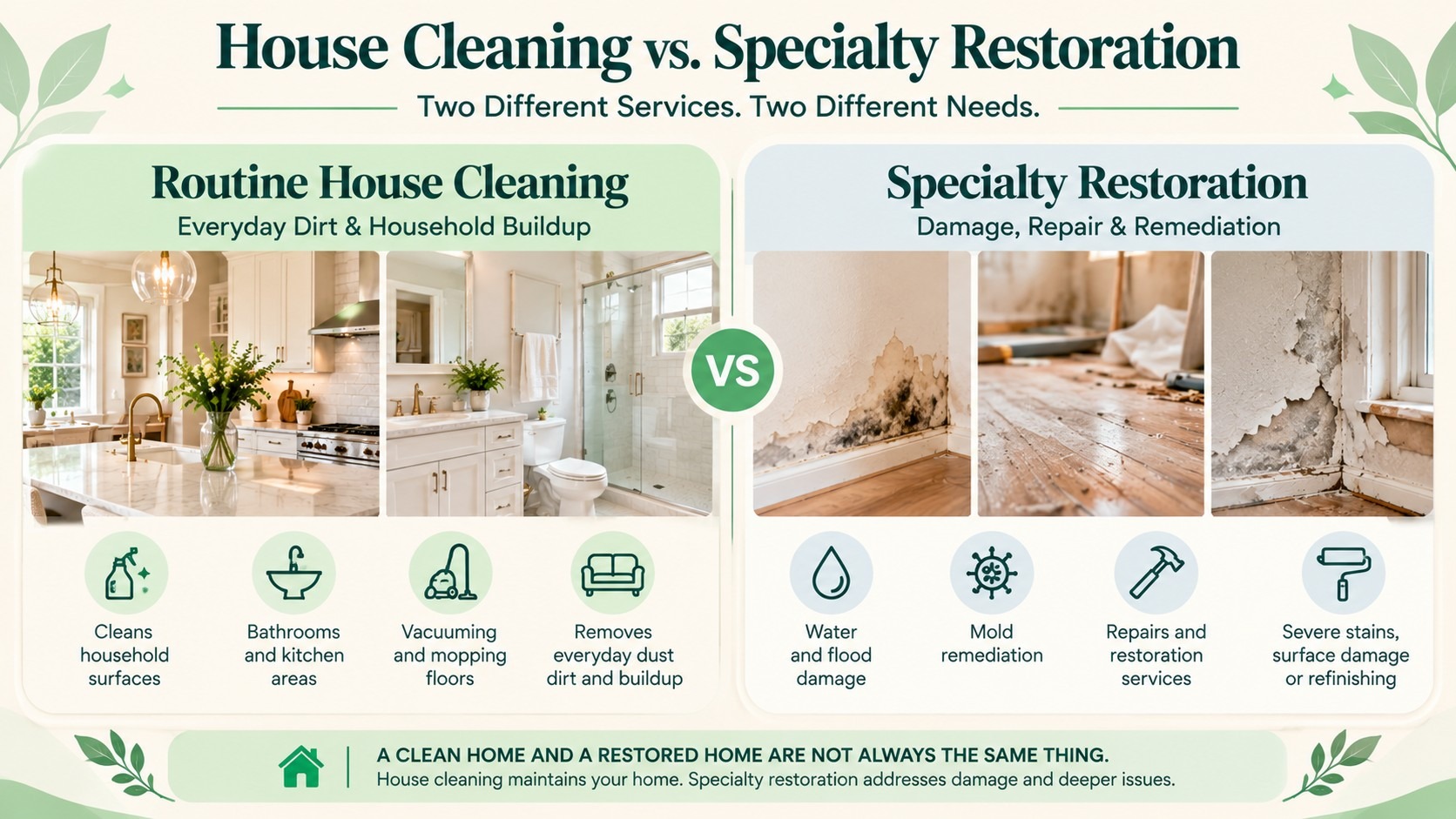
House cleaning focuses on removing ordinary household dust, dirt, residue, and buildup from suitable surfaces.
Restoration focuses on repairing, treating, or recovering materials affected by damage, deterioration, or severe contamination.
Examples of specialty restoration include:
- Mold remediation.
- Water and flood damage restoration.
- Fire and smoke damage restoration.
- Carpet dyeing or repair.
- Hardwood floor refinishing.
- Natural stone polishing or restoration.
- Severe odor remediation.
- Removing permanent stains, corrosion, or surface damage.
For example, a cleaner may be able to remove ordinary soap residue from bathroom tile, but deeply deteriorated grout or damaged caulking may require repair or replacement.
Similarly, wiping a stained countertop does not guarantee that permanent discoloration will disappear.
A clean surface and a restored surface are not always the same thing.
If you are dealing with damage rather than ordinary household dirt, a specialist may be the better choice.
8. Construction Cleaning vs. Normal House Cleaning
One of the most important exclusions to understand is construction-related cleaning.
A newly renovated home may look nearly finished, but fine construction dust and leftover residue can require a very different cleaning process.
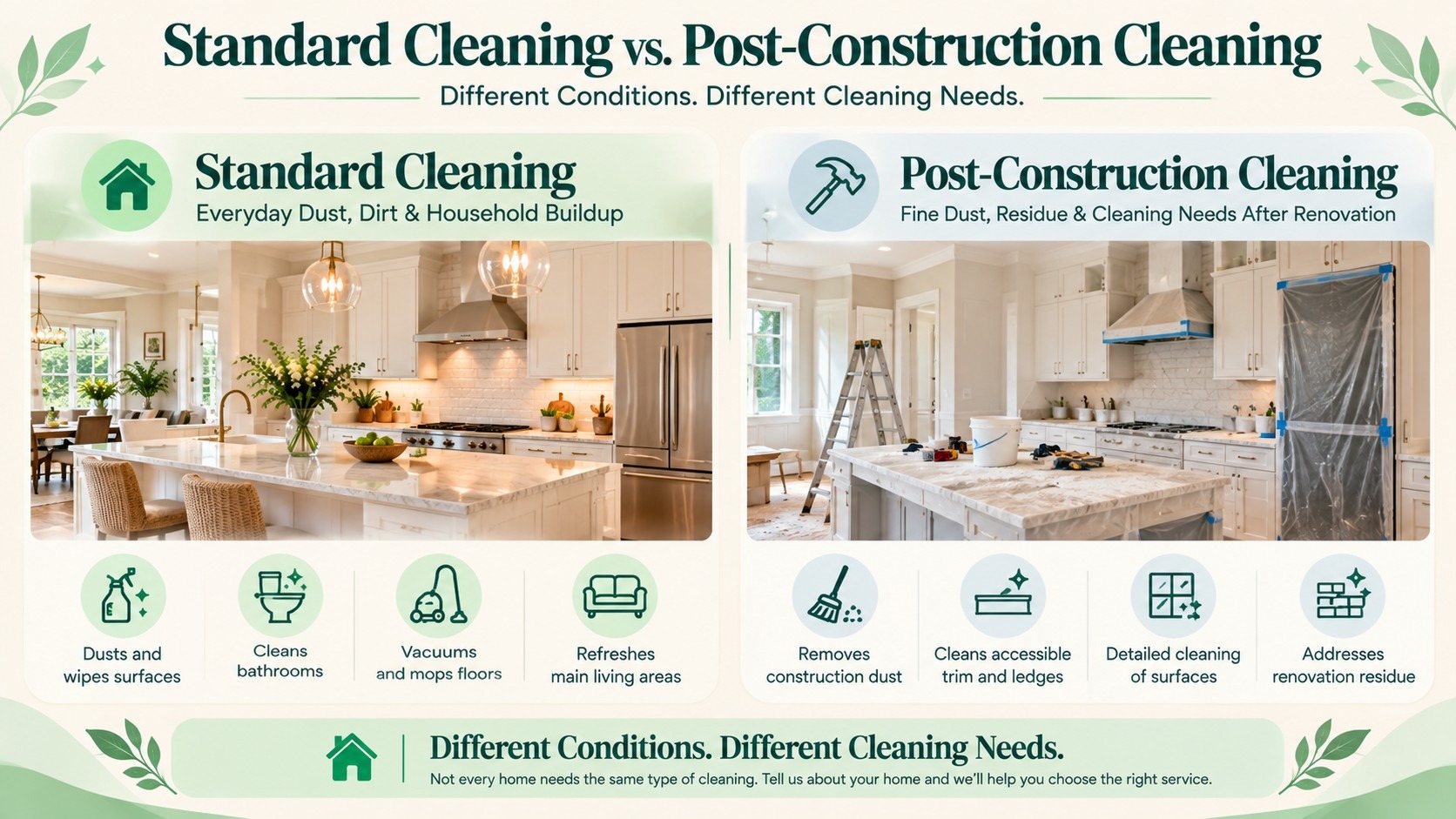
Regular house cleaning typically focuses on:
- Dusting accessible household surfaces.
- Cleaning kitchen counters and exterior appliance surfaces.
- Cleaning bathroom fixtures.
- Vacuuming and mopping appropriate floors.
- Removing everyday dirt and household buildup.
- Refreshing commonly used living spaces.
Post-construction cleaning may involve:
- Removing fine construction dust from suitable surfaces.
- Cleaning accessible trim, ledges, and fixtures.
- Addressing dust left after renovations.
- Cleaning surfaces affected by building activity.
- Performing detailed cleaning before a space is occupied.
Construction cleaning can also involve materials that require special handling. Paint overspray, adhesives, cement residue, and other stubborn construction materials may need separate assessment or specialist removal.
Does MCCM offer post-construction cleaning?
Yes. My Clean Charlotte Maids offers post-construction cleaning as a separate service category.
If your Charlotte-area home has recently undergone remodeling, renovation, or new construction, let us know before scheduling so we can assess the appropriate cleaning scope.
Booking a routine house cleaning when the property actually needs post-construction cleaning can lead to inaccurate expectations and an unsuitable appointment.
Learn more about our Professional House Cleaning Services in Charlotte, NC.
9. Appliance Interiors and Optional Add-Ons
Many homeowners assume that if the kitchen is being cleaned, every part of every appliance will automatically be cleaned too.
That isn’t always the case.
There is a difference between cleaning the outside of an appliance and performing a detailed cleaning of its interior.
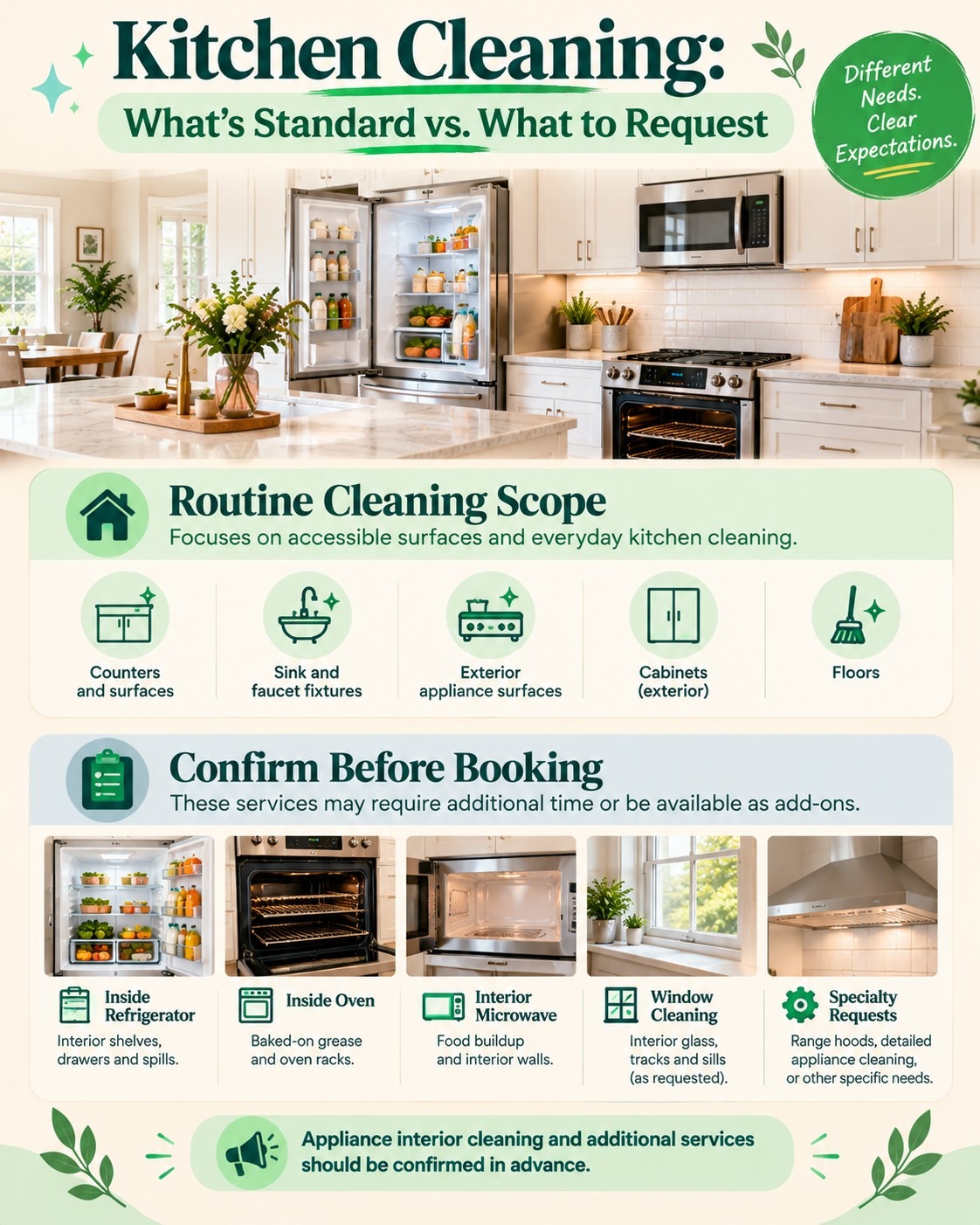
Common appliance cleaning distinctions
| Area | What to clarify |
| Refrigerator exterior | Routine exterior wiping versus detailed cleaning |
| Refrigerator interior | Shelves, drawers, spills, and food residue |
| Oven exterior | Exterior surfaces and accessible controls |
| Oven interior | Baked-on grease, racks, and interior buildup |
| Microwave | Interior versus exterior cleaning |
| Dishwasher | Exterior cleaning versus internal maintenance |
| Washer and dryer | Exterior wiping versus appliance servicing |
At MCCM, interior appliance cleaning requests should be discussed during booking so the correct scope and any applicable add-on pricing can be confirmed.
Why do appliance interiors cost extra?
Detailed appliance cleaning may require additional time, products, and attention.
For example, cleaning the outside of an oven is very different from addressing baked-on grease inside it.
Likewise, cleaning refrigerator shelves and drawers takes more time than wiping the exterior door.
Before scheduling, tell us which appliances you want cleaned and whether you need interior or exterior cleaning.
You can review service pricing and available options on our Cleaning Pricing Page.
10. Clutter Removal vs. Professional House Cleaning
A professional cleaning appointment can make your home feel fresher and more comfortable.
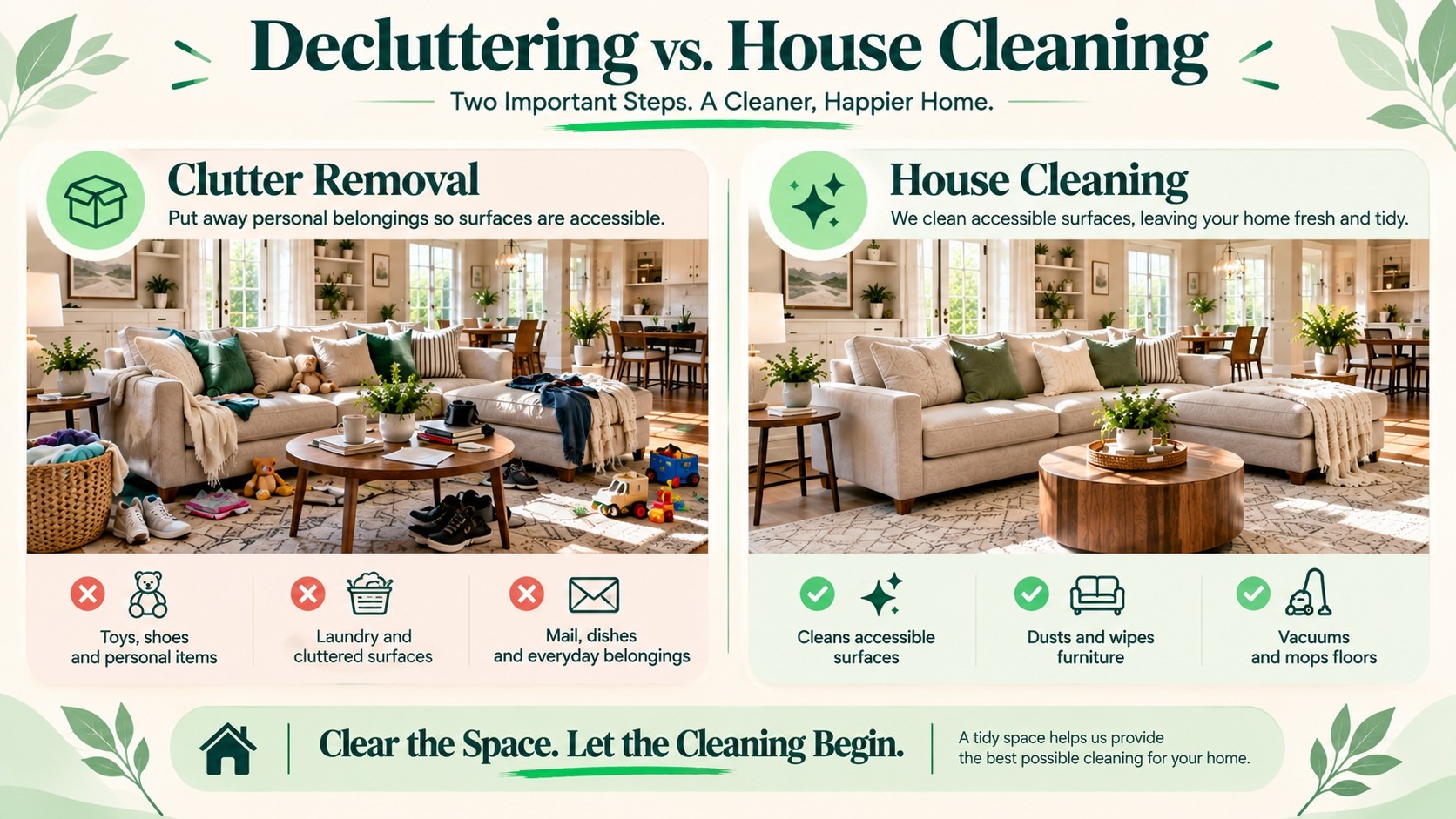
But cleaning and organizing are not exactly the same thing.
Cleaning typically involves:
- Dusting and wiping surfaces.
- Cleaning sinks, counters, and fixtures.
- Vacuuming and mopping floors.
- Removing ordinary dirt and residue.
- Refreshing accessible rooms.
Organizing or decluttering may involve:
- Sorting large piles of clothing.
- Deciding what to keep or donate.
- Organizing closets and storage systems.
- Sorting paperwork and personal belongings.
- Rearranging cabinets and drawers.
- Removing substantial household clutter.
While light tidying may be possible within a cleaning appointment, extensive decluttering requires different planning and time.
Does MCCM offer organizing assistance?
MCCM offers light home refresh and organizing-related services that can be discussed separately from a standard cleaning appointment.
However, customers should not assume extensive organizing, laundry, or decluttering is automatically included in routine house cleaning.
If you need both cleaning and organizing assistance, describe your goals when requesting a quote.
Helpful tip: Clear countertops, floors, and other surfaces before your appointment whenever possible. This allows the team to focus on cleaning the areas that matter most.
11. What Should You Ask Before Hiring a House Cleaner?
The easiest way to avoid misunderstandings is to ask a few specific questions before booking.
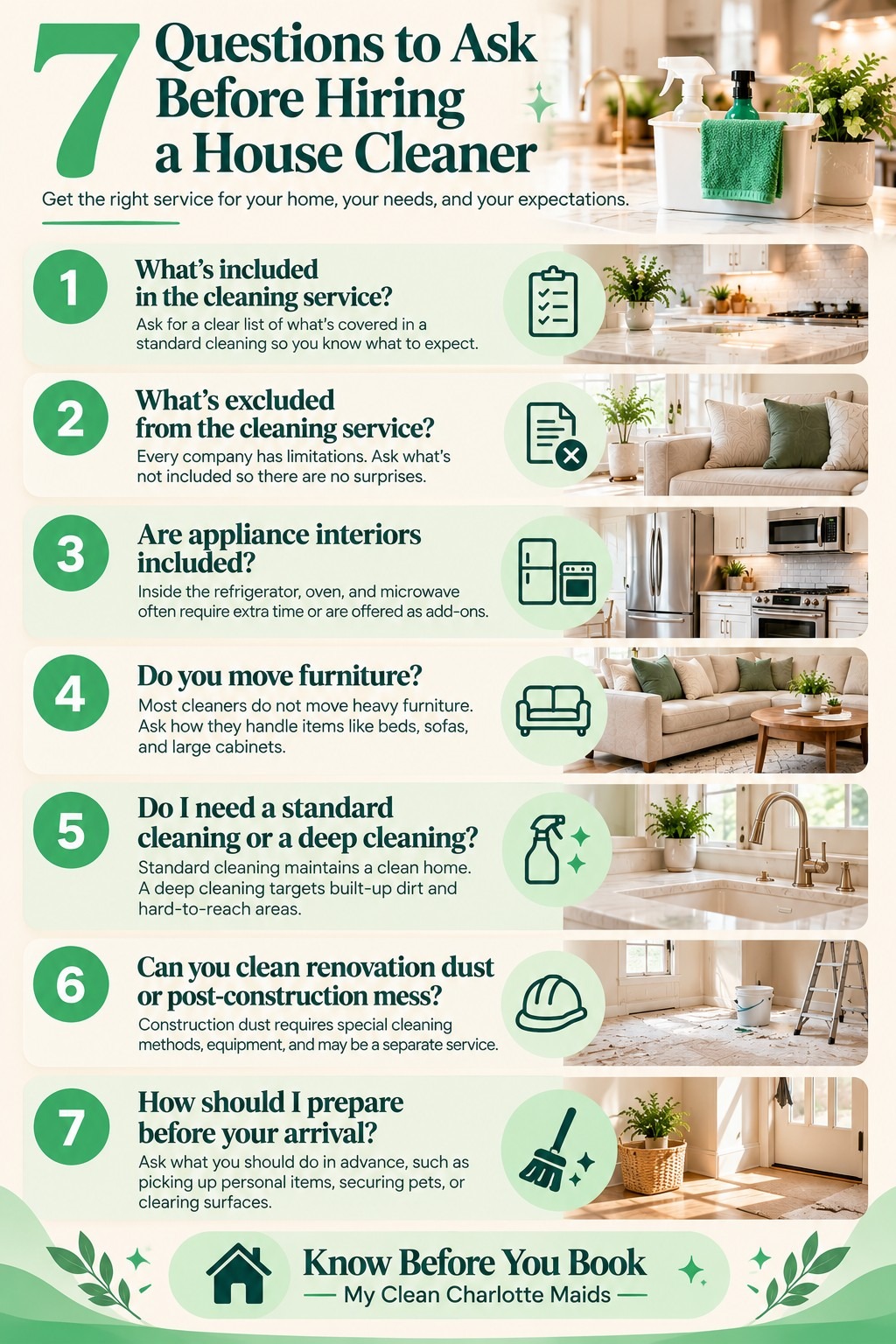
Here are seven helpful questions for Charlotte homeowners:
- What exactly is included in the cleaning checklist? Ask for the service-specific checklist rather than relying on a general description.
- Are there any exclusions I should know about? Mention unusual conditions, hard-to-reach spaces, or areas that need extra attention.
- Are refrigerator and oven interiors included? Confirm whether they require additional charges.
- Do you move furniture or clean behind large appliances? Ask about accessibility and safety limitations.
- What is the difference between standard and deep cleaning? Describe any buildup or neglected areas before choosing a service.
- Can you handle renovation dust or construction residue? Confirm whether a post-construction service is needed.
- What should I do to prepare for the appointment? Ask whether surfaces should be cleared, pets secured, or specific areas made accessible.
These questions help both the homeowner and the cleaning provider agree on expectations before the appointment begins.
For more information, visit our Help Center.
12. How to Choose the Right Cleaning Service for Your Home
Not every home needs the same level of cleaning.
A home that receives regular maintenance may need a standard cleaning, while a property with accumulated buildup may benefit from a deeper reset.
Here is a simple comparison:
| Cleaning service | Best suited for |
| Standard House Cleaning | Routine upkeep of accessible household surfaces and rooms |
| Deep Cleaning | More detailed attention to accumulated dirt and buildup |
| Move-In/Move-Out Cleaning | Cleaning an empty or transitioning property |
| Post-Construction Cleaning | Cleaning needs following renovation or construction |
| Recurring Cleaning | Weekly, biweekly, or monthly maintenance |
| Light Home Refresh / Organizing | Selected tidying and organizing needs arranged separately |
At My Clean Charlotte Maids, we provide cleaning options for different homes, schedules, and priorities throughout the Charlotte area.
The best starting point is to describe the current condition of your home, the areas you want addressed, and any special requests.
You can explore our Professional House Cleaning Services in Charlotte or review our Service Checklist.
13. Frequently Asked Questions About House Cleaning
Do house cleaners clean inside refrigerators?
Not necessarily. Refrigerator interiors may be available as an add-on or as part of a specifically agreed cleaning scope. At MCCM, confirm interior refrigerator cleaning when requesting your quote.
Do professional cleaners move couches and beds?
Heavy furniture moving is generally outside routine residential cleaning. If you want an area underneath large furniture cleaned, make it safely accessible before the appointment.
Do house cleaners clean walls?
Routine spot cleaning and full-wall washing are different tasks. Full-wall washing, extensive marks, and delicate painted surfaces should be discussed beforehand to determine whether they can be safely cleaned.
Is mold removal included in house cleaning?
Ordinary bathroom surface cleaning is different from professional mold remediation. Significant mold contamination or damage should be evaluated by a qualified specialist.
Do cleaners remove pet hair?
Routine pet hair removal from accessible surfaces and floors may be included within the agreed cleaning scope. Heavy buildup, extensive contamination, or special upholstery cleaning may require additional arrangements.
Do house cleaners wash dishes or do laundry?
Dishwashing and laundry are not automatically included in every house cleaning service. MCCM offers laundry-related and light home refresh options that should be arranged in advance.
Do house cleaners clean inside ovens?
Interior oven cleaning is commonly treated as a separate detailed task. Confirm availability, scope, and any applicable cost when booking with MCCM.
Is post-construction cleaning included in deep cleaning?
No, these are distinct service categories. Deep cleaning addresses accumulated household dirt, while post-construction cleaning addresses cleaning needs associated with construction or renovation.
What happens if my home needs more cleaning than expected?
The best approach is to discuss the property’s condition before the appointment. The cleaning provider can then explain whether additional time, a different service, or an adjusted quote may be needed.
Where can I find MCCM’s cleaning checklist?
Visit the My Clean Charlotte Maids Cleaning Checklist to review the published service information and help determine what to request.
14. Clear Expectations Lead to a Better Cleaning Experience
A professional house cleaning service should make maintaining your home easier, not leave you wondering what was supposed to happen during the appointment.
Understanding what house cleaners don’t clean is just as important as knowing what they do clean.
Heavy furniture moving, unsafe areas, biohazard remediation, exterior work, specialty restoration, and extensive decluttering generally fall outside routine house cleaning.
Other tasks, such as interior appliance cleaning, window cleaning, organizing assistance, and post-construction cleaning, may require a different service or additional arrangements.
At My Clean Charlotte Maids, our goal is to help Charlotte homeowners choose the cleaning service that fits their home, priorities, and schedule.
That starts with clear communication, realistic expectations, and an agreed cleaning checklist.
Because a better cleaning experience begins before the first surface is wiped.
Ready to Book a Cleaning That Fits Your Home?
Whether you need routine house cleaning, a detailed deep clean, move-in/move-out cleaning, or help refreshing your home, My Clean Charlotte Maids is here to help you understand your options.
Tell us what needs cleaning, and we’ll help you choose the right service.
Serving Charlotte, Matthews, Pineville, Ballantyne, Huntersville, Concord, Fort Mill, Rock Hill, and surrounding communities.
Call or text: (980) 888-8541
Book online: Get My House Cleaning Quote
Clean homes, Happy Clients. 🐸💚




Stay Updated
Fresh cleaning tips, home-care hacks, and smart living ideas — delivered weekly from My Clean Charlotte Maids.