

A Practical Guide for Charlotte Homeowners | My Clean Charlotte Maids
Keeping a clean home should make everyday life easier. But sometimes, even after spending hours wiping surfaces, vacuuming floors, and scrubbing bathrooms, your home still doesn’t feel as fresh as you expected.
The problem may not be how often you clean. It may be how you clean.
Many Charlotte homeowners unknowingly follow cleaning habits that spread dust, leave behind residue, create unnecessary work, or allow dirt and grime to build up over time.
Between busy work schedules, family routines, pets, seasonal pollen, and North Carolina’s humid weather, maintaining a home in Charlotte can already feel challenging.
The good news? A few simple changes can make cleaning more effective and help your home stay cleaner between deeper resets.
Here are 12 common cleaning mistakes that make your home harder to maintain, along with practical ways to avoid them.
1. Cleaning Floors Before Dusting Higher Surfaces
One of the most common cleaning mistakes is starting with floors before addressing dust on shelves, countertops, ceiling fans, and furniture.
When you dust higher surfaces afterward, particles can fall onto areas you’ve already cleaned.
Why it matters: You may end up vacuuming or mopping the same area twice.
The better approach: Follow MCCM’s Start High. Finish Low.™ cleaning framework.
- Start with ceiling fans, high shelves, and upper surfaces.
- Move to countertops, furniture, and frequently touched areas.
- Finish with baseboards, vacuuming, and mopping.
Working from top to bottom helps prevent unnecessary repeat cleaning.

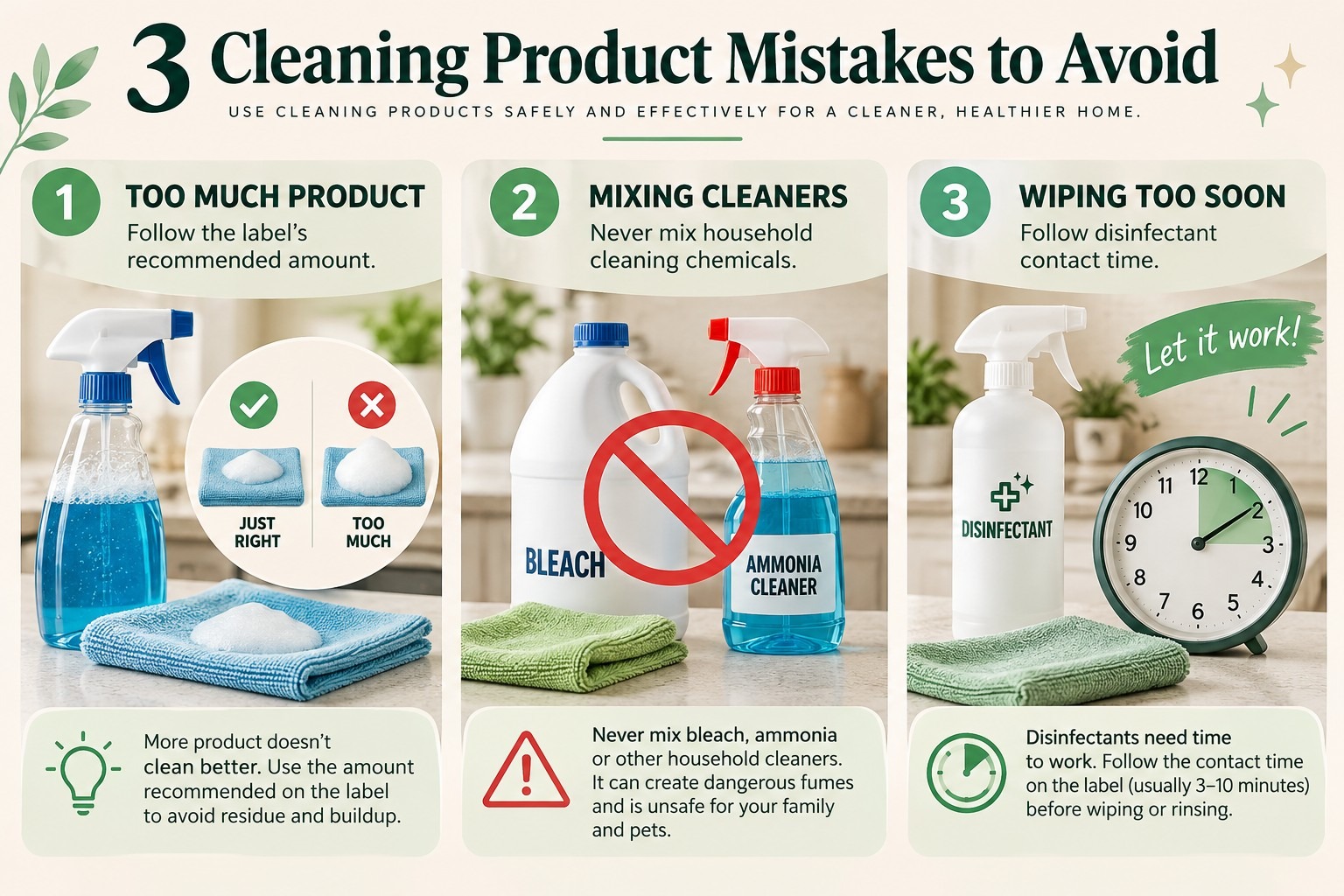
2. Using Too Much Cleaning Product
More cleaning solution doesn’t always mean better cleaning.
Excessive product can leave sticky residue on countertops, floors, and other surfaces. That residue may attract dirt and make surfaces look dull.
Why it matters: Overusing products can increase buildup and require additional rinsing.
The better approach:
- Follow the manufacturer’s dilution and usage instructions.
- Use the recommended amount for each surface.
- Rinse when the product label requires it.
- Avoid repeatedly spraying an area that only needs light cleaning.
Effective cleaning is about using the right product in the right amount.
3. Mixing Cleaning Chemicals
Combining household cleaning products may seem like a way to make them stronger, but some combinations can produce dangerous fumes or reactions.
For example, bleach should never be mixed with ammonia, acids such as vinegar, or other cleaners unless the product manufacturer explicitly states that the combination is safe.
Why it matters: Dangerous chemical exposure can cause serious health problems.
The better approach:
- Never mix cleaning chemicals.
- Read product labels and safety warnings.
- Use one compatible product at a time.
- Follow ventilation instructions.
- Keep cleaning products in their original labeled containers.
MCCM Cleaning Tip: Safe cleaning is always more important than aggressive cleaning.
4. Wiping Away Disinfectants Too Quickly
Many homeowners spray a disinfectant and immediately wipe it away.
However, disinfectants often require a specific amount of time to remain visibly wet on a surface to work as directed.
This is known as contact time, sometimes called dwell time.
Why it matters: Wiping too early may prevent the product from achieving its labeled disinfecting effectiveness.
The better approach:
- Remove visible dirt and debris first.
- Apply an appropriate disinfectant according to its label.
- Keep the surface wet for the full labeled contact time.
- Follow instructions for rinsing or allowing the surface to dry.
Not every surface requires disinfection. Routine cleaning with soap or an appropriate cleaner is often sufficient.
5. Ignoring Entryways and High-Traffic Areas
Your entryway is one of the first places where outdoor dirt enters your home.
Shoes, backpacks, pets, packages, and everyday foot traffic can introduce dust, soil, and debris.
For Charlotte households, seasonal pollen and rainy weather can make these areas especially important.
Why it matters: Dirt collected near entrances can spread throughout the home.
The better approach:
- Place durable mats at exterior doors.
- Clean entryway floors regularly.
- Establish a convenient place for shoes.
- Wipe frequently touched door handles.
- Pay attention to hallways and other high-traffic routes.
A cleaner entryway can help reduce how much dirt travels into the rest of your home.
6. Overlooking Baseboards and Room Edges
Baseboards are easy to forget because they’re rarely at eye level.
Over time, dust, pet hair, and grime can collect along baseboards, corners, and floor edges.
Why it matters: Even when floors and furniture look clean, dusty room edges can make a space feel unfinished.
The better approach:
- Dust baseboards periodically.
- Use a vacuum attachment to remove loose debris.
- Wipe painted baseboards with a compatible cleaner when needed.
- Include corners and floor edges during deeper cleaning sessions.
These small details can make a noticeable difference in the overall appearance of a room.
7. Using the Wrong Products on Different Surfaces
Not every cleaning product is suitable for every material.
Natural stone, hardwood, stainless steel, laminate, painted surfaces, and delicate finishes may require different cleaning methods.
Why it matters: Incompatible products can damage finishes, leave streaks, or cause discoloration.
The better approach:
- Identify the material before choosing a product.
- Follow manufacturer care instructions.
- Avoid abrasive scrubbers on delicate finishes.
- Test compatible products in an inconspicuous area when appropriate.
- Use tools designed for the surface being cleaned.
A product that works well on one surface may be unsuitable for another.
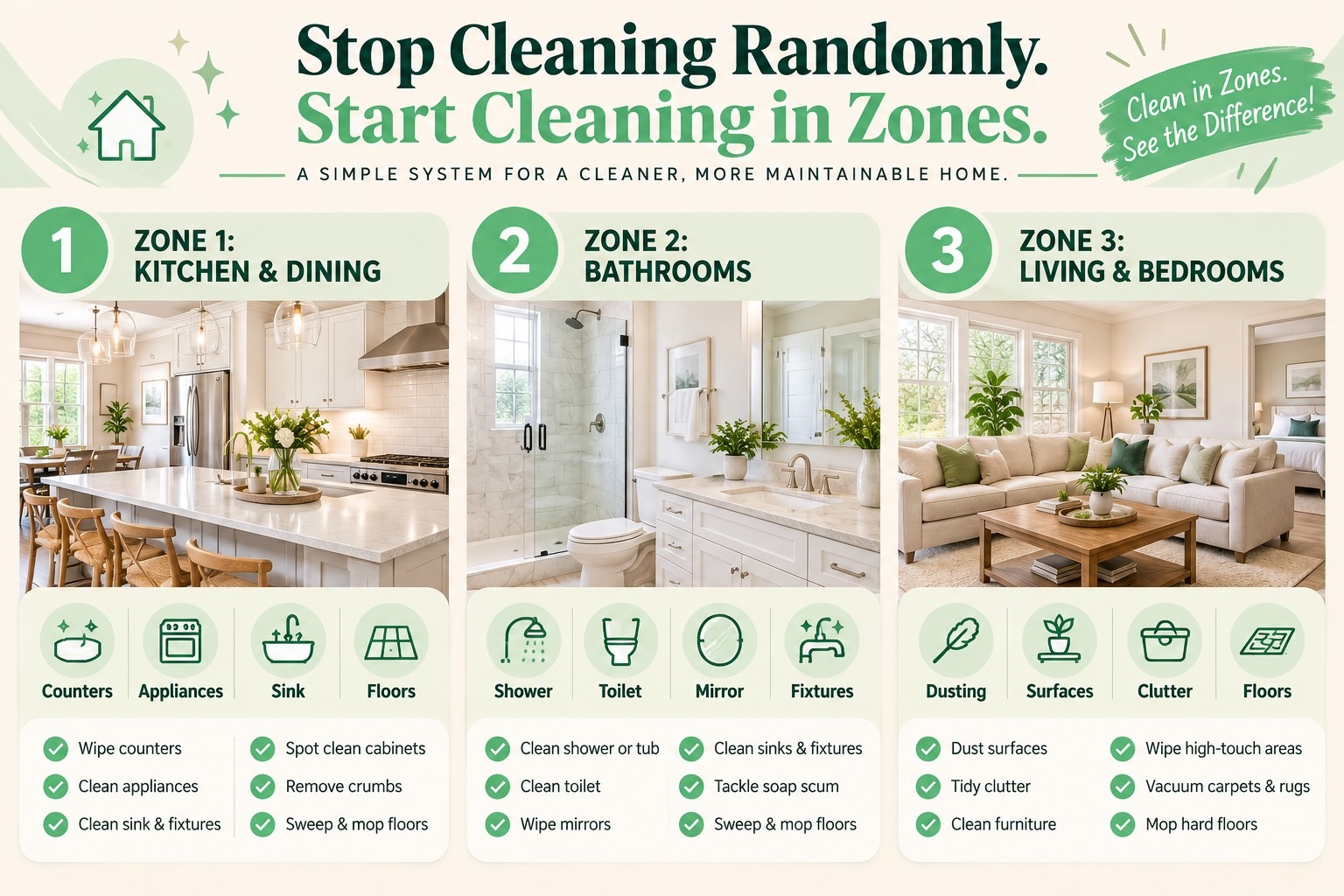
8. Cleaning Randomly Instead of Working in Zones
Jumping from the kitchen to the bathroom, then back to the living room, can make cleaning feel endless.
Without a plan, it’s easy to miss areas, repeat tasks, or lose track of what you’ve already completed.
Why it matters: Random cleaning creates unnecessary movement and makes progress harder to measure.
The better approach: Divide your home into manageable cleaning zones.
Zone 1: Kitchen and Dining
Focus on counters, appliances, sinks, and floors.
Zone 2: Bathrooms
Focus on fixtures, mirrors, sinks, toilets, showers, and floors.
Zone 3: Bedrooms and Living Spaces
Focus on dusting, surfaces, clutter, and floors.
Complete one zone before moving to the next.
Combining zone-based cleaning with a top-to-bottom approach creates a more consistent routine.
9. Using Dirty Cleaning Tools
A dirty mop, saturated cloth, or vacuum with a clogged filter may make cleaning less effective.
Reusing the same cloth across multiple areas can also transfer contaminants between surfaces.
Why it matters: Cleaning tools should remove dirt, not spread it.
The better approach:
- Wash reusable microfiber cloths after use.
- Replace or clean mop pads regularly.
- Maintain vacuum filters according to manufacturer instructions.
- Use separate cloths for bathrooms and food-preparation areas.
- Replace worn-out tools when necessary.
Clean tools help support cleaner results.
10. Forgetting Frequently Touched Surfaces
It’s easy to focus on large visible surfaces while overlooking smaller areas that people touch throughout the day.
Examples include:
- Light switches
- Door handles
- Cabinet pulls
- Remote controls
- Refrigerator handles
- Stair railings
Why it matters: These surfaces can collect fingerprints, oils, dirt, and microorganisms.
The better approach: Add high-touch surfaces to your regular cleaning checklist and disinfect when appropriate, using products compatible with the material.
11. Waiting Too Long Between Deeper Cleaning Sessions
Routine cleaning is important, but some areas require occasional extra attention.
Soap scum, grease, dust, and residue can gradually accumulate in places that aren’t addressed during everyday cleaning.
Common examples include:
- Shower doors and bathroom fixtures
- Kitchen backsplash areas
- Baseboards and corners
- Cabinet exteriors
- Hard-to-reach surfaces
Why it matters: The longer buildup remains, the more effort it may require to remove.
The better approach: Maintain a regular cleaning routine and schedule deeper cleaning based on your home’s condition, activity level, and needs.
For more bathroom-specific guidance, read our Bathroom Deep Cleaning Guide for Charlotte Homeowners.
12. Cleaning Only When the House Looks Dirty
Visible dirt isn’t the only sign that an area needs attention.
Dust can collect on elevated surfaces, bathroom residue can develop gradually, and frequently used spaces can become harder to maintain without consistent care.
Why it matters: Waiting until every room looks dirty often turns manageable tasks into a much larger cleaning project.
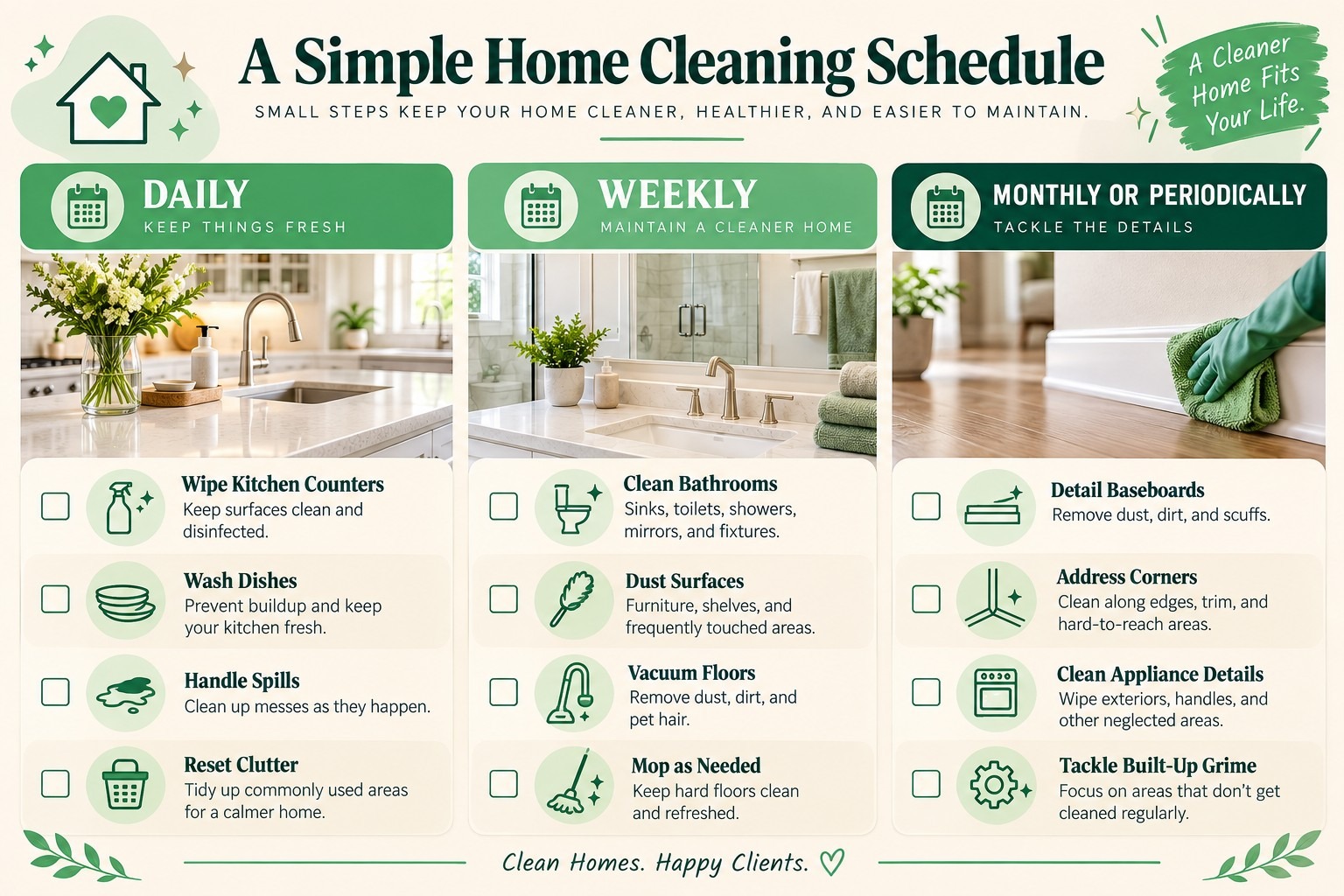
The better approach: Establish a realistic maintenance schedule.
Daily: Kitchen counters, dishes, small spills, and quick clutter resets.
Weekly: Bathrooms, dusting, floors, and frequently touched surfaces.
Monthly or periodically: Baseboards, neglected corners, appliance details, and deeper attention to buildup.
The best schedule is one that fits your household and can be maintained consistently.
The MCCM Start High. Finish Low.™ Cleaning Framework
At My Clean Charlotte Maids, we believe effective cleaning should follow a clear, repeatable process.
Our Start High. Finish Low.™ framework provides homeowners with a simple way to organize their cleaning tasks and avoid unnecessary rework.
Step 1: Start High
Address upper surfaces first.
Examples include ceiling fans, high shelves, vents where safely accessible, and elevated furniture surfaces.
Step 2: Work Through the Middle
Move to the areas used most often.
Examples include countertops, tables, furniture, cabinets, fixtures, and frequently touched surfaces.
Step 3: Finish Low
Complete the lower portions of the room.
Examples include baseboards, corners, floor edges, vacuuming, and mopping.
The principle is simple: Clean in an order that reduces the chance of making already-cleaned areas dirty again.
This framework works especially well when combined with zone-based cleaning, helping Charlotte homeowners create a more organized and repeatable routine.
Why Charlotte Homes Need a Consistent Cleaning Strategy
Charlotte households face several environmental and lifestyle factors that can influence cleaning needs.
Seasonal Pollen
Spring pollen can collect on windowsills, entryways, furniture, and surfaces near frequently opened doors.
Humidity and Bathroom Moisture
Charlotte’s humid climate can contribute to moisture-related cleaning challenges, especially in bathrooms with inadequate ventilation.
Busy Family Schedules
Between school, work, errands, and activities, household cleaning tasks can quickly accumulate.
Pets and High-Traffic Living Spaces
Pet hair, tracked-in debris, and frequent foot traffic can increase the attention required for floors and common areas.
A consistent cleaning system helps homeowners address these challenges before they become larger projects.
If your home still feels dusty after cleaning, explore our guide: Why Is My House Dusty Even After I Clean?.
When Routine Cleaning Isn’t Enough
Sometimes the challenge isn’t your cleaning technique. It’s the amount of buildup that has accumulated over time.
You may benefit from a professional deep cleaning when:
- Bathrooms have stubborn soap scum or grime.
- Baseboards and corners haven’t been cleaned thoroughly in a while.
- Kitchen surfaces need extra attention.
- Your home hasn’t received a detailed cleaning recently.
- You’re preparing to begin a more consistent cleaning schedule.
Professional deep cleaning can help address accumulated dirt and buildup, giving you a more manageable starting point for ongoing maintenance.
At My Clean Charlotte Maids, our deep cleaning service focuses on providing detailed attention to areas that need more than routine upkeep, with the exact scope confirmed during booking.
How Professional House Cleaning Helps Charlotte Homeowners
Professional house cleaning isn’t just about making a home look presentable.
It’s about helping homeowners maintain a comfortable, welcoming space while reducing the time and effort required for routine upkeep.
My Clean Charlotte Maids provides residential cleaning services for Charlotte-area families, busy professionals, and homeowners who want dependable cleaning support.
Whether you need a detailed one-time reset or ongoing maintenance, choosing the right cleaning service can make home care more manageable.
Learn more about Professional House Cleaning in Charlotte, NC.
Frequently Asked Questions About Cleaning Mistakes
What is the most common mistake people make when cleaning?
One of the most common mistakes is cleaning in the wrong order. Starting with floors before dusting higher surfaces can create unnecessary repeat work. Following a top-to-bottom cleaning process can make your routine more efficient.
Should I dust or vacuum first?
Generally, dust higher surfaces first and vacuum afterward. This helps collect particles that may fall during dusting. Always consider the needs of delicate surfaces and any manufacturer instructions.
Can using too much cleaning product make my home dirtier?
Yes. Some cleaning products can leave residue when overapplied or improperly rinsed. That residue may attract dirt and make surfaces harder to maintain.
How often should Charlotte homeowners deep clean their homes?
There is no universal schedule. The ideal frequency depends on household size, pets, foot traffic, routine maintenance, and the condition of the home. Areas with heavy buildup may need attention sooner than lightly used spaces.
Is professional deep cleaning worth it?
Professional deep cleaning can be helpful when accumulated grime, neglected details, or a busy schedule make thorough cleaning difficult. It can also provide a fresh starting point before establishing recurring maintenance.
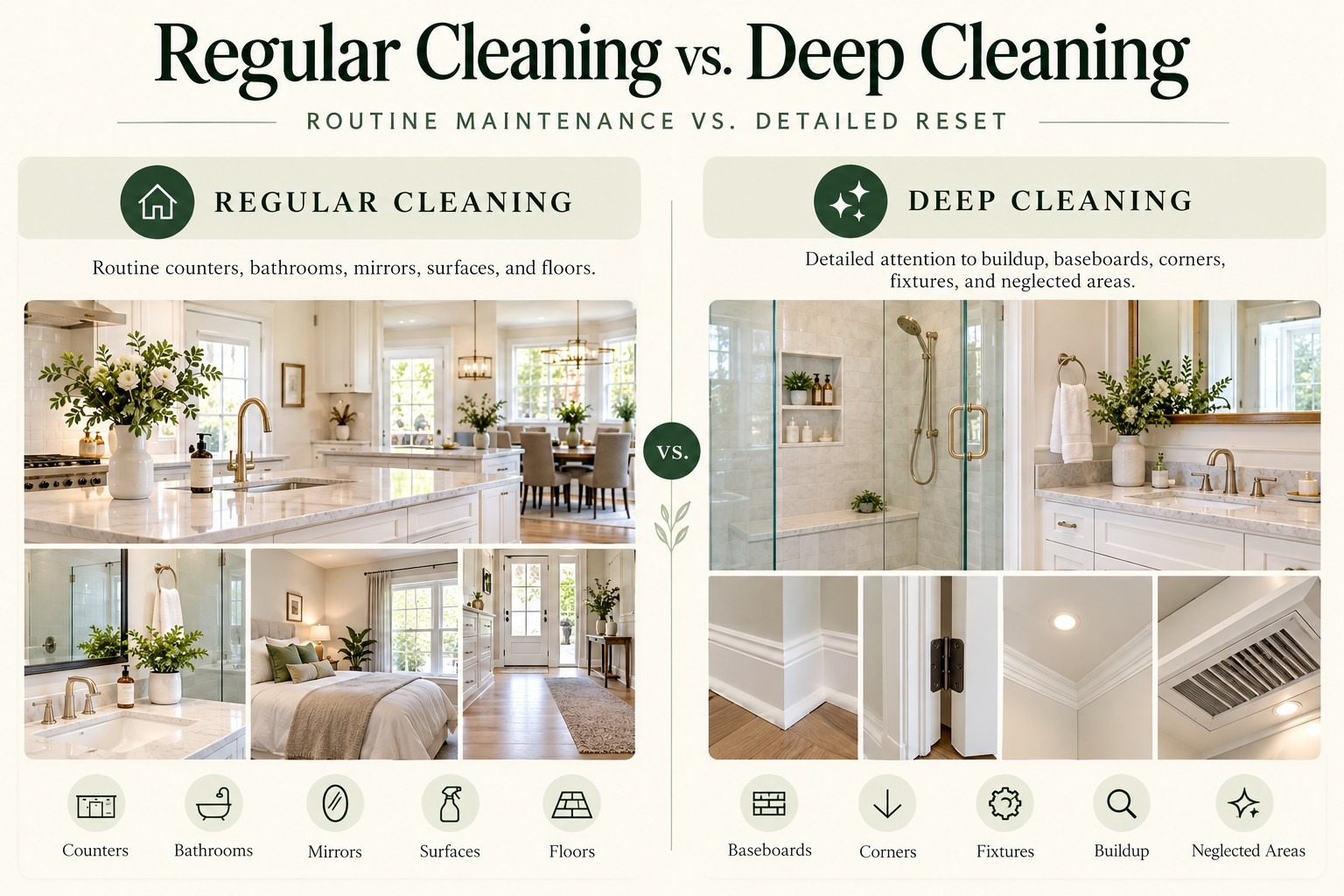
What’s the difference between regular cleaning and deep cleaning?
Regular cleaning focuses on maintaining frequently used surfaces and spaces. Deep cleaning generally involves more detailed attention to buildup, edges, fixtures, and other areas that require extra work. The exact tasks depend on the service provider’s checklist.

Ready to Make Your Charlotte Home Easier to Maintain?
A cleaner home doesn’t have to mean spending every weekend catching up.
By avoiding common cleaning mistakes, using the right products, following a consistent routine, and addressing buildup before it becomes overwhelming, you can make home maintenance easier.
And when your home needs more than everyday cleaning, My Clean Charlotte Maids is here to help.
Our professional Deep Cleaning service helps Charlotte-area homeowners tackle accumulated dirt and grime and create a fresher starting point for regular upkeep.
A cleaner home. Less catching up. More time for what matters. 🐸💚
Ready for a deeper reset?
Call or text: (980) 888-8541
Serving Charlotte, NC, and surrounding communities.
My Clean Charlotte Maids — Clean Homes, Happy Clients.



Stay Updated
Fresh cleaning tips, home-care hacks, and smart living ideas — delivered weekly from My Clean Charlotte Maids.