
Pets make a house feel like home. They bring comfort, personality, companionship, and plenty of memorable moments.
They can also leave behind odors that become difficult to remove with ordinary surface cleaning.
Pet odors may settle into rugs, upholstery, bedding, floors, baseboards, and the areas where pets spend the most time. In busy Charlotte homes, warm weather, humidity, pollen, shedding, muddy paws, and closed indoor spaces can make those smells feel even stronger.
The good news is that a pet-friendly home does not have to smell like pets.
With a consistent cleaning routine, attention to odor-trapping surfaces, and occasional professional deep cleaning, you can keep your home feeling fresh, comfortable, and welcoming.
Here are some of the best ways to reduce pet odors in your Charlotte home.
Why Pet Odors Keep Coming Back
Pet odors rarely come from just one source.
Even after you clean the most obvious area, odor-causing particles may remain in nearby fabrics, floors, furniture, or hidden corners. Common sources include:
- Pet beds and blankets
- Carpet and area rugs
- Upholstered furniture
- Litter boxes
- Food and water stations
- Accidents on floors or carpet
- Saliva on toys and furniture
- Damp towels or pet-cleaning supplies
- Hair and dander beneath furniture
- Mud and moisture tracked indoors
- Baseboards, corners, and wall edges
- HVAC filters and air vents
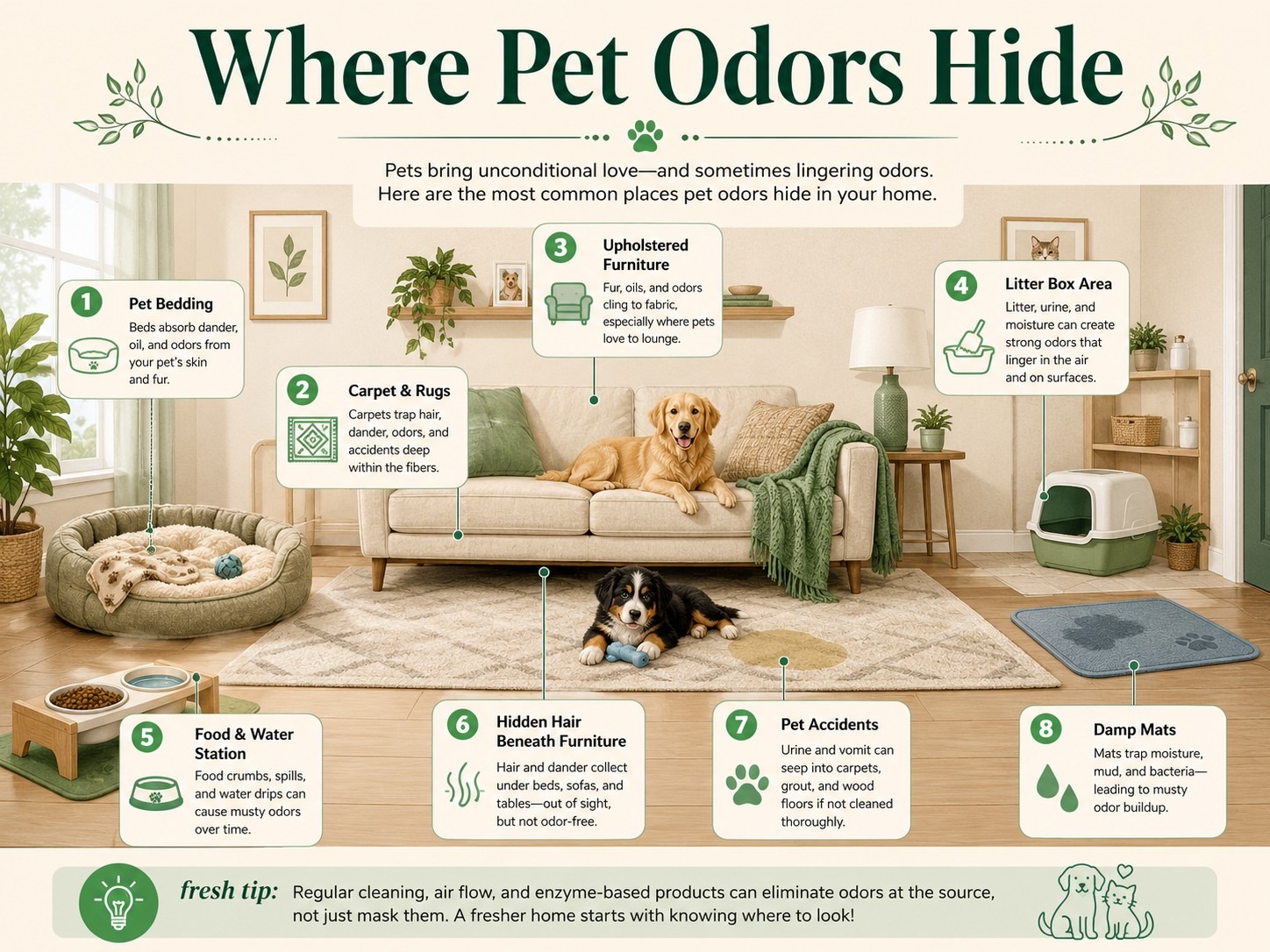
Spraying air freshener may temporarily cover the smell, but it does not remove the source.
A better strategy is to identify where the odor is coming from, clean the affected material properly, and maintain the surrounding area before buildup returns.
1. Wash Pet Bedding Regularly
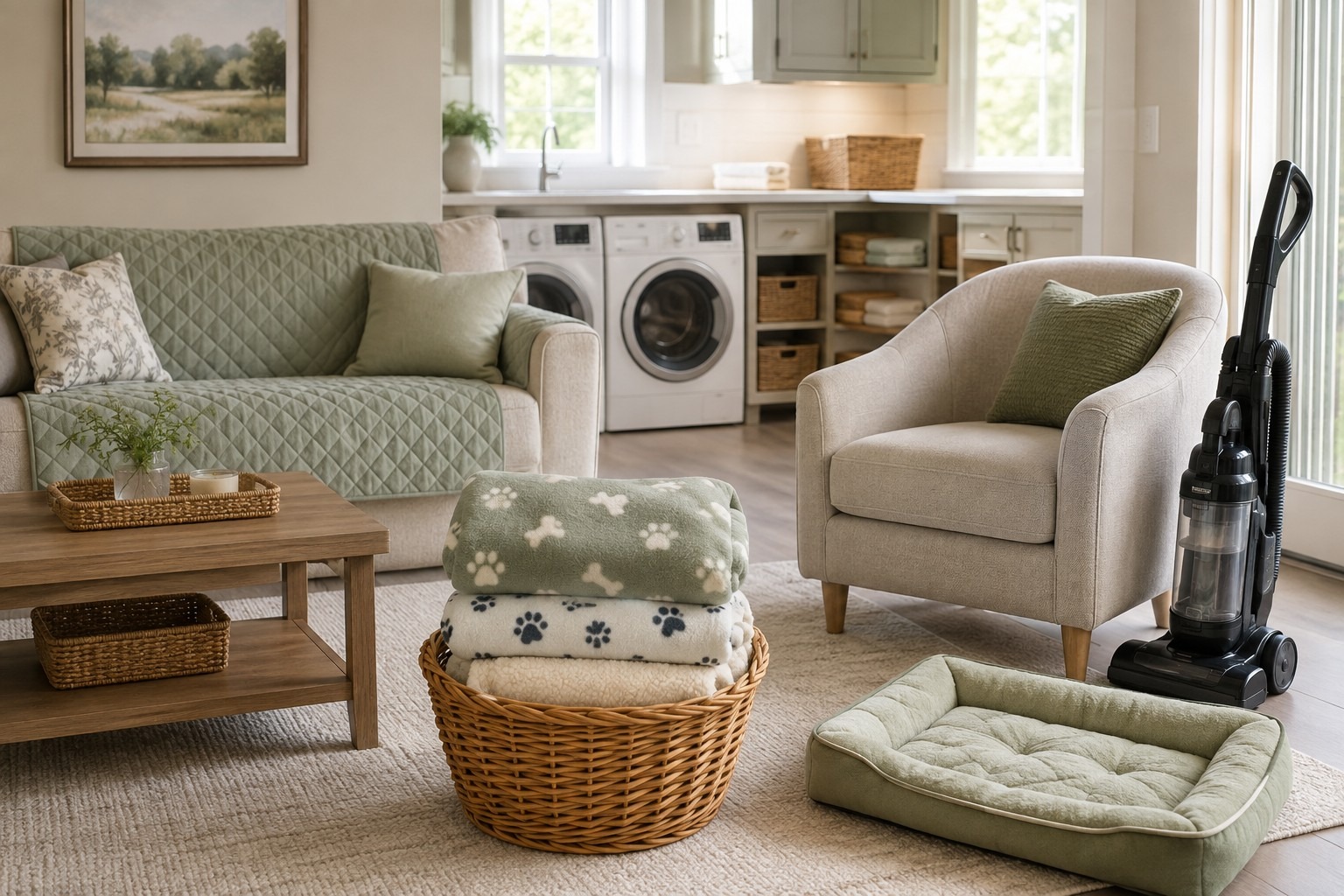
Pet beds, blankets, crate liners, and washable furniture covers absorb body oils, saliva, dirt, hair, and moisture.
Because your pet uses these items frequently, they can become one of the strongest odor sources in the home.
Wash washable pet bedding according to the manufacturer’s care instructions. Make sure the items dry completely before returning them to your pet’s space. Damp fabric can quickly develop a musty smell.
A simple routine may include:
- Shaking loose hair outdoors
- Vacuuming the bed before washing
- Washing removable covers
- Cleaning crate mats and blankets
- Wiping the area underneath the bed
- Allowing everything to dry fully
For homes with multiple pets or pets that spend a lot of time outdoors, bedding may need attention more frequently.
3. Clean Accidents as Soon as Possible
The longer a pet accident remains untreated, the more likely it is to soak into carpet padding, grout, unfinished wood, or other porous materials.
Begin by blotting the area instead of rubbing it. Rubbing can spread moisture farther into the surrounding fibers.
Use a cleaning product that is appropriate for the affected surface. Products designed for pet accidents often use enzymes to help break down odor-causing organic material rather than simply covering the smell.
Before applying any product:
- Follow the label directions
- Test it in an inconspicuous area
- Confirm that it is appropriate for your flooring or fabric
- Keep pets away until the area is safe and dry
- Avoid mixing cleaning chemicals
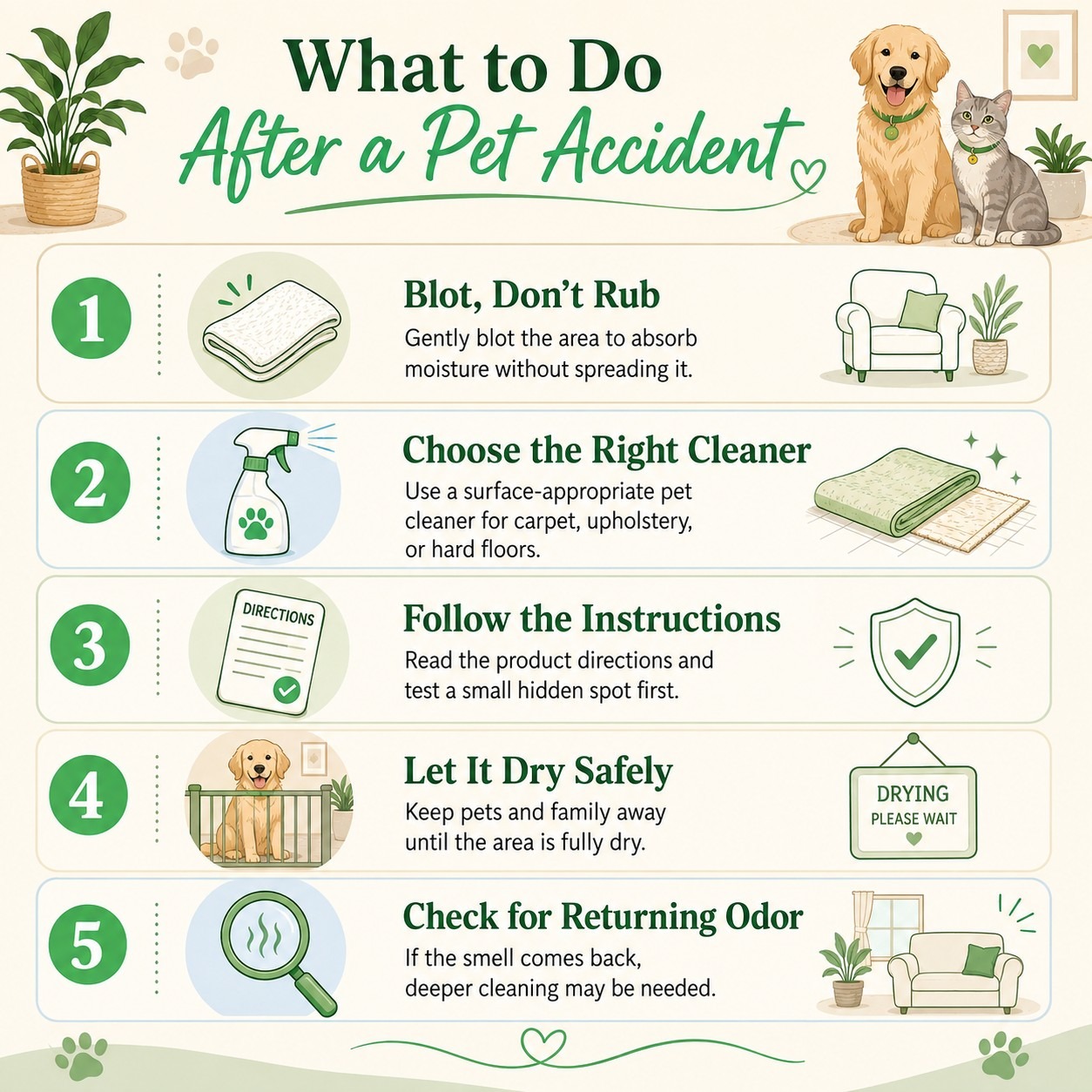
If an odor returns after the surface appears clean, the accident may have reached the carpet pad, subfloor, grout, or another deeper layer. That may require more specialized treatment.
4. Maintain the Litter Box Area
A clean litter box can make a major difference in the overall freshness of a home.
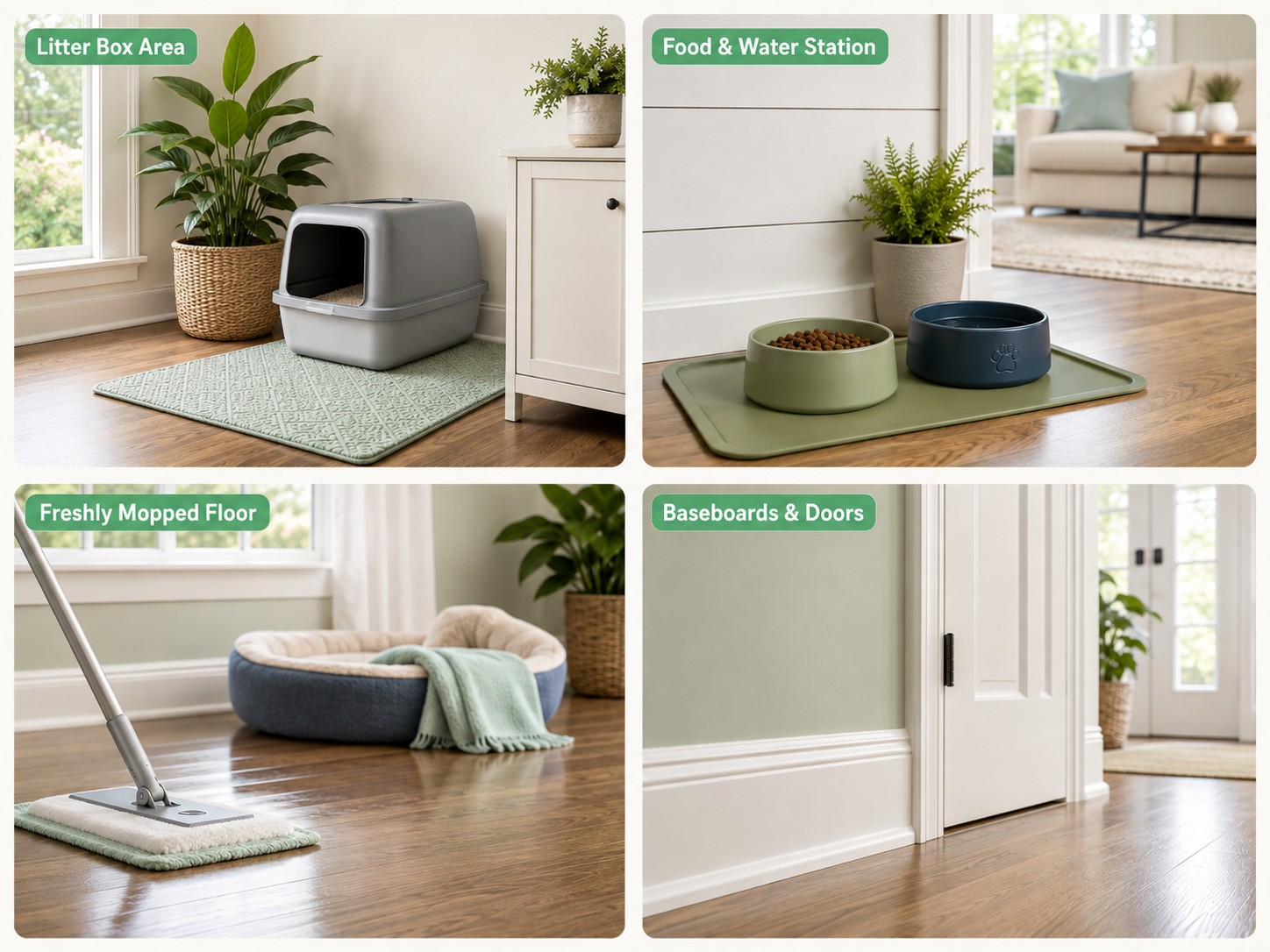
Remove waste regularly and replace litter according to the product instructions. Clean the box itself when needed, and wipe the surrounding floor and wall area to remove scattered litter, dust, and residue.
Do not overlook:
- Litter mats
- Scoops and storage containers
- The floor beneath the box
- Nearby baseboards
- Walls beside the box
- Trash cans used for waste
- Fabric or rugs near the area
Place the litter box in a ventilated location that is still comfortable and accessible for your cat. Avoid relying heavily on strong fragrances, which may be unpleasant for pets and may only disguise the underlying odor.
5. Clean Food and Water Stations
Food residue, spilled water, pet saliva, and damp mats can create unpleasant smells around feeding stations.
Wash food and water bowls regularly using a pet-appropriate cleaning method. Wipe the floor beneath them and clean reusable mats before residue begins to build up.
Check the surrounding area for:
- Dried food
- Water trapped beneath bowls
- Sticky floor residue
- Hair collecting around the mat
- Moisture near baseboards
- Spills beneath storage containers
7. Pay Attention to Carpet and Area Rugs
Carpet fibers can hold pet hair, dander, dirt, moisture, and accident residue below the visible surface.
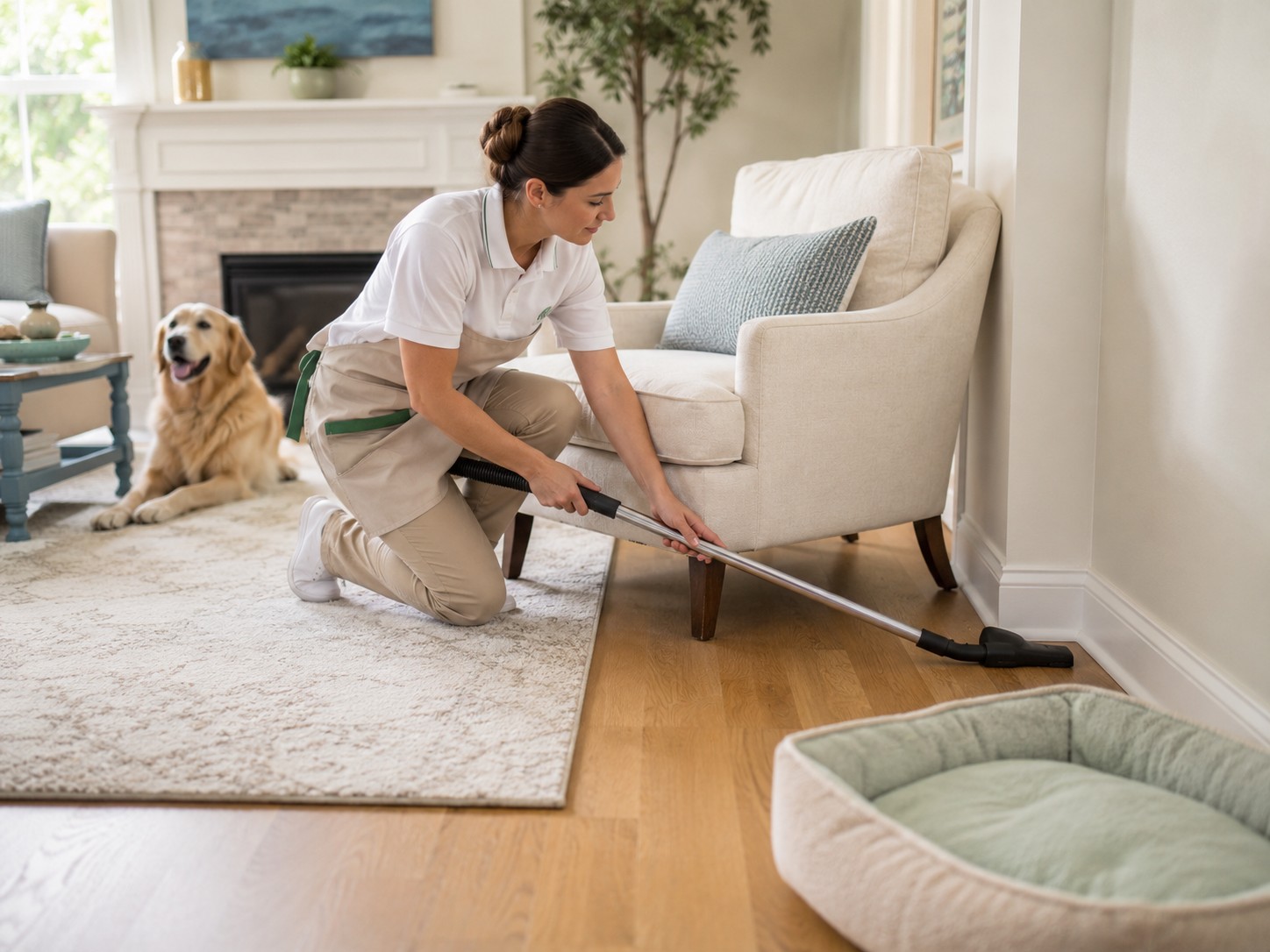
Vacuum slowly and make multiple passes through the areas your pet uses most. Move lightweight furniture occasionally so you can clean beneath it rather than only cleaning around it.
Area rugs should also be cleaned according to their care instructions. Remember to inspect and clean the rug pad and floor underneath when appropriate.
Signs your carpet or rug may need more detailed attention include:
- Odors that return after vacuuming
- Visible pet stains
- Darkened high-traffic areas
- Excessive embedded hair
- A musty smell during humid weather
- Odor that becomes stronger when the room is closed
Professional carpet or rug cleaning may be helpful when odor has settled deeper than routine vacuuming can reach.
8. Mop Hard Floors Correctly
Hard floors are easier to wipe than carpet, but pet residue can still collect in seams, textured surfaces, grout lines, and around baseboards.
Sweep or vacuum first so you do not push pet hair around with the mop. Then use a cleaning method that is safe for your specific flooring.
Avoid oversaturating wood and laminate floors. Excess water may enter seams and create damage or trapped moisture.
Give extra attention to:
- Entryways
- Feeding stations
- Areas near exterior doors
- Spaces around litter boxes
- Beneath pet beds
- Corners and wall edges
- Spots where pets frequently rest
Clean mop pads after use rather than storing them while damp or dirty.
9. Wipe Baseboards, Doors, and Walls
Pets brush against surfaces throughout the day. Over time, oils, fur, dirt, and moisture can collect on lower walls, doors, trim, and baseboards.
These areas may not look extremely dirty from a distance, but they can hold odor and make an otherwise clean room feel less fresh.
Inspect and wipe:
- Lower sections of doors
- Door frames
- Baseboards
- Walls beside pet beds
- Areas near litter boxes
- Cabinet sides near feeding stations
- Stair risers
- Mudroom and entryway walls
Use a product and method appropriate for the paint or finish, and test a small area first.
10. Keep Entryways Ready for Muddy Paws
Charlotte weather can bring rain, red clay, pollen, grass, and outdoor debris into the home.
Creating a simple pet-cleaning station near the door can prevent much of that material from spreading.
Consider keeping these items nearby:
- A washable doormat
- A clean paw towel
- Pet-safe wipes
- A basket for leashes and supplies
- A washable runner
- A container for waste bags
- A small hamper for used towels
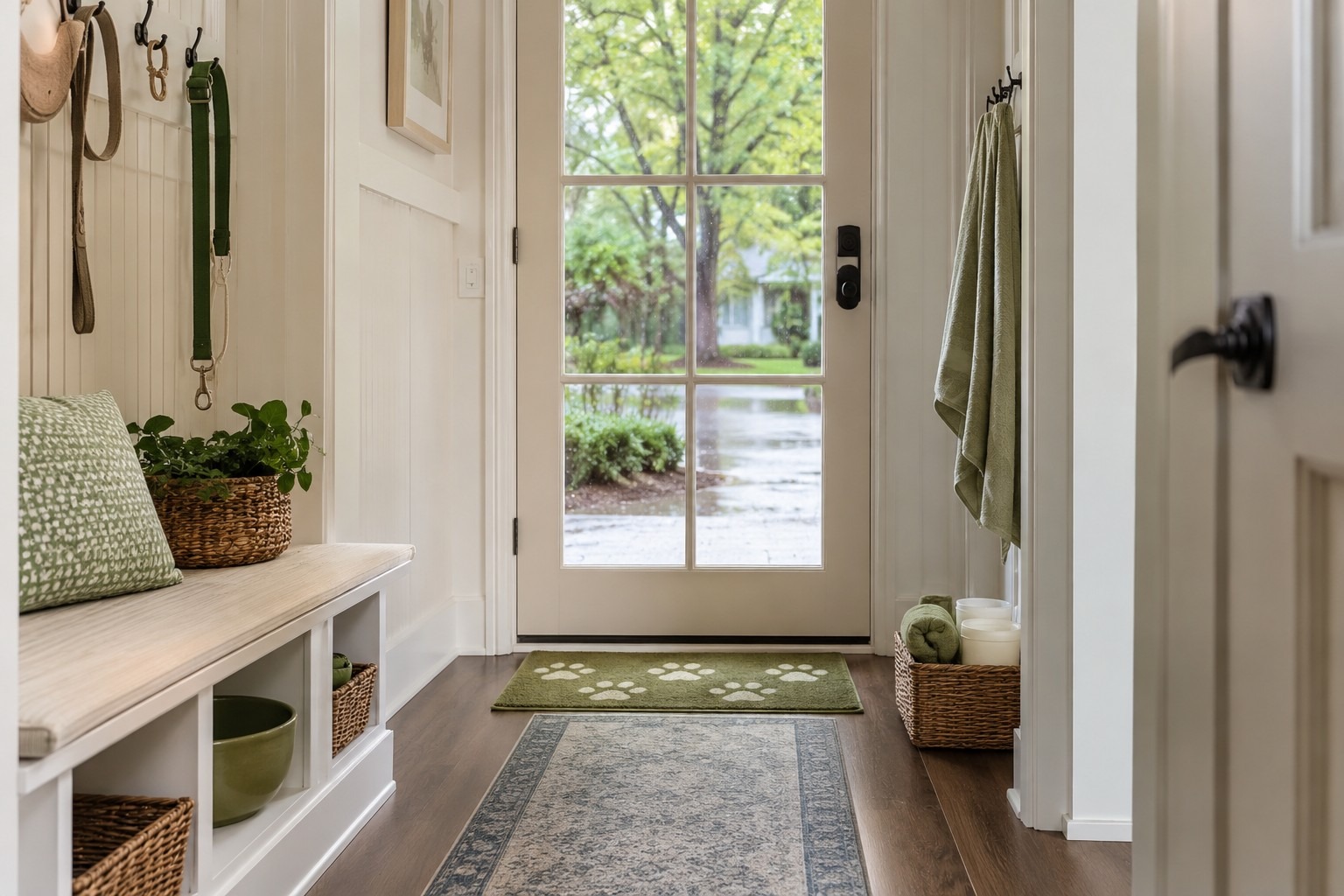
Wipe wet or muddy paws before your pet walks through the house. Wash the towels and mats regularly so the entryway does not become another odor source.
11. Improve Ventilation and Indoor Airflow
Fresh airflow can help reduce stale indoor smells, particularly in rooms where pets spend a lot of time.
When weather and household conditions allow, open windows briefly and use exhaust fans in bathrooms, laundry rooms, and other humid areas.
You should also check:
- HVAC filters
- Return-air vents
- Ceiling fans
- Floor vents
- Air purifier filters
- Pet hair around vent covers
Follow your HVAC manufacturer’s recommendations when selecting and replacing filters. Homes with pets may need filters checked more frequently because hair and dander can accumulate faster.
Cleaning the home itself remains important. Air fresheners and filters cannot replace the removal of hair, residue, and odor sources from household surfaces.
12. Groom Pets Consistently
Cleaning the home is only part of pet-odor control.
Regular brushing can reduce the amount of loose hair and dander transferred to floors, furniture, and bedding. Keeping paws clean and following an appropriate bathing or grooming routine can also help.
Grooming needs vary by pet, breed, coat, age, and health. Follow guidance from your veterinarian or professional groomer rather than bathing your pet excessively.
Frequently clean grooming tools, collars, harnesses, and fabric leashes as appropriate.
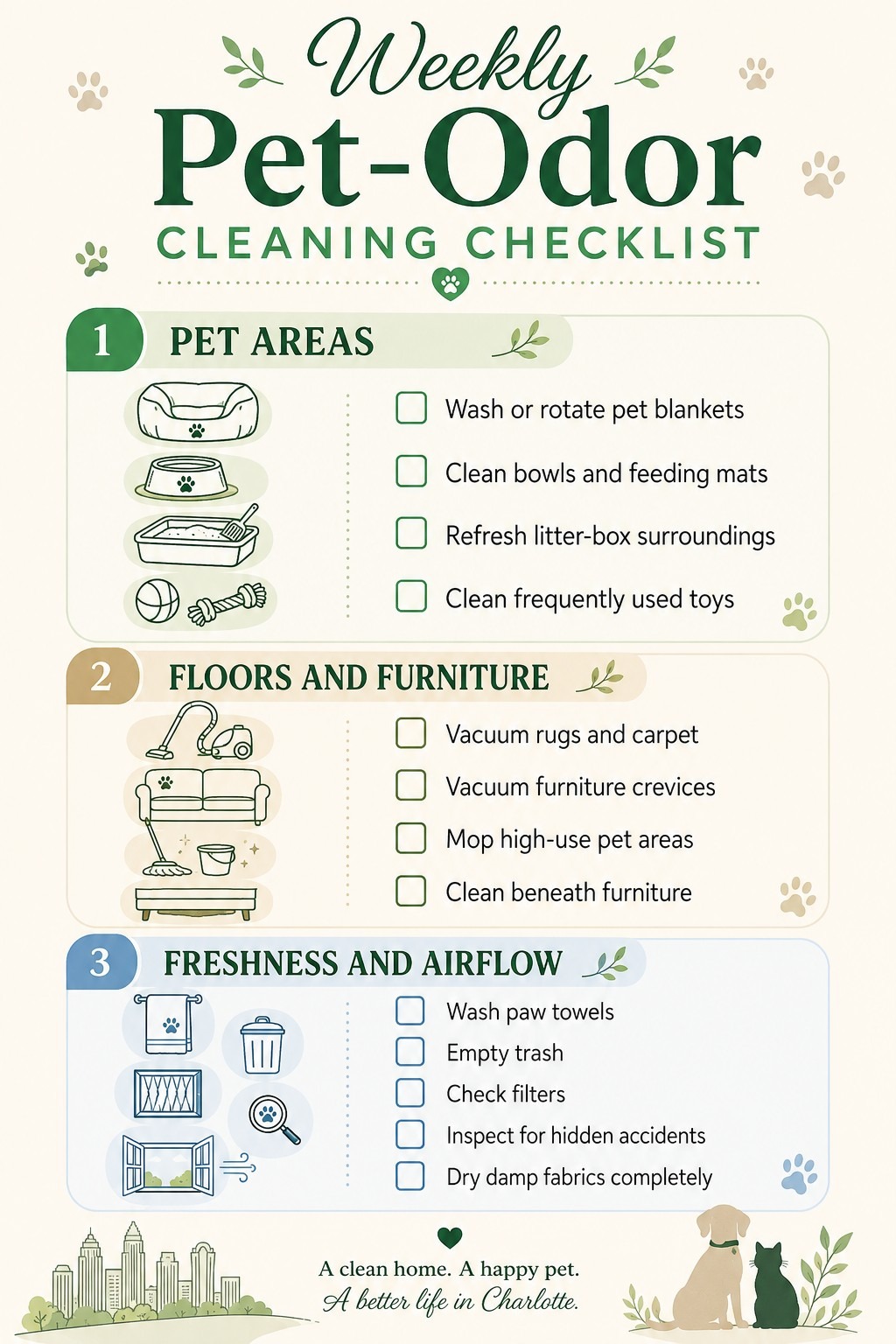
A Simple Weekly Pet-Odor Cleaning Checklist
Pet Areas
- Vacuum around pet beds and crates
- Wash or rotate blankets
- Wipe the floor beneath feeding stations
- Clean food and water bowls
- Remove scattered litter
- Wipe the litter-box area
- Clean frequently used toys when appropriate
Floors and Furniture
- Vacuum carpet and rugs
- Vacuum sofa cushions and crevices
- Sweep or vacuum hard floors
- Mop high-use pet areas
- Clean beneath lightweight furniture
- Wipe visible marks from doors and baseboards
Freshness and Airflow
- Empty household trash
- Wash used paw towels
- Check HVAC or air purifier filters
- Ventilate pet areas when practical
- Inspect for hidden accidents
- Dry damp mats and fabrics completely
When Routine Cleaning Is Not Enough
Even a well-maintained pet-friendly home may occasionally need a deeper reset.
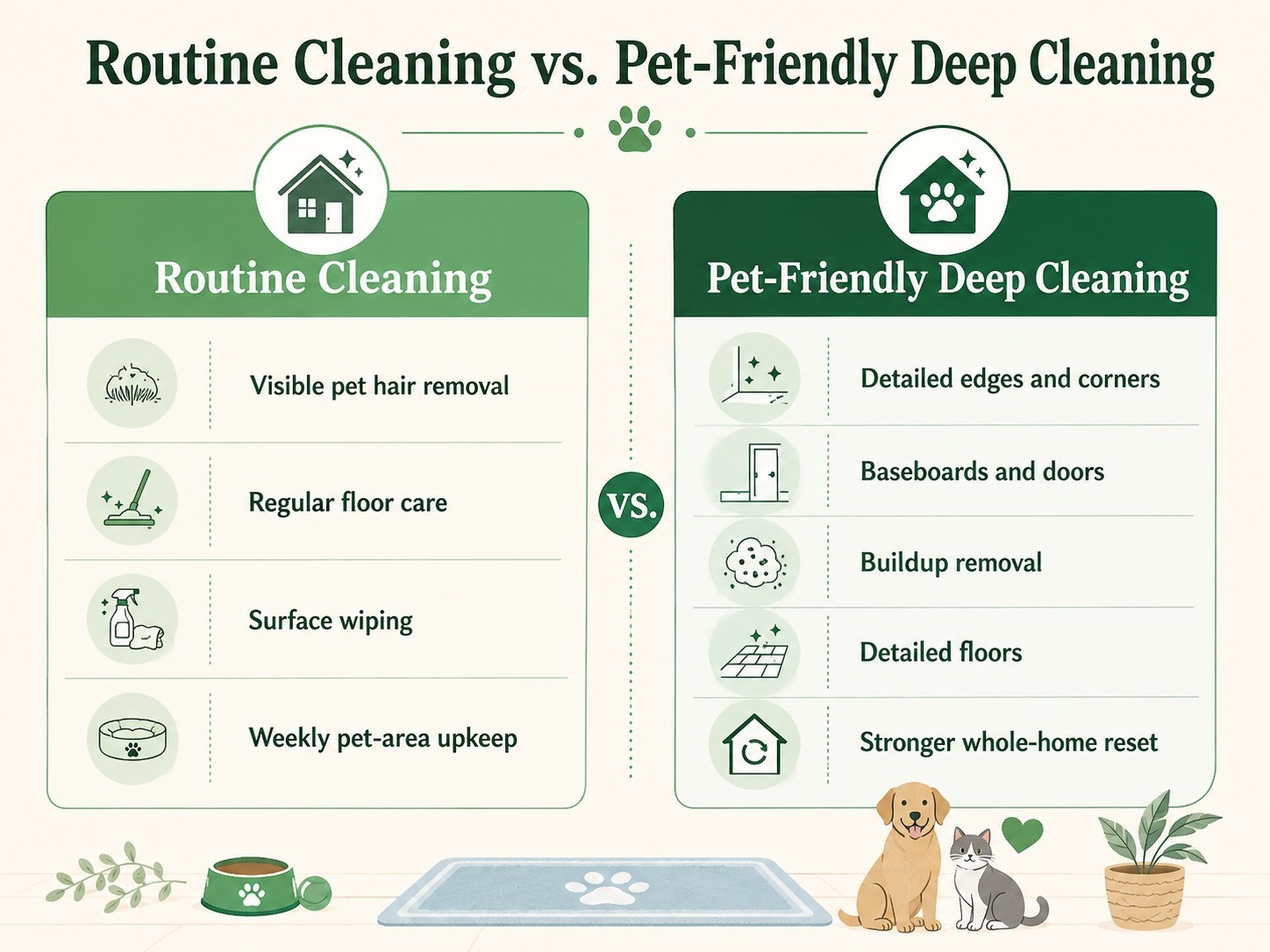
Routine cleaning usually focuses on visible surfaces and weekly upkeep. Deep cleaning reaches more of the areas where hair, dander, dirt, and odor-producing residue tend to collect over time.
Consider scheduling a professional deep cleaning when:
- Odors return soon after you clean
- Hair has accumulated beneath furniture
- Baseboards and doors have visible buildup
- Several pets live in the home
- You are preparing for guests
- You are moving into or out of a home
- The house has been closed up for an extended period
- You are beginning recurring cleaning
- Regular maintenance has fallen behind
- Pet areas need more detailed attention
A deep cleaning can create a cleaner starting point. After that reset, recurring cleaning may help keep floors, bathrooms, kitchens, furniture-adjacent areas, and high-touch surfaces easier to maintain.
What a Pet-Friendly Deep Cleaning Can Address
The exact service should be based on the needs of the home and the cleaning package selected, but a pet-conscious deep cleaning may focus on areas such as:
- Detailed vacuuming of accessible floors
- Hair removal from floor edges and corners
- Cleaning around accessible furniture
- Baseboards and doors
- Kitchen and bathroom buildup
- Feeding-station floors
- Litter-box surroundings
- Entryway dirt and paw traffic
- Dust and dander on reachable surfaces
- High-touch surfaces
- Detailed floor cleaning
- Other approved add-on areas
Always share important pet information when requesting a quote. Let the cleaning company know how many pets are in the home, where they will be during the appointment, and whether there are accidents, heavy hair, strong odors, or sensitive areas that require special attention.
Professional house cleaning can remove common surface buildup and improve the overall freshness of a home. However, severe urine contamination, damaged flooring, mold, pest problems, or odors that have penetrated subfloors may require a specialized remediation provider.
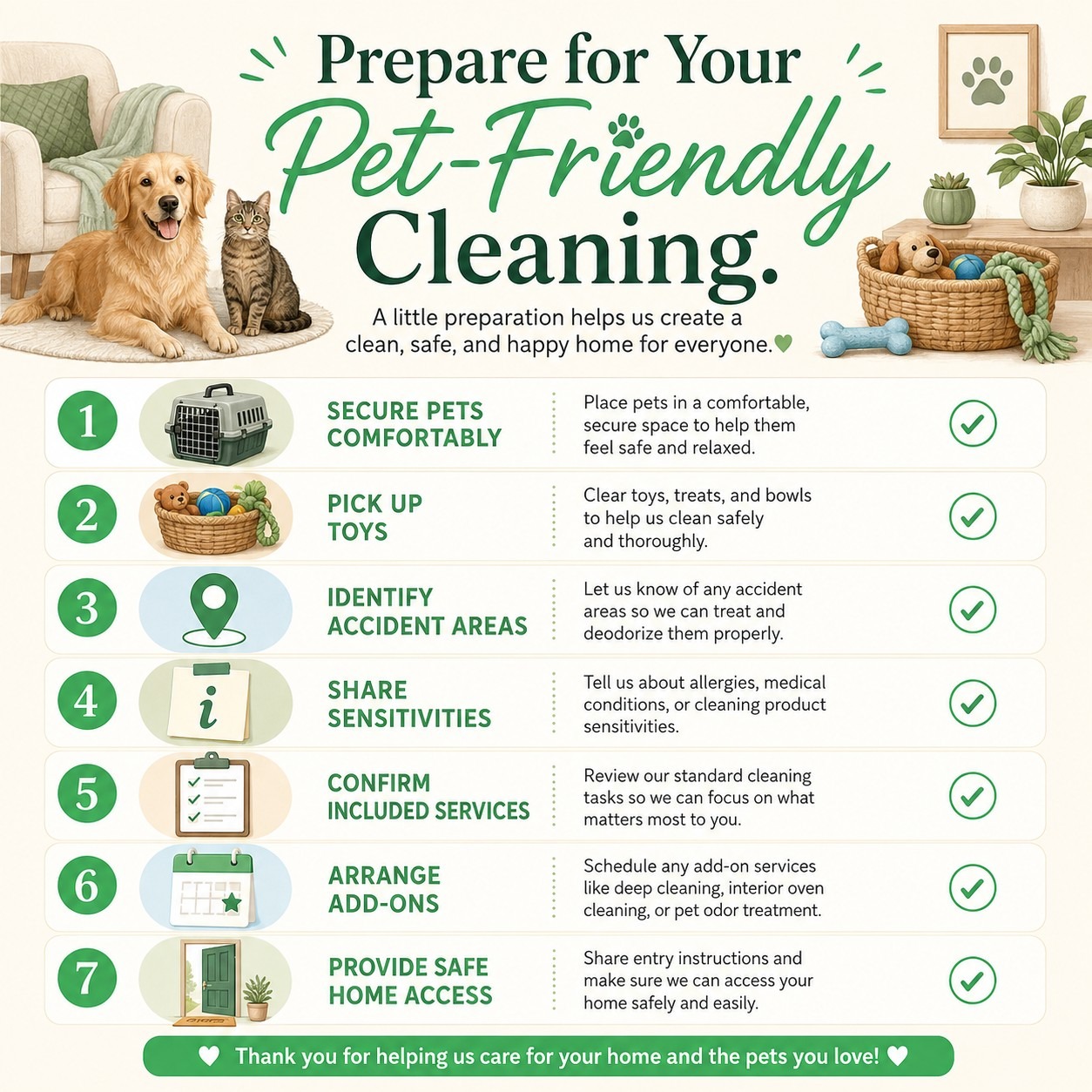
Prepare Your Home for Pet-Friendly Cleaning
A little preparation can help the cleaning appointment go more smoothly.
Before your cleaning:
- Place pets in a secure and comfortable area.
- Pick up toys, bowls, leashes, and small accessories.
- Identify any known accident areas.
- Explain which rooms your pet uses most.
- Share any product sensitivities or household concerns.
- Confirm which pet-related tasks are included in the service.
- Arrange special add-ons in advance.
- Make sure the cleaning team can safely enter and move through the home.
Securing pets protects both the animals and the cleaning professionals. Even a friendly pet may become nervous around unfamiliar people, vacuums, equipment, or open doors.
A Fresher Home for You and Your Pets
A pet-friendly home should feel comfortable for everyone who lives there.
The most effective odor-control routine is not about covering smells with stronger fragrances. It is about removing hair, residue, moisture, and buildup from the places where they collect.
Regularly washing pet bedding, cleaning floors, maintaining litter and feeding stations, vacuuming hidden areas, and addressing accidents promptly can make a noticeable difference.
When odor and buildup have spread beyond your regular routine, a professional deep cleaning can help give your home a more complete reset.
Book a Pet-Friendly Deep Cleaning in Charlotte
Love your pets but not the lingering odors?
My Clean Charlotte Maids can help refresh the areas where pet hair, dirt, dander, and everyday buildup tend to collect. Our professional cleaning services are designed for busy Charlotte families, pet owners, professionals, and homeowners who want a cleaner, more comfortable space.
Give Your Pet-Friendly Home a Detailed Reset
Book a Pet-Friendly Deep Cleaning with My Clean Charlotte Maids.
Call or text: (980) 888-8541
Book online: mycleancharlottemaids.com/book/
We proudly serve Charlotte and nearby communities, including Ballantyne, South Charlotte, Matthews, Pineville, Huntersville, Concord, Mooresville, Davidson, Cornelius, Fort Mill, Rock Hill, and surrounding areas.
Clean homes, Happy Clients.
Written by My Clean Charlotte Maids


Stay Updated
Fresh cleaning tips, home-care hacks, and smart living ideas — delivered weekly from My Clean Charlotte Maids.