

Bathrooms are supposed to feel fresh, clean, and comfortable.
But in Charlotte, it does not take long for a bathroom to start showing signs of moisture buildup. You may notice dark spots around the shower, discoloration along grout lines, residue around fixtures, or a musty smell that seems to return even after cleaning.
That is not unusual.
Bathrooms already deal with water and steam every day, and Charlotte’s warm, humid conditions can make it harder for that moisture to dry quickly. Add frequent showers, damp towels, limited ventilation, soap residue, and hard-to-reach surfaces, and buildup can develop faster than many homeowners expect.
The good news is that understanding why mold and mildew develop can make prevention much easier.
Here is what Charlotte homeowners should know about bathroom moisture, hidden buildup, cleaning frequency, and when it may be time for a deeper reset.
Why Charlotte Bathrooms Can Stay Damp Longer

Every shower adds moisture to the air.
In a bathroom with strong ventilation and good airflow, much of that moisture can clear relatively quickly. But during Charlotte’s warmer and more humid months, the surrounding air may already contain a significant amount of moisture.
That can make it harder for wet bathroom surfaces to dry completely.
Moisture may remain around:
- Shower walls
- Grout lines
- Tub edges
- Shower-door tracks
- Faucet bases
- Caulk
- Bathroom corners
- Bath mats
- Towels
- Toiletry containers
The longer those areas stay damp, the easier it becomes for mildew and other buildup to develop.
This is one reason a bathroom that seems easy to maintain during cooler months may need more attention during Charlotte’s warmer seasons.
What Causes Mold and Mildew in Bathrooms?
Humidity is only one part of the problem.
Bathrooms combine several conditions that make buildup especially common.
1. Constant Moisture
Showers, baths, handwashing, and everyday bathroom routines introduce water into the room repeatedly.
Even when the bathroom looks dry, moisture may still be sitting in less visible areas.
For example, water can collect:
- Behind shampoo bottles
- Under soap dishes
- Around faucet bases
- Between tiles
- Inside shower tracks
- Around tub edges
- Beneath bath mats
These small areas often take longer to dry than open surfaces.
2. Poor Ventilation
A bathroom exhaust fan can make a major difference, but only if it is working properly and used consistently.
Bathrooms with:
- Small or weak exhaust fans
- No exhaust fan
- Closed doors after showers
- Limited airflow
- No windows
- Older ventilation systems
may hold moisture for much longer.
You may leave the bathroom thinking everything is drying normally while humid air continues settling on walls, ceilings, grout, fixtures, and other surfaces.
3. Soap Scum and Body Oils
Bathroom surfaces do not collect water alone.
They also collect:
- Soap residue
- Shampoo
- Conditioner
- Body oils
- Skin cells
- Mineral deposits
- Dust
- Hair
Over time, those materials form a film on tubs, showers, tile, fixtures, and glass.
That buildup can make surfaces harder to clean and may trap additional moisture.
This is why simply wiping away visible water may not always be enough.
4. Grout and Caulk Hold Moisture
Smooth tile is usually easier to wipe clean.
Grout and caulk can be more challenging.
Grout contains small pores and uneven areas where moisture and residue can settle. Caulk around tubs and showers may also remain damp, especially in corners or areas that receive repeated splashes.
That is why mildew often appears first:
- Along shower corners
- Around bathtub edges
- Between tiles
- Along caulk lines
- Around fixtures
- Near shower doors
These areas usually require more detailed cleaning than the larger surfaces around them.
The Bathroom Areas Homeowners Often Miss
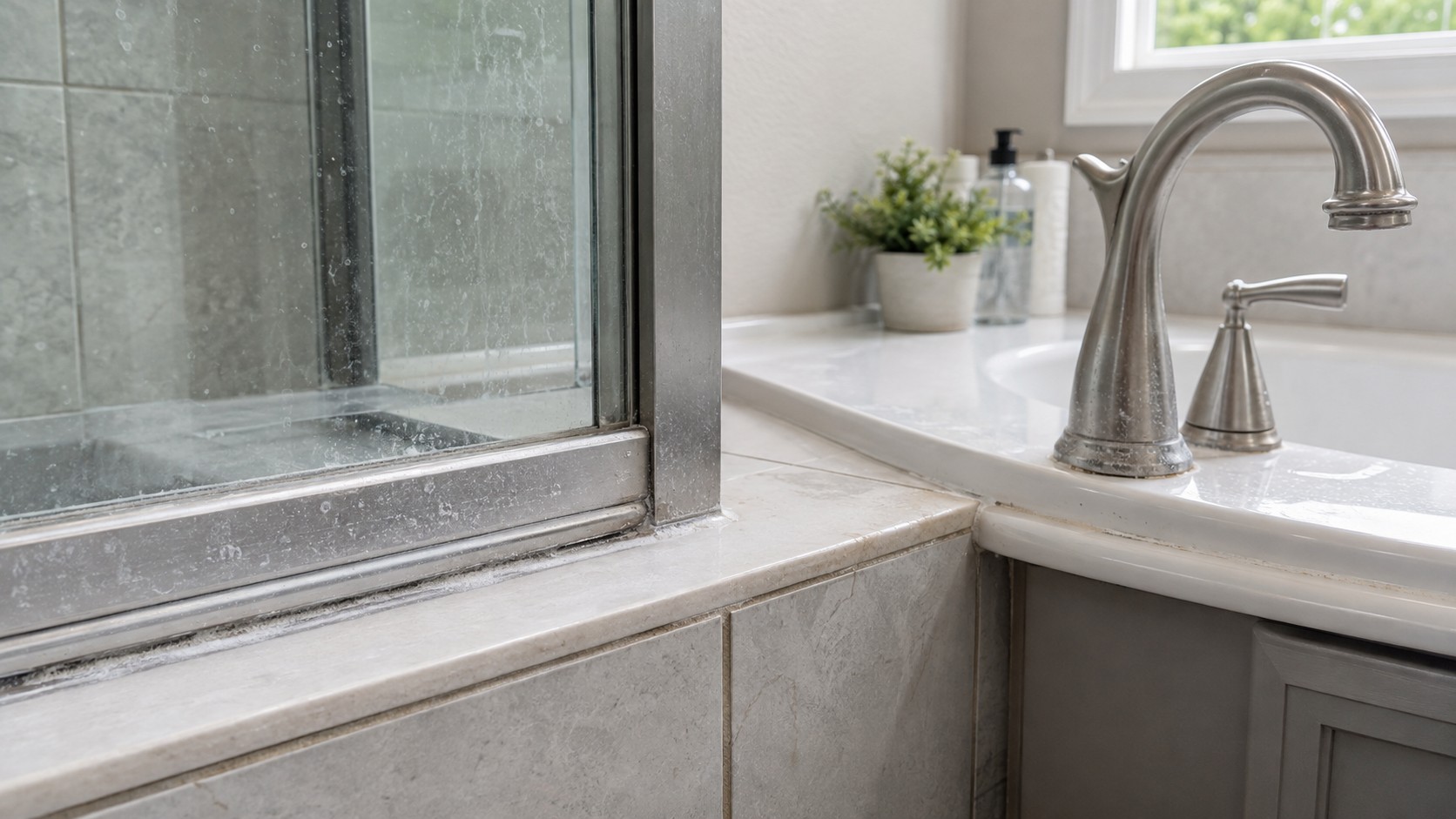
A bathroom can look clean while buildup is developing in less obvious places.
Most people naturally focus on:
- Toilets
- Sinks
- Mirrors
- Countertops
- Bathtubs
- Showers
- Floors
Those areas are important, but they are not the only places where moisture and residue collect.
Shower-Door Tracks
Water, soap residue, and dirt can settle into the small corners of shower-door tracks.
Because these areas are narrow and easy to overlook, buildup can develop quickly.
Around Faucet Bases
Water often sits around the bottom of faucets after handwashing or cleaning.
Over time, this can lead to mineral deposits and residue.
Behind Toilets
Dust, hair, splashes, and moisture can collect behind the toilet and along the nearby baseboards.
Shower Corners
Corners often receive plenty of water but less airflow.
That combination makes them one of the first places to show buildup.
Under Toiletries
Shampoo bottles, soap containers, and other products can trap moisture underneath them.
Moving these items regularly can make cleaning easier.
Under Bath Mats
A damp mat sitting against the floor may slow down the drying process.
Allow bath mats to dry thoroughly between uses.
Bathroom Exhaust Covers
Dust and lint can build up on vent covers.
A heavily dusty exhaust cover may interfere with airflow and reduce how efficiently moisture leaves the room.
Baseboards and Floor Edges
Hair, dust, splashes, and humidity can all collect around bathroom edges.
These areas are often skipped during quick cleaning.
Mold vs. Mildew: What Is the Difference?
Mold and mildew are often discussed as though they are the same thing, but there is a difference.
Mildew typically refers to a flatter type of fungal growth that develops on surfaces and may appear gray, white, or dark.
Mold is a broader category of fungi and can vary in color, texture, location, and severity.
In many everyday bathrooms, homeowners may be dealing with minor surface mildew around wet areas.
However, extensive growth, recurring growth behind walls, ceiling damage, water leaks, or suspected mold inside building materials may require help from a qualified mold-remediation professional.
Professional house cleaning is designed for normal household buildup and surface cleaning. It is not a substitute for mold remediation when there is a structural or moisture problem.
Why Mildew Keeps Coming Back After You Clean It
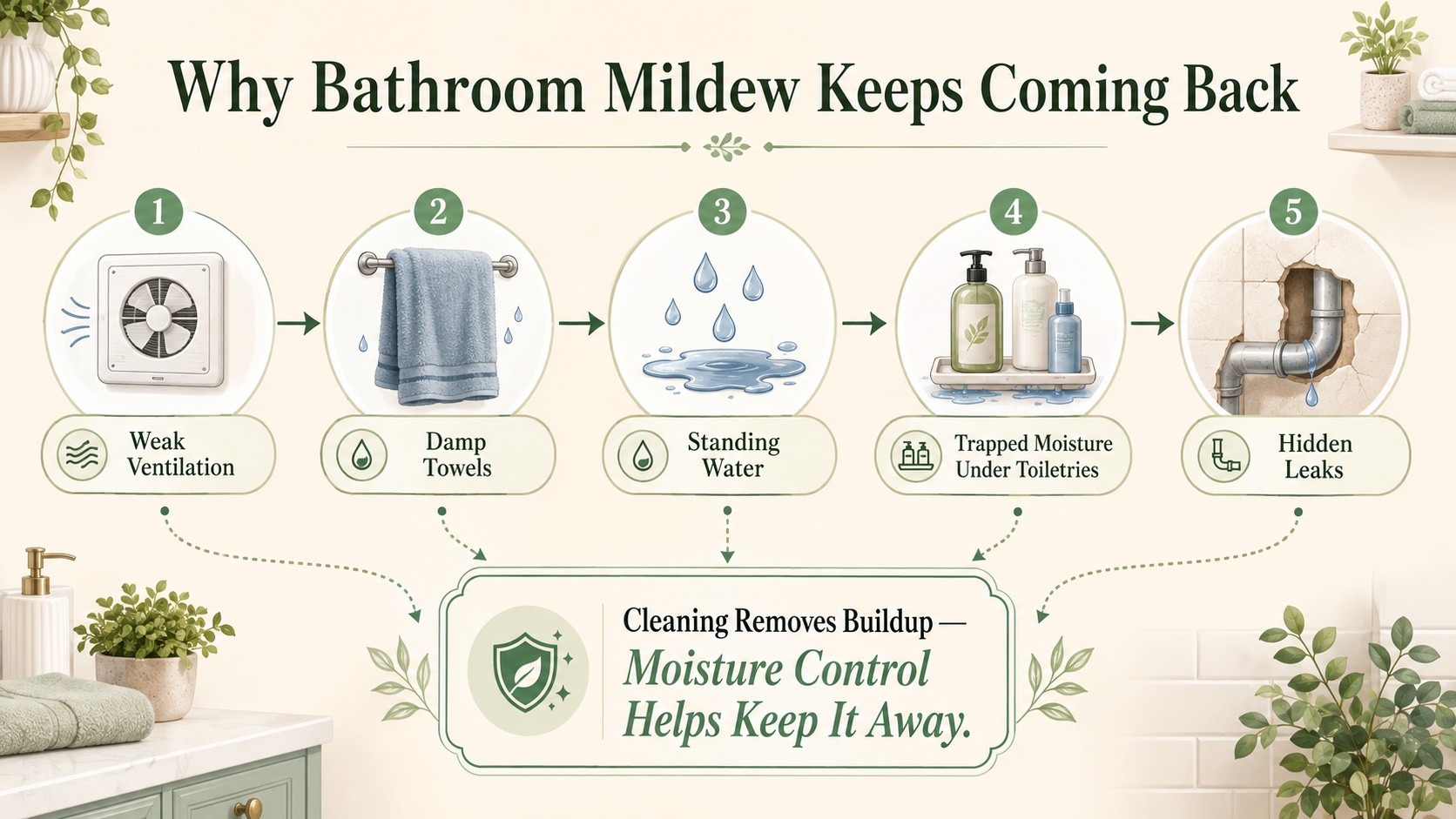
Few things are more frustrating than cleaning a shower only to see discoloration return shortly afterward.
When that happens, the problem may not be the cleaning itself.
The environment creating the buildup may still be present.
The Exhaust Fan Is Turned Off Too Soon
The bathroom can remain humid long after the shower ends.
Keeping the fan running for a period afterward can help remove lingering moisture.
Damp Towels Stay Bunched Up
Wet towels that are piled together or folded over themselves dry slowly.
Spread them out so air can circulate.
The Shower Curtain Stays Folded While Wet
Moisture can become trapped between the folds.
Allow the curtain or liner to dry as completely as possible.
Toiletries Trap Water
Shampoo bottles and other items can trap water underneath them.
Move them periodically and wipe the surface beneath.
The Bathroom Door Stays Closed
Limited airflow may slow drying.
When practical, allowing additional airflow can help.
There May Be a Leak
If one area remains damp even when the bathroom has not been used, a plumbing or moisture problem may be present.
Cleaning removes visible buildup.
Controlling moisture helps keep it from returning.
Both are important.
A Better After-Shower Routine for Charlotte Homes

You do not need to deep clean the entire bathroom every day.
A few simple habits can help reduce how much moisture stays behind.
Run the Exhaust Fan
Turn the fan on during the shower and allow it to continue running afterward.
Give Wet Surfaces Airflow
When practical, leave the shower area open enough for air to circulate.
Spread Out Wet Towels
Hang towels so they can dry instead of leaving them piled together.
Remove Standing Water
Pay special attention to:
- Tub edges
- Shower ledges
- Shower tracks
- Corners
- Shelves
Keep Shower Products Organized
Avoid covering every ledge with bottles.
Less clutter makes it easier for surfaces to dry and easier to clean them regularly.
Dry Bath Mats
If a mat becomes damp, allow both the mat and the floor underneath it to dry.
A simple moisture-control routine after each shower can prevent a much bigger cleaning job later.
Your Weekly Bathroom Cleaning Priorities
Consistency is one of the easiest ways to keep bathroom buildup under control.
A practical weekly routine should include:
- Cleaning toilets
- Cleaning sinks and faucets
- Wiping countertops
- Cleaning mirrors
- Removing soap residue from tubs and showers
- Cleaning shower glass
- Wiping commonly touched surfaces
- Cleaning floors
- Removing hair from corners and edges
- Checking grout and caulk
- Wiping tub and shower ledges
- Laundering bath mats and towels as needed
You do not need every surface to look perfect every day.
The goal is to prevent several weeks of moisture, soap residue, hair, and dust from accumulating together.
How Often Should You Deep Clean a Bathroom?
There is no single schedule that works for every home.
A guest bathroom used occasionally may need far less attention than a primary bathroom shared by an entire family.
You may need deeper cleaning more often if:
- Multiple people share the bathroom
- Children use the bathroom frequently
- The household takes several showers each day
- Ventilation is limited
- Soap scum builds up quickly
- The bathroom is small
- Towels frequently remain damp
- The shower contains many products
- Grout and shower tracks are difficult to maintain
The best cleaning schedule depends on how the bathroom is actually used.
When Regular Bathroom Cleaning Is No Longer Enough
Regular cleaning works best when the bathroom is already in maintainable condition.
Sometimes, however, the detailed buildup gets ahead of the weekly routine.
You may be ready for a deeper clean if you notice:
- Heavy soap scum
- Dingy grout
- Buildup around faucets
- Dirty shower-door tracks
- Residue around the bathtub
- Dusty vents
- Neglected baseboards
- Buildup behind the toilet
- Hard-to-reach corners that have been skipped
- Persistent bathroom odors
- Several areas needing extra detail work
At that point, repeating the same quick cleaning routine may not give you the reset you are looking for.
A bathroom deep cleaning can provide a better starting point.
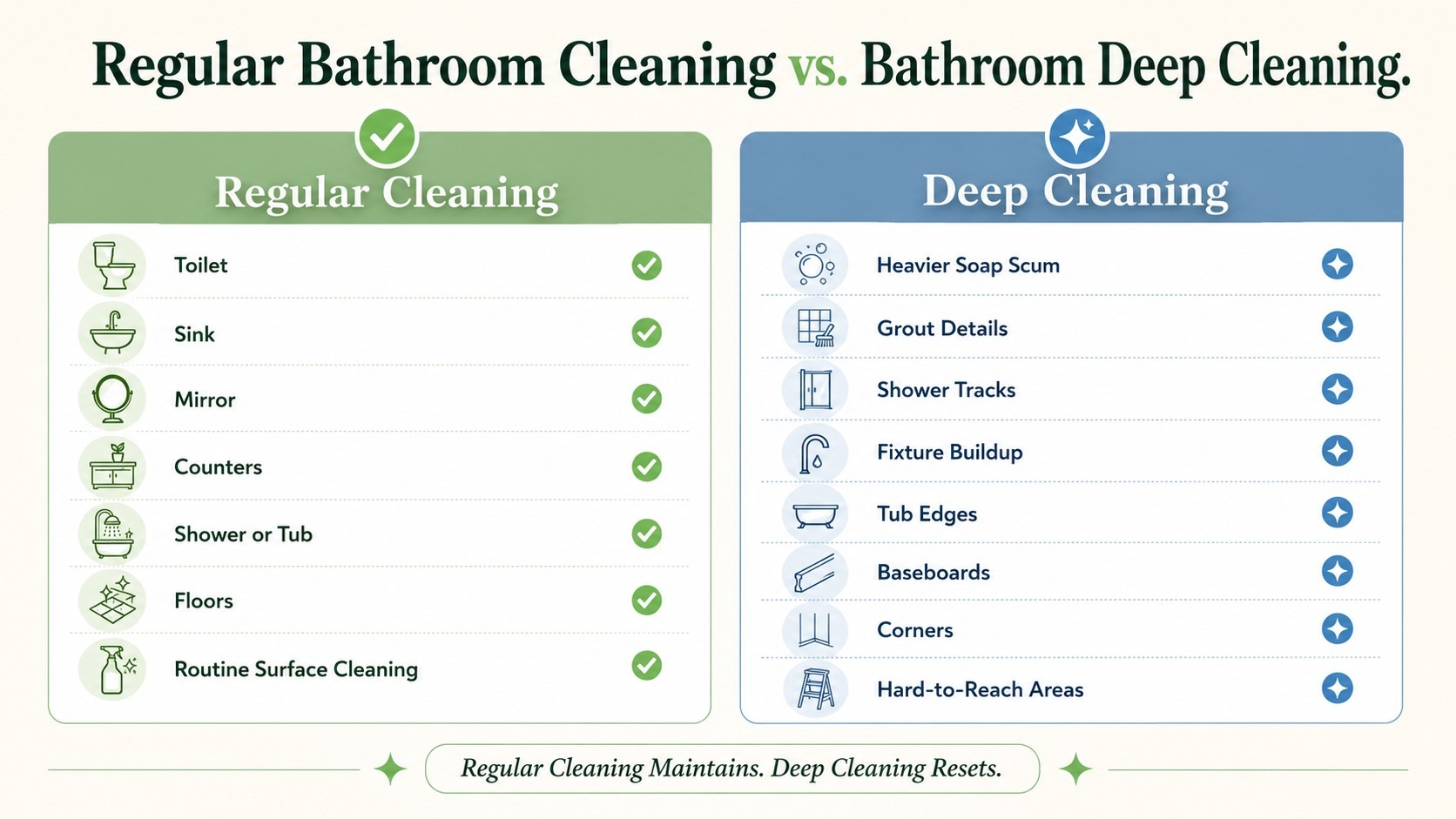
Regular Bathroom Cleaning vs. Bathroom Deep Cleaning
The easiest way to think about the difference is:
Regular cleaning maintains. Deep cleaning resets.
Regular Bathroom Cleaning
Regular bathroom cleaning is best when the room is already in reasonably good condition.
Typical priorities include:
- Toilets
- Sinks
- Countertops
- Mirrors
- Showers
- Bathtubs
- Fixtures
- Floors
- General surface cleaning
The goal is to keep everyday buildup under control.
Bathroom Deep Cleaning
A deeper clean is better when more detailed or accumulated buildup needs attention.
Depending on the condition of the bathroom and the service scope, deeper cleaning may include additional attention to:
- Heavier soap scum
- Grout areas
- Shower corners
- Fixture buildup
- Tub edges
- Shower tracks
- Baseboards
- Exterior cabinetry
- Hard-to-reach surfaces
- Detailed bathroom edges and corners
Once that heavier buildup is addressed, regular recurring cleaning can make the space much easier to maintain.
Do Not Forget the Exhaust Fan
One of the most overlooked bathroom details is above your head.
The exhaust fan.
Vent covers can gradually collect:
- Dust
- Hair
- Lint
- General household debris
If the cover becomes heavily coated, airflow may be reduced.
A bathroom that cannot move humid air efficiently may take longer to dry after showers.
Periodically check the vent cover and clean accessible exterior dust as needed.
If the fan still seems ineffective after basic cleaning, the ventilation system itself may need professional evaluation.
Cleaning can help support proper airflow, but it cannot repair a fan or ventilation problem.
What About Opening a Bathroom Window?
A bathroom window can provide additional airflow under the right conditions.
However, opening a window during very humid Charlotte weather may not always bring dry air into the room.
For many homes, the best approach is a combination of:
- An effective exhaust fan
- HVAC operation
- Good airflow
- Consistent cleaning
- Removing standing water
- Allowing towels and mats to dry
The goal is simple:
Help the bathroom dry as thoroughly and quickly as practical after every use.
Why Busy Family Bathrooms Need More Attention
A bathroom used by one person is very different from a bathroom used by four or five people every day.
More people usually means:
- More showers
- More wet towels
- More soap residue
- More hair
- More splashes
- More humidity
- More floor traffic
That is why heavily used family bathrooms may need more frequent cleaning than a lightly used guest bathroom.
This is especially important for busy Charlotte families who may already be juggling work, school, activities, pets, and household responsibilities.
The bathroom does not become dirty all at once.
It usually happens a little at a time.
Consistency keeps that buildup from becoming overwhelming.
The Charlotte Bathroom Cleaning Rule to Remember
If there is one thing to remember, it is this:
Moisture creates the opportunity. Buildup makes the problem harder to manage.
A bathroom that stays damp while collecting soap scum, dust, hair, and residue will become harder to maintain than one that dries properly and receives consistent cleaning.
A better bathroom-maintenance routine combines:
- Good ventilation
- Faster drying
- Consistent weekly cleaning
- Periodic deep cleaning
- Addressing leaks or recurring moisture problems early
Small habits can prevent much larger cleaning projects later.
Frequently Asked Questions About Mold, Mildew, and Bathroom Cleaning in Charlotte
Why does mold or mildew build up so quickly in Charlotte bathrooms?
Charlotte’s warm, humid conditions can make it harder for moisture to evaporate quickly. When shower steam, standing water, damp towels, soap residue, and limited ventilation combine, bathroom surfaces may remain damp longer and mildew can develop more easily.
How often should I clean my bathroom to help prevent mildew?
Frequently used bathrooms generally benefit from a thorough cleaning about once a week. Some high-use areas, such as showers, sinks, toilets, and floors, may need additional attention between full cleanings.
The most important factor is consistency
Does running the bathroom exhaust fan really help?
Yes. A properly working exhaust fan can help remove humid air from the room and encourage surfaces to dry faster.
Run it during the shower and leave it on for a period afterward.
What bathroom areas are most likely to develop buildup?
Common trouble spots include:
- Grout lines
- Caulk
- Shower corners
- Shower-door tracks
- Faucet bases
- Tub edges
- Behind the toilet
- Under bath mats
- Beneath toiletries
- Baseboards
- Exhaust vent covers
These areas tend to stay damp longer or are often missed during quick routine cleaning.
What is the difference between regular bathroom cleaning and bathroom deep cleaning?
Regular cleaning focuses on maintaining the bathroom through routine cleaning of toilets, sinks, counters, mirrors, showers, tubs, fixtures, and floors.
Bathroom deep cleaning provides additional attention to accumulated detail work, such as heavier soap scum, edges, corners, grout areas, shower tracks, fixture buildup, baseboards, and other commonly overlooked surfaces.
When should I schedule a bathroom deep cleaning?
Consider a deep cleaning when you notice:
- Heavy soap scum
- Dingy grout
- Buildup around fixtures
- Dirty shower tracks
- Neglected edges or corners
- Dusty baseboards
- Persistent bathroom odors
- Several areas that regular cleaning is no longer keeping up with
A deep cleaning can create a cleaner baseline that is easier to maintain afterward.
Can My Clean Charlotte Maids remove mold?
My Clean Charlotte Maids can address normal household bathroom buildup and minor surface mildew that falls within the scope of professional house cleaning.
Significant mold growth, mold related to leaks or water damage, recurring structural moisture issues, or suspected mold inside walls or ceilings should be evaluated by a qualified mold-remediation professional.
Does opening the bathroom door after a shower help?
When practical, additional airflow can help moisture leave the room more quickly.
However, an effective exhaust fan should still be used when available.
Do you offer bathroom deep cleaning in Charlotte, NC?
Yes. My Clean Charlotte Maids provides professional deep cleaning services for Charlotte-area homes, including detailed bathroom cleaning as part of the service.
We serve Charlotte and surrounding communities, including Matthews, Pineville, Ballantyne, Huntersville, Concord, Gastonia, Mooresville, Davidson, Cornelius, Fort Mill, Rock Hill, and nearby areas.

Ready to Give Your Bathroom a Deeper Reset?
If routine cleaning is no longer keeping up with soap scum, moisture buildup, dingy grout, or hard-to-reach bathroom details, it may be time for a professional reset.
My Clean Charlotte Maids can help.
A professional deep cleaning can give your bathroom the detailed attention it needs so the space feels cleaner, fresher, and easier to maintain.
Bathroom Deep Cleaning for Charlotte-Area Homes
Spend less time scrubbing showers, corners, fixtures, and bathroom floors and more time enjoying a home that feels refreshed.
Call or text: (980) 888-8541
Book online: mycleancharlottemaids.com/book/
Get My Bathroom Deep Cleaning Quote
Professional deep cleaning available throughout Charlotte and surrounding communities.
Clean homes, Happy Clients.
Written by My Clean Charlotte Maids
Serving Charlotte, Fort Mill, Rock Hill, Gastonia, Pinehurst, Lake Norman, Fayetteville & surrounding areas.



Stay Updated
Fresh cleaning tips, home-care hacks, and smart living ideas — delivered weekly from My Clean Charlotte Maids.