

Cleaning your own home can make a noticeable difference. The counters look better, the floors feel fresher, and the rooms seem more organized.
But even after a full afternoon of dusting, vacuuming, scrubbing, and mopping, some areas may still feel unfinished.
That is usually because everyday cleaning focuses on the surfaces we see and use most often. Meanwhile, dust, grease, pet hair, soap residue, and other buildup quietly collect in corners, along edges, behind furniture, and around fixtures.
These commonly missed areas may not seem important individually. Together, however, they can affect how clean the entire home looks and feels.
Here are some of the places Charlotte homeowners frequently overlook during DIY house cleaning—and why a professional cleaning can provide a more complete reset.
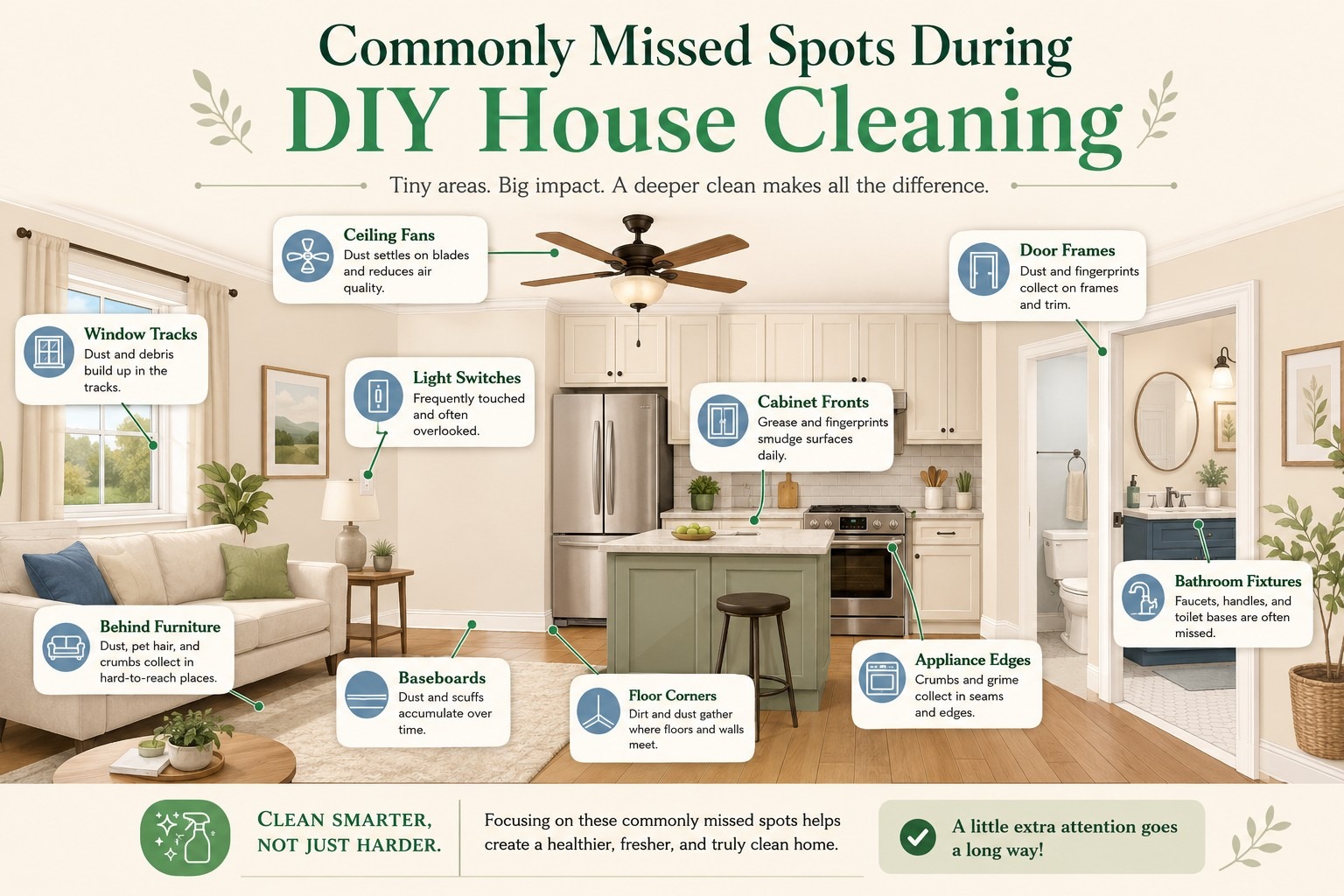
1. Baseboards and Floor Edges
Baseboards are easy to ignore because they sit below eye level. Over time, they can collect:
- Dust
- Pet hair
- Dirt from shoes
- Scuff marks
- Spills and splashes
- Debris pushed toward the walls while sweeping or mopping
The narrow edge where the flooring meets the baseboard can also trap dirt that a regular mop or vacuum pass does not remove.
In homes with children, pets, busy entryways, or high-traffic rooms, this buildup can become noticeable quickly. Cleaning the center of the floor may make the room feel fresher, but dusty baseboards can still leave it looking unfinished.
2. Doors, Door Frames, and Handles
Most people remember to wipe the front of a refrigerator or clean a bathroom counter. Interior doors and door frames, however, often receive less attention.
Dust can settle along the top edges of doors and trim. Fingerprints, smudges, and grime may build up around handles and frequently touched areas.
Pay special attention to:
- Bathroom doors
- Bedroom doors
- Pantry doors
- Closet doors
- Laundry-room doors
- The area around doorknobs
- The top edge of the door frame
Light-colored doors can hide buildup until the surface is examined closely. Once these areas are cleaned, the entire room may look brighter and better maintained.
3. Light Switches and Frequently Touched Surfaces
Light switches are used throughout the day but are rarely included in a quick cleaning routine.
The same is true for other frequently touched surfaces, including:
- Cabinet handles
- Drawer pulls
- Stair railings
- Appliance handles
- Remote controls
- Thermostat covers
- Faucet handles
These small areas can collect fingerprints, oils, dust, food residue, and everyday grime.
They may not take long to wipe, but remembering every frequently touched surface throughout the home can be difficult when you are trying to complete several larger cleaning tasks at once.
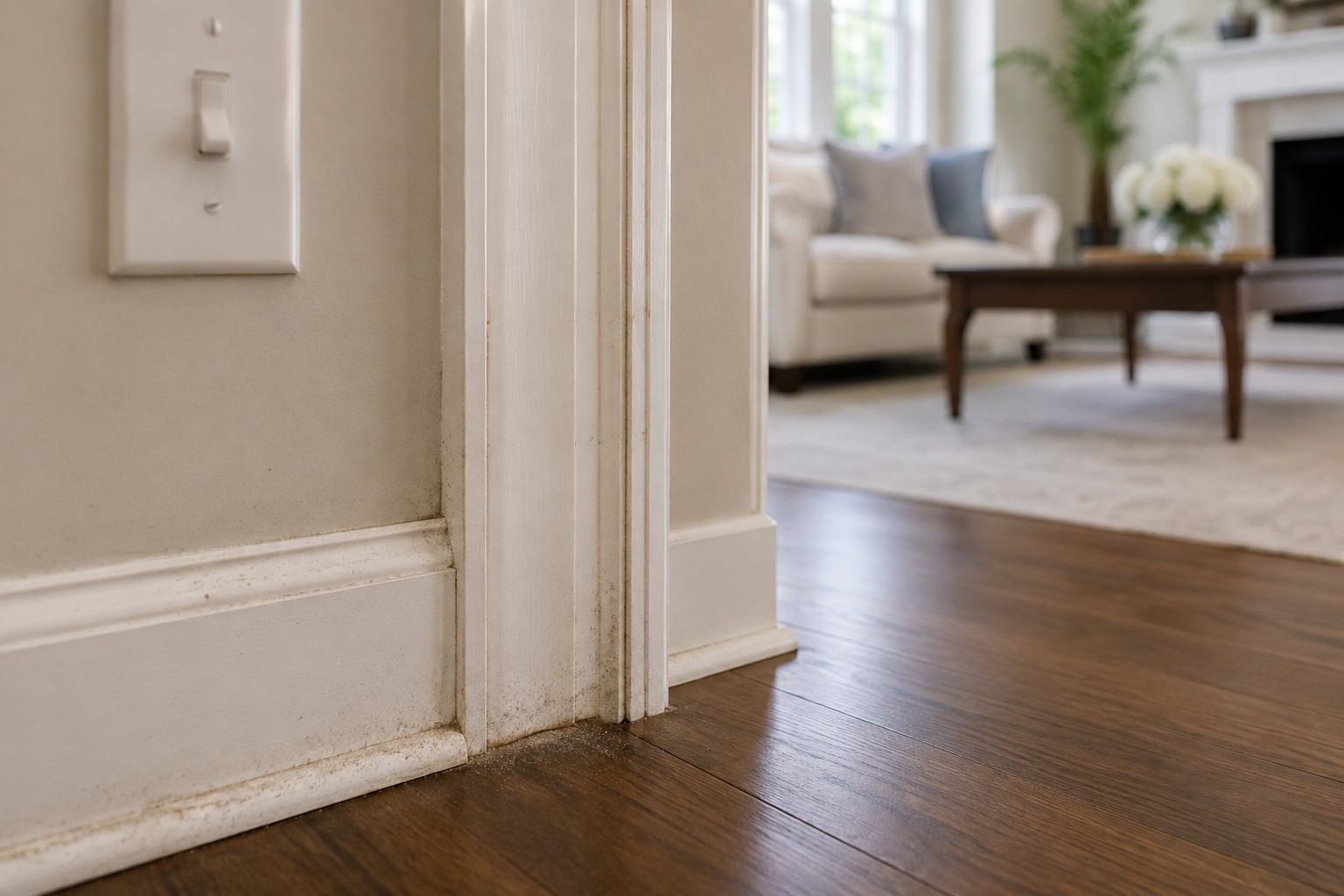
4. Ceiling Fans and Light Fixtures
Ceiling fans can collect a surprising amount of dust, especially when they are not cleaned regularly.
When the fan is running, dust along the blades may be less noticeable. Once the fan is turned off—or sunlight hits the room—the buildup becomes much easier to see.
Dust can also collect on:
- Light fixtures
- Lamp shades
- Ceiling vents
- Recessed-light trim
- Hanging fixtures
- The tops of fan blades
These areas are often missed because they require a step stool, an extension duster, or extra care around delicate fixtures.
Cleaning high surfaces before cleaning the furniture and floors also matters. Otherwise, loosened dust may fall onto areas that have already been cleaned.
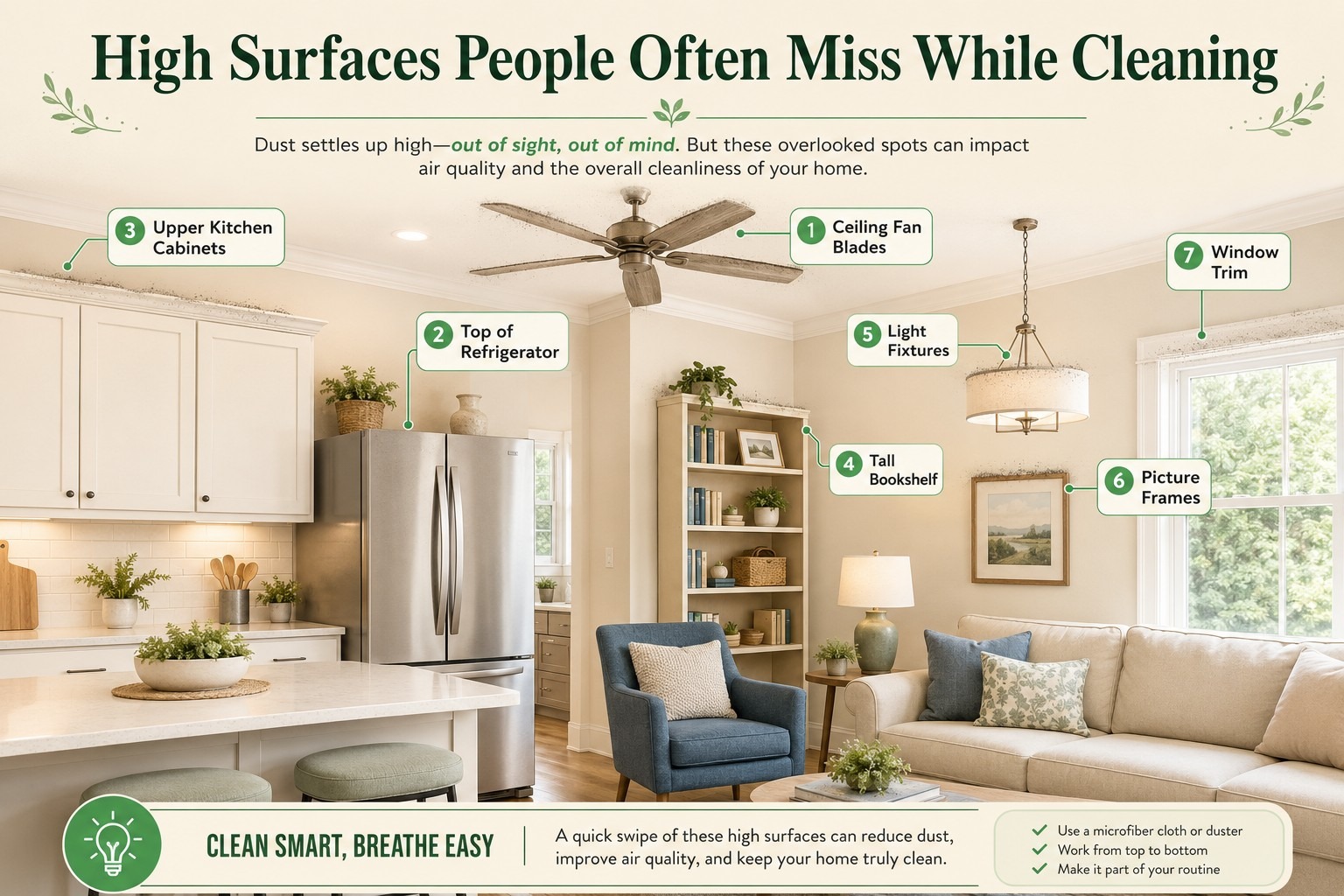
5. The Tops of Cabinets, Refrigerators, and Furniture
If a surface is above eye level, there is a good chance it does not receive regular attention.
Dust and grease may accumulate on top of kitchen cabinets, especially in areas near the stove. The top of the refrigerator can collect dust, crumbs, packaging, and items that were placed there temporarily and forgotten.
Other frequently missed high surfaces include:
- Tall bookcases
- Armoires
- Cabinet ledges
- Picture frames
- Curtain rods
- Window trim
- Tall headboards
Because these areas are not immediately visible, buildup can remain for months before anyone notices it.
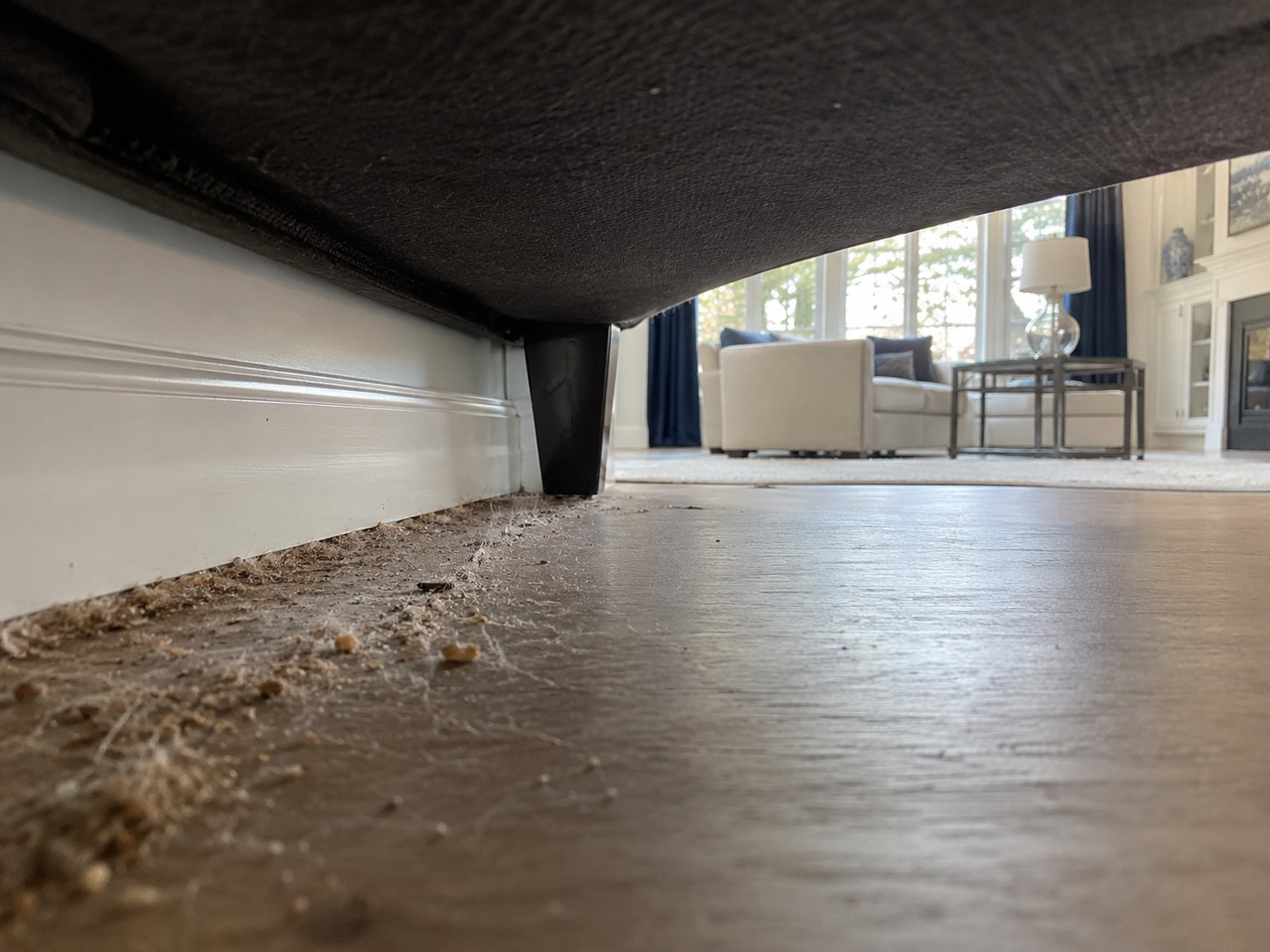
6. Areas Under and Behind Furniture
Vacuuming or mopping around furniture is faster than moving it. That is why dust, crumbs, pet hair, toys, and small household items often collect underneath:
- Sofas
- Beds
- Nightstands
- Dressers
- Dining-room tables
- Accent chairs
- Entryway benches
The areas behind furniture may also contain dust along the walls and baseboards.
You do not need to move every heavy piece of furniture during every cleaning. However, periodically reaching underneath accessible furniture can prevent debris from accumulating and spreading back into the room.
7. Window Sills, Tracks, and Blinds
Windows can make a room feel bright and open, but the surrounding details are commonly overlooked.
Dust may settle on blinds and window sills, while dirt, pollen, dead insects, and other debris collect inside the tracks.
A quick wipe of the glass does not always address:
- Window ledges
- Window locks
- Frames
- Tracks
- Blind slats
- Curtain rods
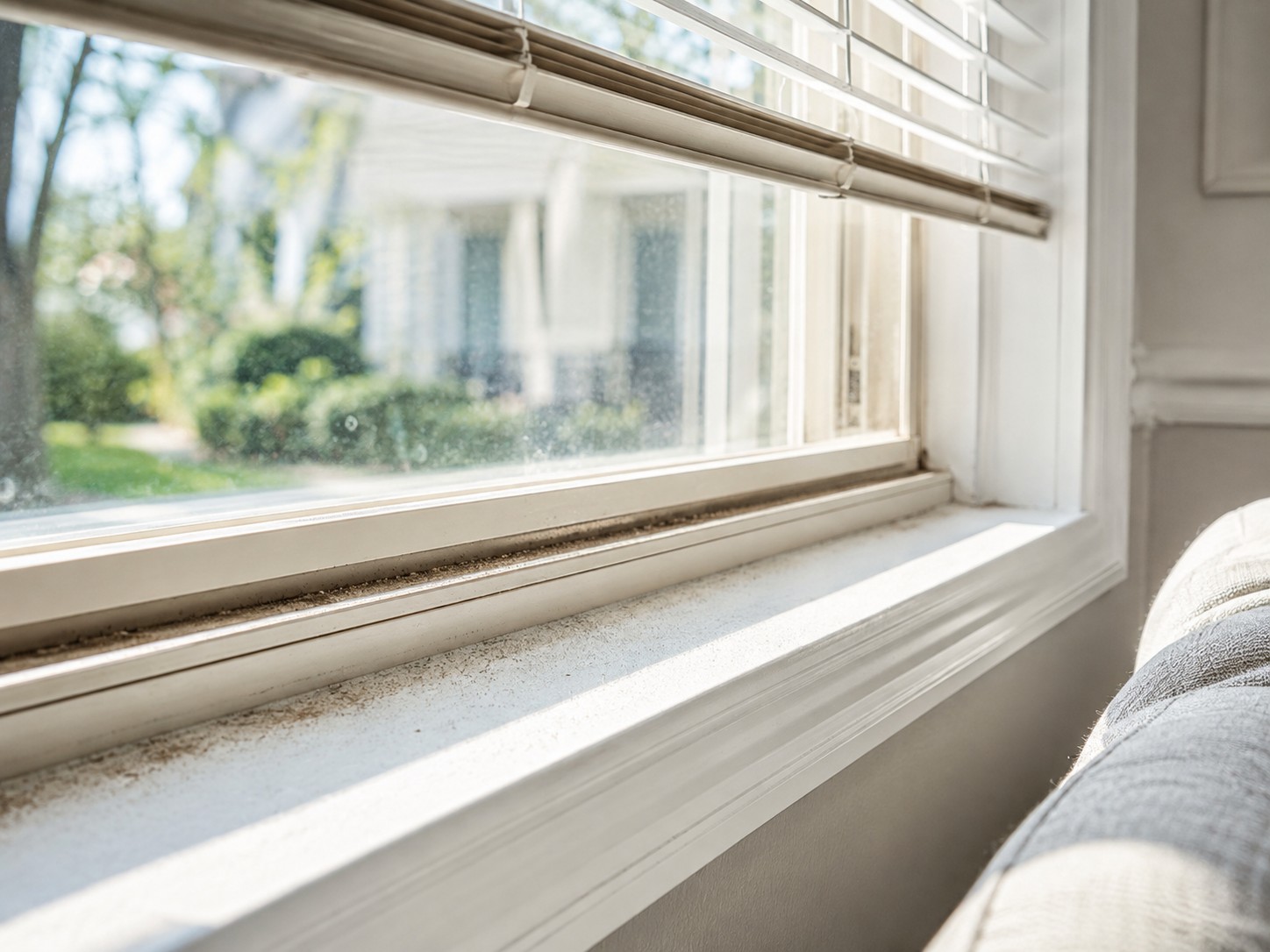
These areas can be especially noticeable when natural light shines through the window.
Instead of trying to clean every blind in the house at once, rotate rooms and clean a few windows during each home reset.
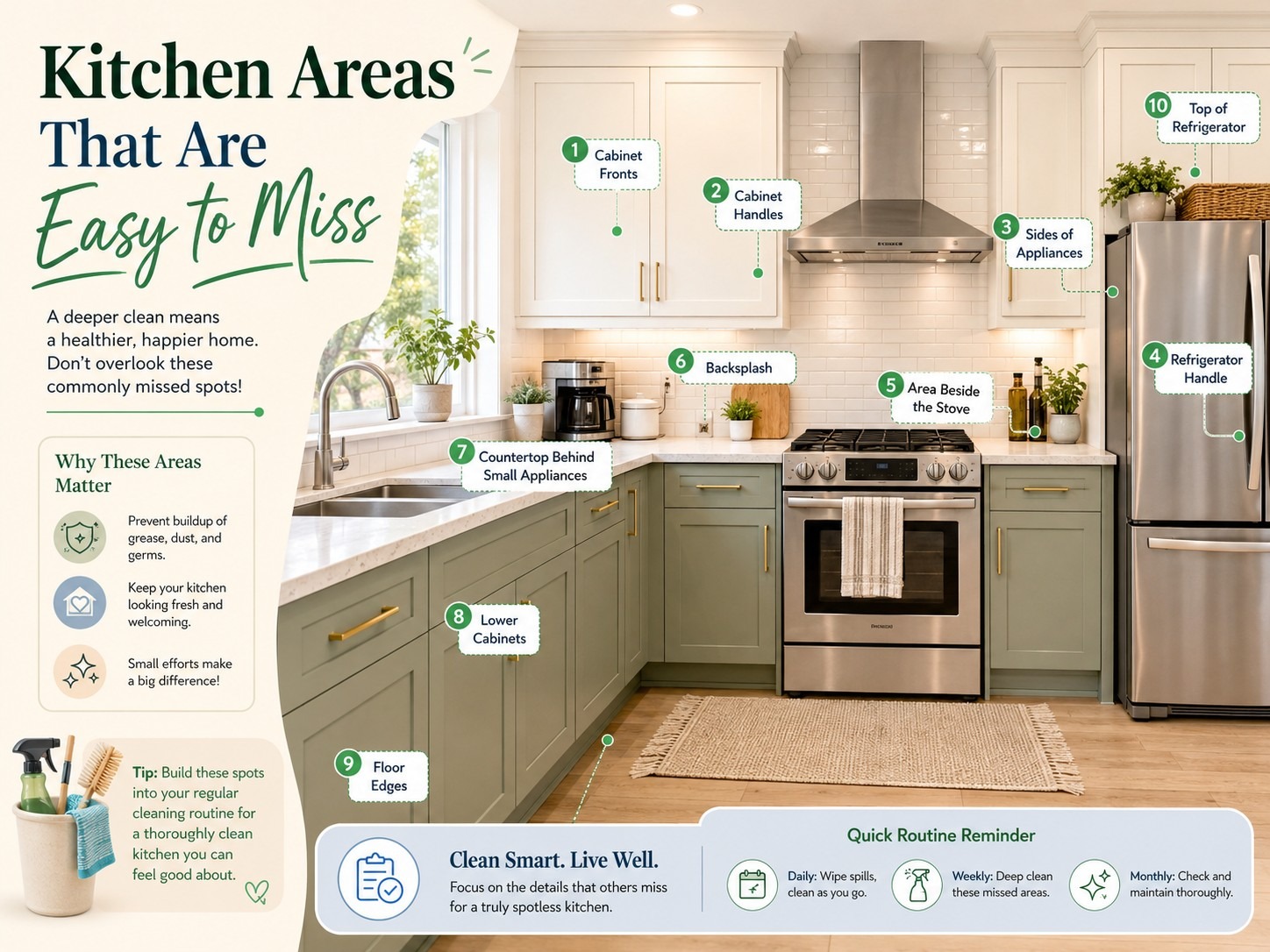
8. Kitchen Cabinet Fronts and Lower Cabinets
Kitchen counters, sinks, and stovetops usually receive the most attention. Cabinet fronts may be missed unless there is an obvious spill.
However, cabinet doors can collect:
- Fingerprints
- Food splatters
- Grease
- Dust
- Drips
- Marks around knobs and handles
Lower cabinets often need extra attention because they are exposed to spills, shoes, pets, vacuum cleaners, and floor-cleaning water.
The cabinets near the stove, trash can, sink, and food-preparation areas usually develop buildup faster than the rest.
9. The Sides and Fronts of Appliances
Cleaning the inside of an appliance is important, but the exterior details can also affect the appearance of the kitchen.
Commonly missed areas include:
- The sides of the stove
- The front of the dishwasher
- Refrigerator handles
- The area above the microwave
- Control knobs
- The lower edge of the oven
- The space between appliances and cabinets
Grease, crumbs, dust, and food residue may settle in these narrow spaces.
The kitchen may look clean at first glance, but buildup around appliances can make it feel as though something is still unfinished.
10. Backsplashes and Areas Behind Small Appliances
Kitchen backsplashes can collect cooking residue, water spots, crumbs, and grease.
The sections behind coffee makers, air fryers, toaster ovens, knife blocks, and other countertop appliances are especially easy to miss. Moving each item takes additional time, so many people simply wipe around them.
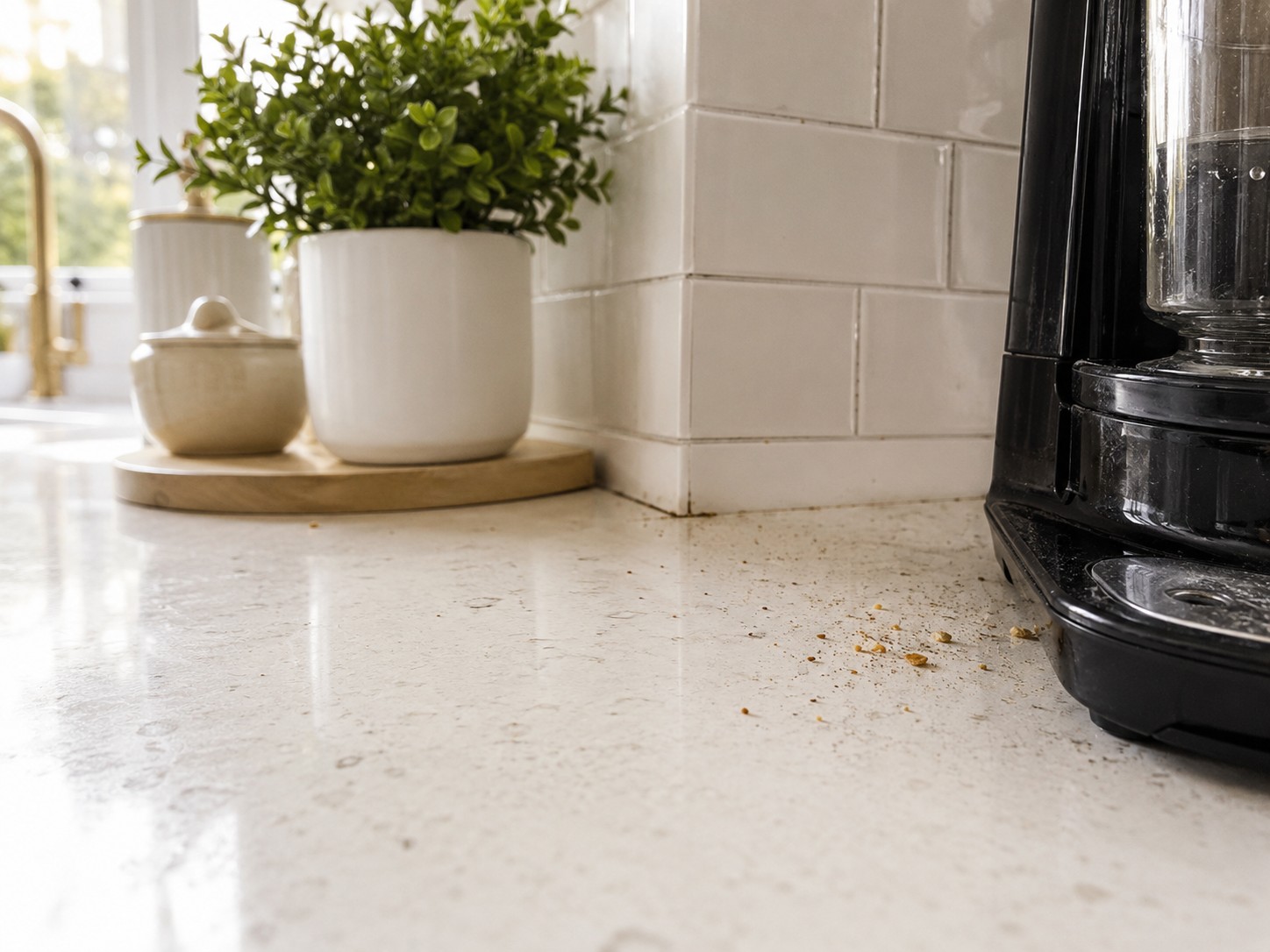
Over time, the hidden areas underneath and behind small appliances may collect:
- Crumbs
- Sticky residue
- Grease
- Dust
- Coffee grounds
- Water stains
Periodically clearing the counter and cleaning the entire surface can make the kitchen feel significantly fresher.
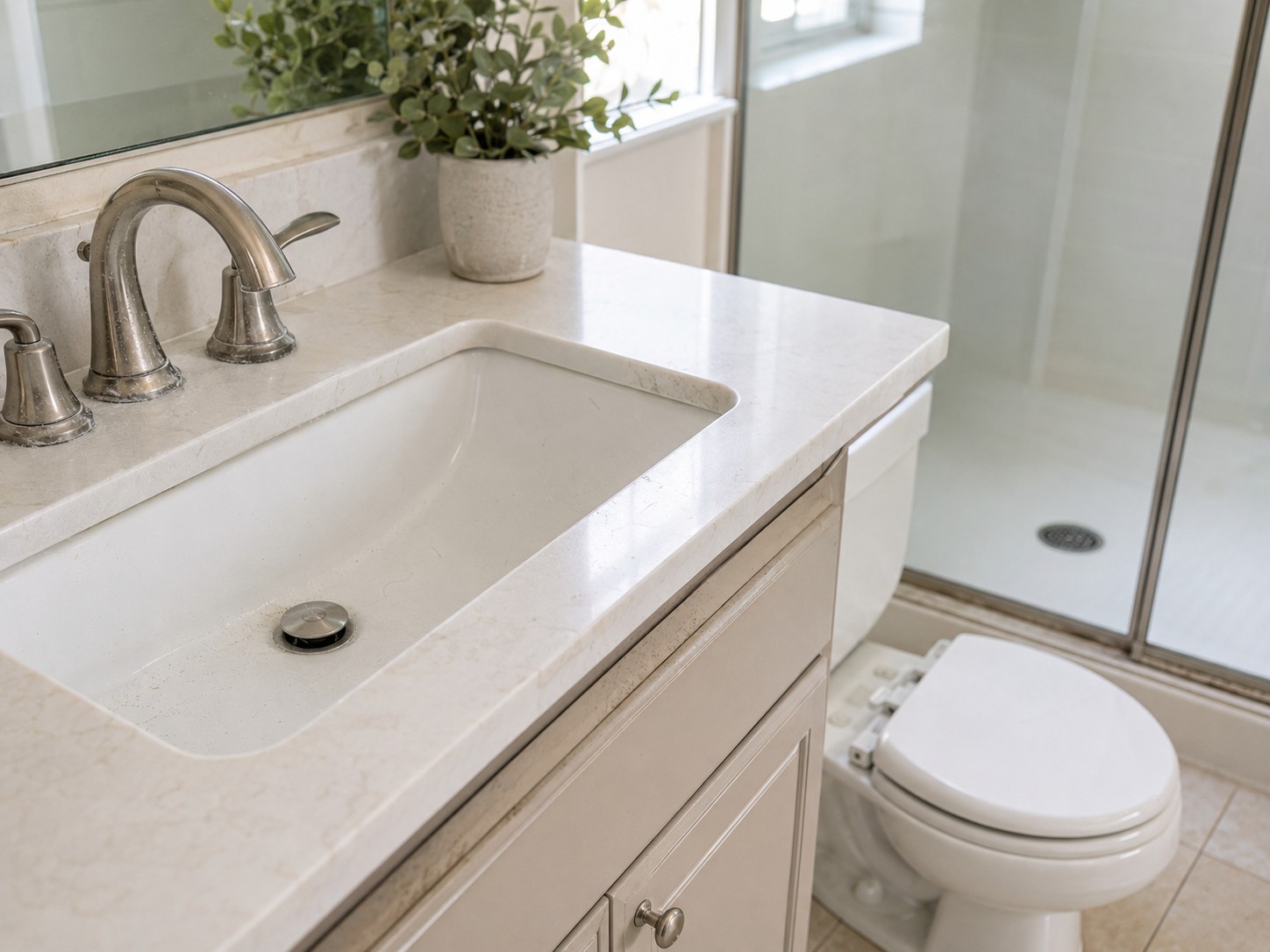
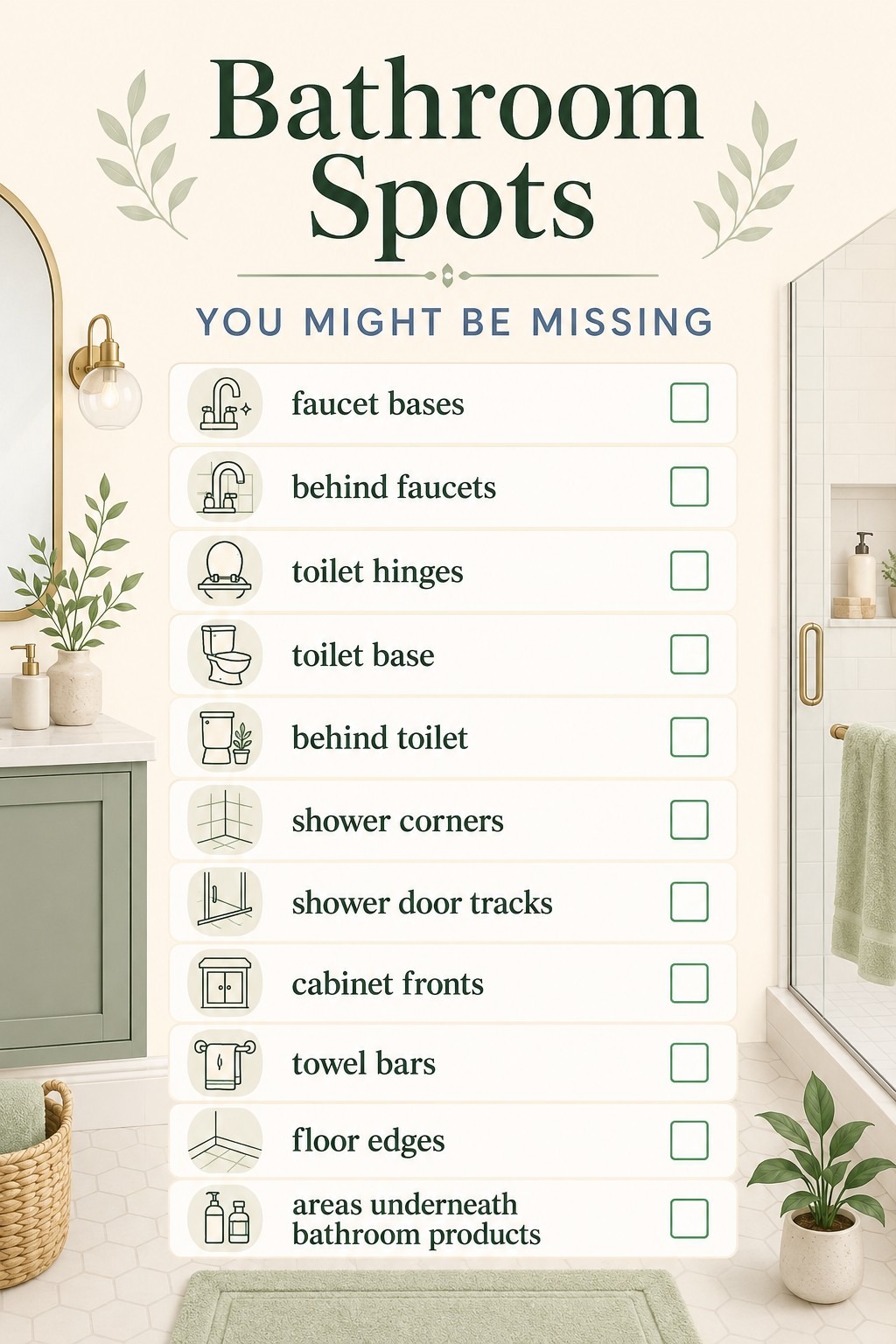
11. Bathroom Fixture Bases and Small Details
Bathrooms contain several narrow spaces where residue can collect.
Homeowners usually remember the toilet bowl, sink, shower, and countertops. They may overlook the smaller details around those fixtures.
Frequently missed bathroom areas include:
- The base of the faucet
- The area behind the faucet
- Toilet hinges
- The base of the toilet
- Toilet sides
- Cabinet fronts
- Towel bars
- Toilet-paper holders
- Shower-door tracks
- The edges around the bathtub
Soap residue, dust, hair, water spots, and bathroom-product buildup often settle in these locations.
Detailed bathroom cleaning can be time-consuming because each fixture may require attention from several angles.
12. Shower Corners, Tracks, and Product Areas
A shower may be rinsed regularly without receiving a thorough detailed cleaning.
Corners, grout lines, shelves, door tracks, and the areas underneath bottles can develop buildup even when the main shower walls appear clean.
Before cleaning the shower, remove:
- Shampoo bottles
- Soap containers
- Razors
- Bath toys
- Shower accessories
This makes it easier to clean the entire surface instead of wiping around each product.
Keeping fewer products inside the shower can also make regular maintenance easier.
13. The Area Around and Behind the Toilet
The front of the toilet may receive regular cleaning, while the sides, base, and surrounding floor are missed.
Dust and hair can collect behind the toilet, especially in smaller bathrooms where the space is difficult to reach.
Remember to clean:
- The floor behind the toilet
- The sides of the toilet
- The base
- The wall or baseboard nearby
- The toilet handle
- The hinges beneath the seat
Using a narrow cleaning tool or vacuum attachment may make these areas easier to reach.
14. Laundry-Room Surfaces
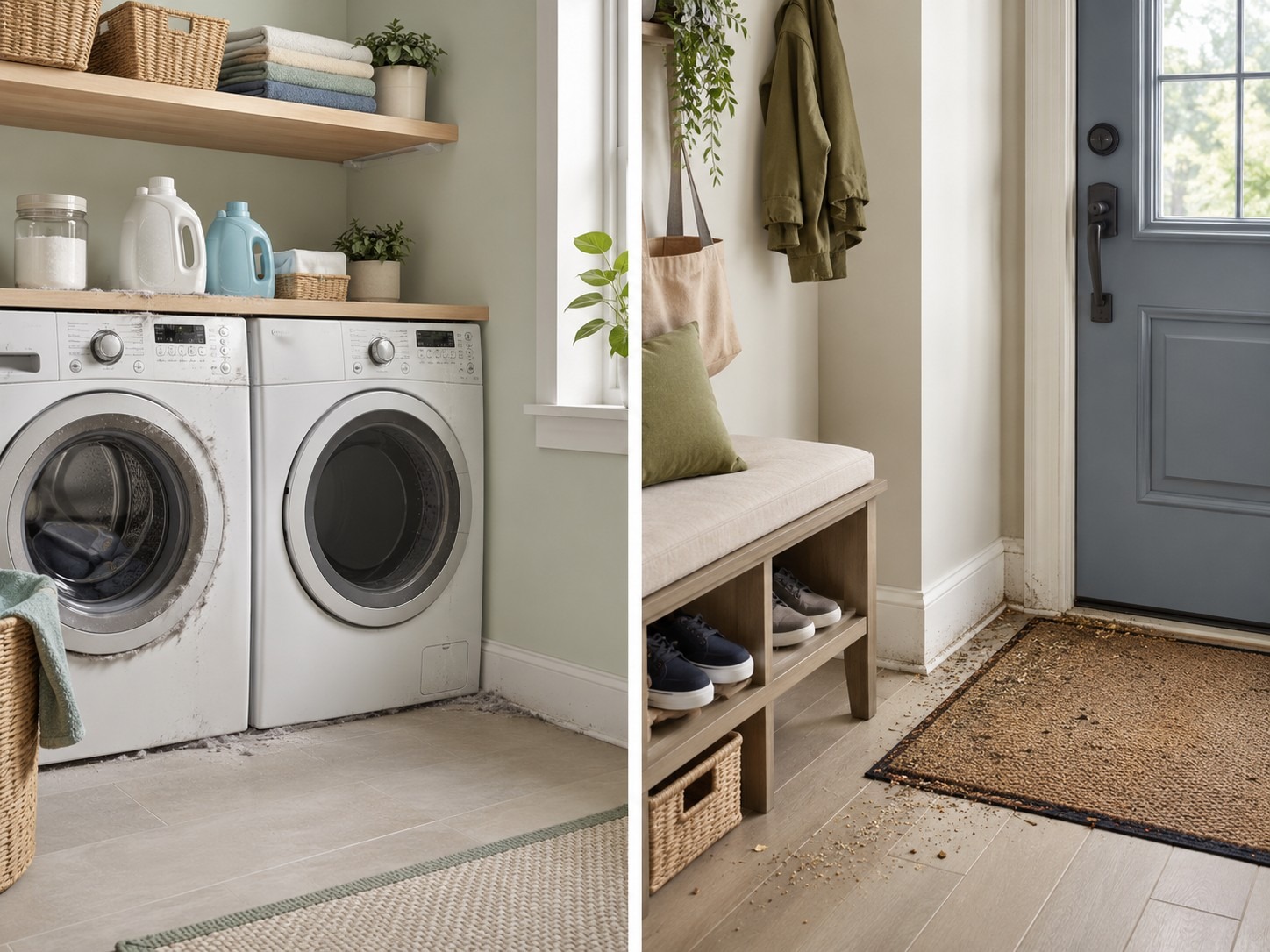
The laundry room works hard, but it is often treated as a utility space rather than a room that needs regular cleaning.
Lint and dust can settle on:
- The washer and dryer
- Shelves
- Cabinet fronts
- Detergent containers
- Baseboards
- The floor behind laundry baskets
- The area around the machines
Drips from detergent and fabric products may also create sticky residue on machines or shelves.
A quick laundry-room reset can help prevent lint, dust, and product buildup from spreading to freshly washed clothes.
15. Entryways and Shoe Storage Areas
Entryways collect much of the dirt that enters the home.
Even when the visible floor is swept or vacuumed, debris may remain:
- Under shoe racks
- Behind baskets
- Along baseboards
- Beneath entryway benches
- In corners
- Under door mats
- Around the front door
Charlotte homes can experience tracked-in pollen, dust, grass, mud, and everyday outdoor debris. Cleaning under mats and storage furniture can help keep that buildup from traveling into the rest of the home.
16. Trash Cans and the Areas Around Them
Taking out the trash does not necessarily mean the trash area is clean.
Kitchen and bathroom trash cans may develop:
- Food residue
- Drips
- Dust
- Odors
- Sticky spots
- Debris underneath the liner
The wall, cabinet, or floor surrounding the trash can may also need attention.
Periodically wiping the inside and outside of the container can make the kitchen or bathroom feel noticeably fresher.
17. Vacuum Attachments and Cleaning Tools
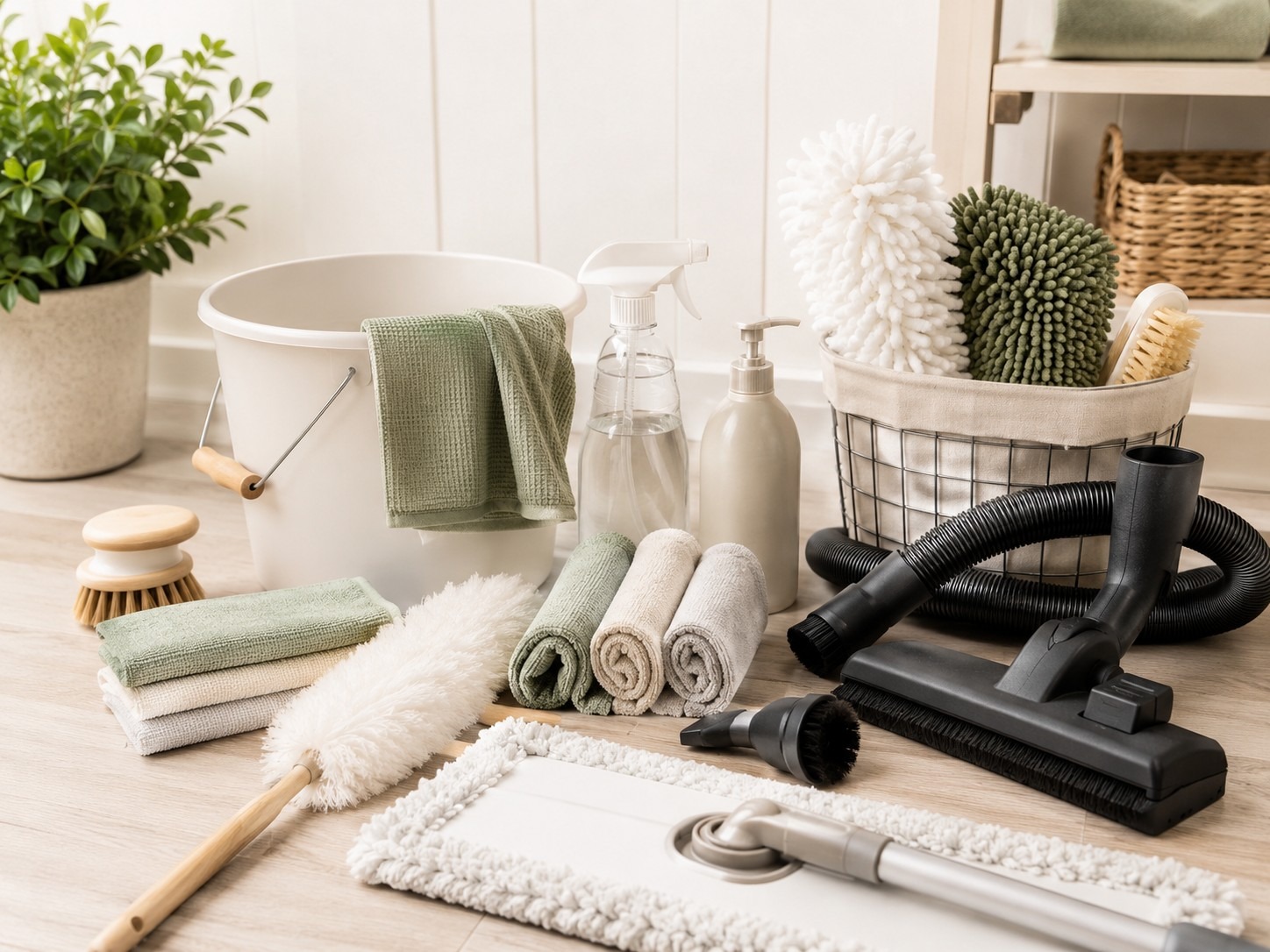
Sometimes a home does not feel completely clean because the tools being used also need attention.
A vacuum with a full filter, tangled brush roll, or clogged attachment may not pick up dirt effectively. A heavily used mop head can spread residue rather than remove it.
Regularly check and clean:
- Vacuum filters
- Brush rolls
- Vacuum attachments
- Mop heads
- Reusable cleaning cloths
- Buckets
- Sponges
- Dusting tools
Starting with clean tools makes the entire cleaning process more effective.
Why Are These Areas So Easy to Miss?
Most DIY cleaning happens within a limited amount of time. Homeowners naturally focus on the tasks that make the biggest immediate visual difference, such as:
- Clearing clutter
- Wiping counters
- Cleaning sinks
- Vacuuming floors
- Mopping
- Making beds
- Cleaning the toilet
By the time those tasks are finished, there may not be enough time or energy left for doors, baseboards, cabinet fronts, window tracks, fixtures, and other details.
That does not mean you are cleaning incorrectly. It simply means maintaining an entire home requires more time and attention than many busy households have available every week.
A Simple Way to Catch More Missed Areas
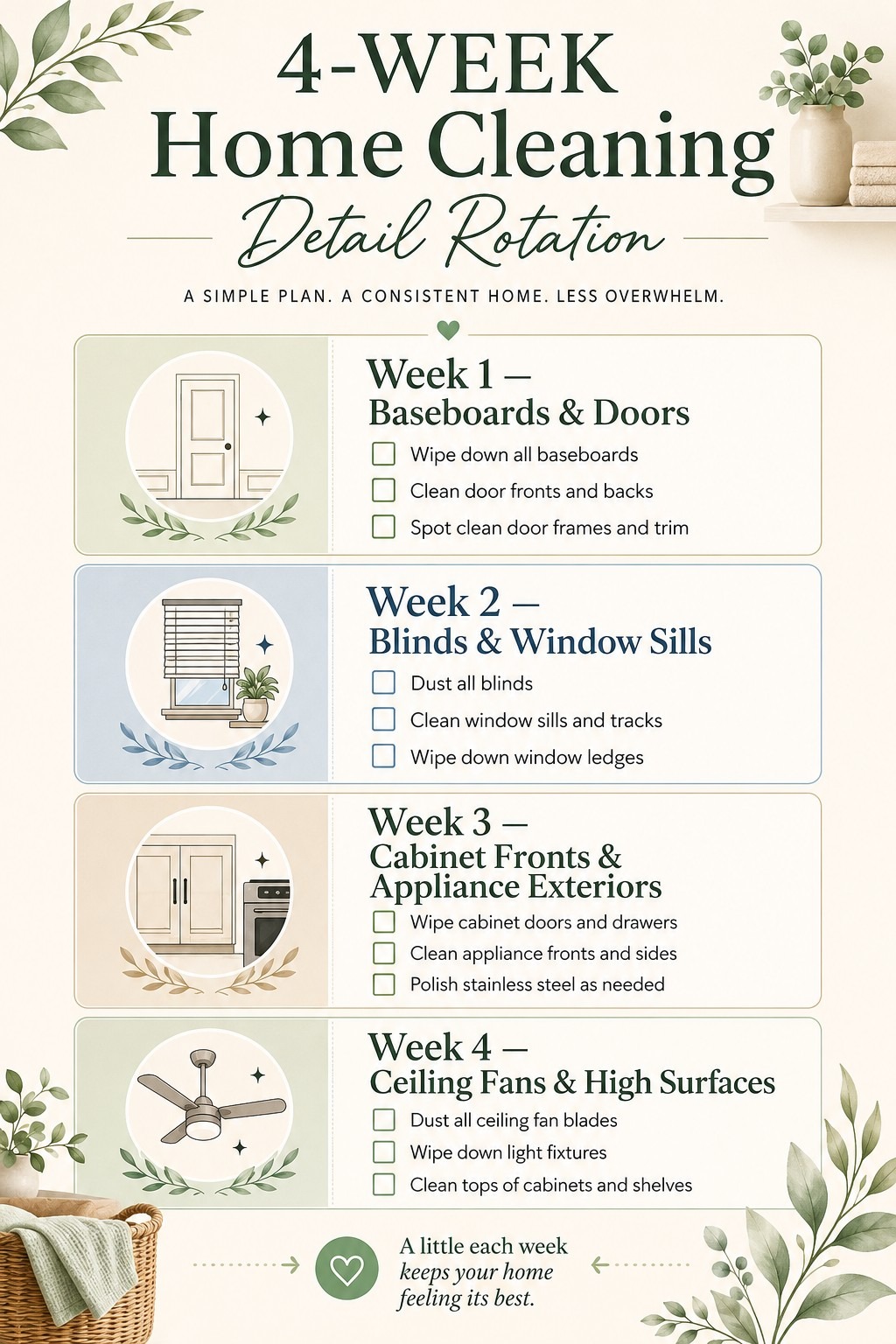
Instead of trying to detail the entire home every weekend, create a rotating schedule.
For example:
- Week one: Baseboards and doors
- Week two: Blinds and window sills
- Week three: Cabinet fronts and appliance exteriors
- Week four: Ceiling fans and high surfaces
This allows you to work through detailed areas gradually without turning every weekend into a full-home deep-cleaning project.
You can also keep a short checklist for each room. A written list makes it easier to remember smaller areas that are often skipped.
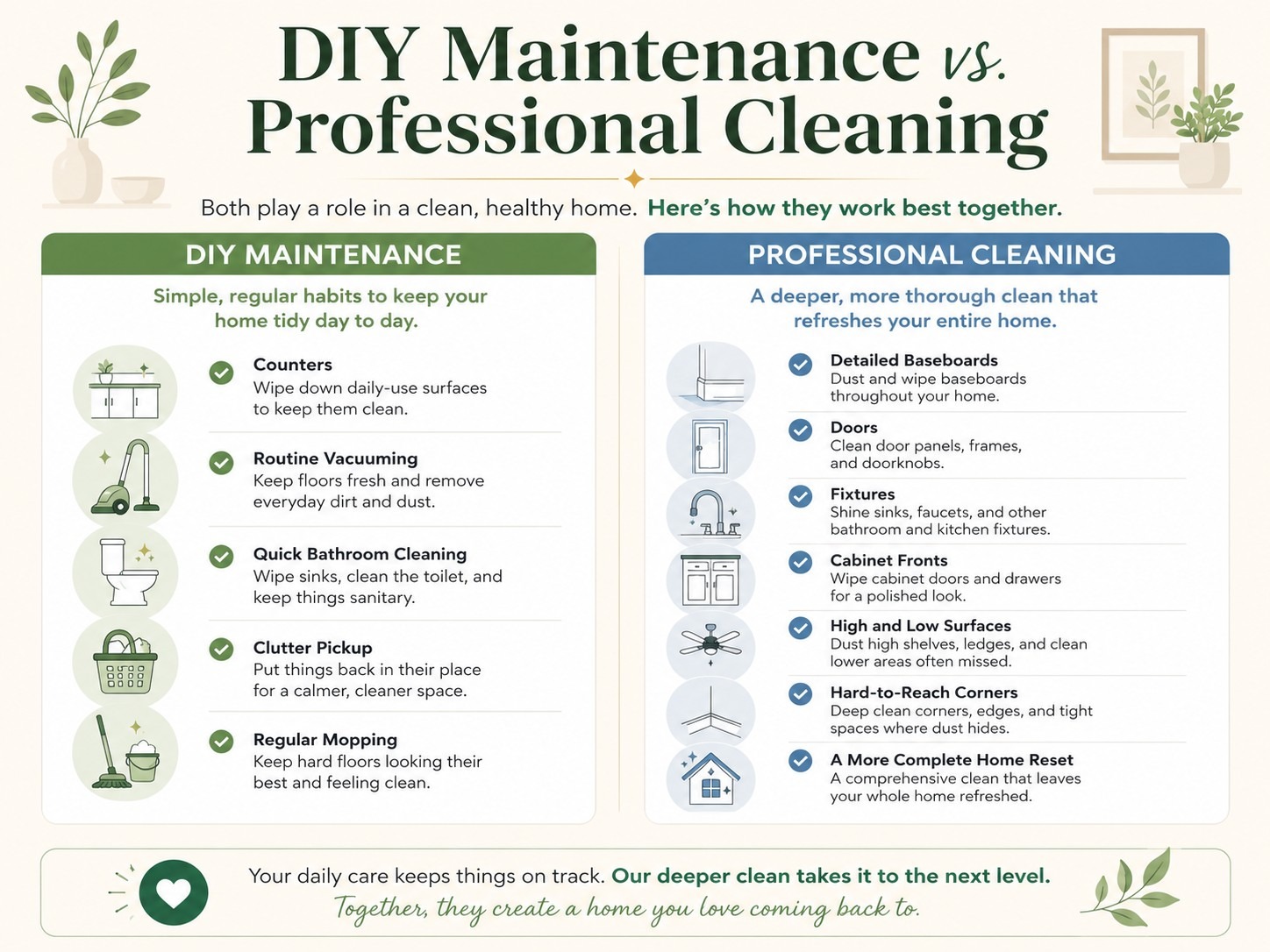
When DIY Cleaning May Not Be Enough
Regular DIY cleaning can help maintain your home, but professional cleaning may be useful when:
- Dust and buildup keep returning
- You are falling behind on detailed tasks
- Baseboards, doors, or cabinets need extra attention
- Your schedule leaves little time for cleaning
- Pet hair has reached corners and furniture edges
- The bathrooms or kitchen need a stronger reset
- You are preparing for guests or a special event
- You want to begin a recurring cleaning routine
- The home has not received a detailed cleaning recently
Professional cleaners follow a more structured process and can focus on both the major surfaces and the small details that influence how clean the home feels.
Professional Cleaning Helps Complete the Picture
A home does not need to be spotless every day to feel comfortable.
However, when overlooked dust, grease, hair, and residue begin collecting throughout multiple rooms, routine surface cleaning may no longer create the result you want.
Professional house cleaning can help address the areas that are difficult to reach, easy to forget, or too time-consuming to include in your regular routine.
It can also give you a cleaner starting point that is easier to maintain between visits.

Need Help Catching the Areas You Keep Missing?
Need help resetting your home? Book a professional cleaning with My Clean Charlotte Maids. Call/text (980) 888-8541 or book online.
Whether your home needs a one-time detailed reset or reliable recurring upkeep, My Clean Charlotte Maids can help you spend less time catching up and more time enjoying your home.
We proudly serve:
Charlotte, Fort Mill, Rock Hill, Pineville, Matthews, Huntersville, Concord, Gastonia, Mooresville, Fayetteville, and Pinehurst.
Call or text (980) 888-8541 or visit mycleancharlottemaids.com/book/ to schedule your professional cleaning.



Stay Updated
Fresh cleaning tips, home-care hacks, and smart living ideas — delivered weekly from My Clean Charlotte Maids.