

Baseboards are one of those areas that are easy to overlook—until sunlight hits them and suddenly every layer of dust, pet hair, pollen, and scuffing becomes noticeable.
For busy Charlotte families, keeping baseboards clean can be challenging. Seasonal pollen enters through doors and windows, pet hair gathers along the walls, and children leave fingerprints, crumbs, and marks in high-traffic rooms.
Fortunately, baseboards do not need to be cleaned every day or even every week. A simple maintenance schedule can keep them looking fresh without adding another major chore to your routine.
This guide explains how often to schedule baseboard cleaning, which areas need the most attention, and when adding baseboards to a professional deep cleaning service may be the best choice.
Quick Answer: How Often Should You Clean Baseboards?
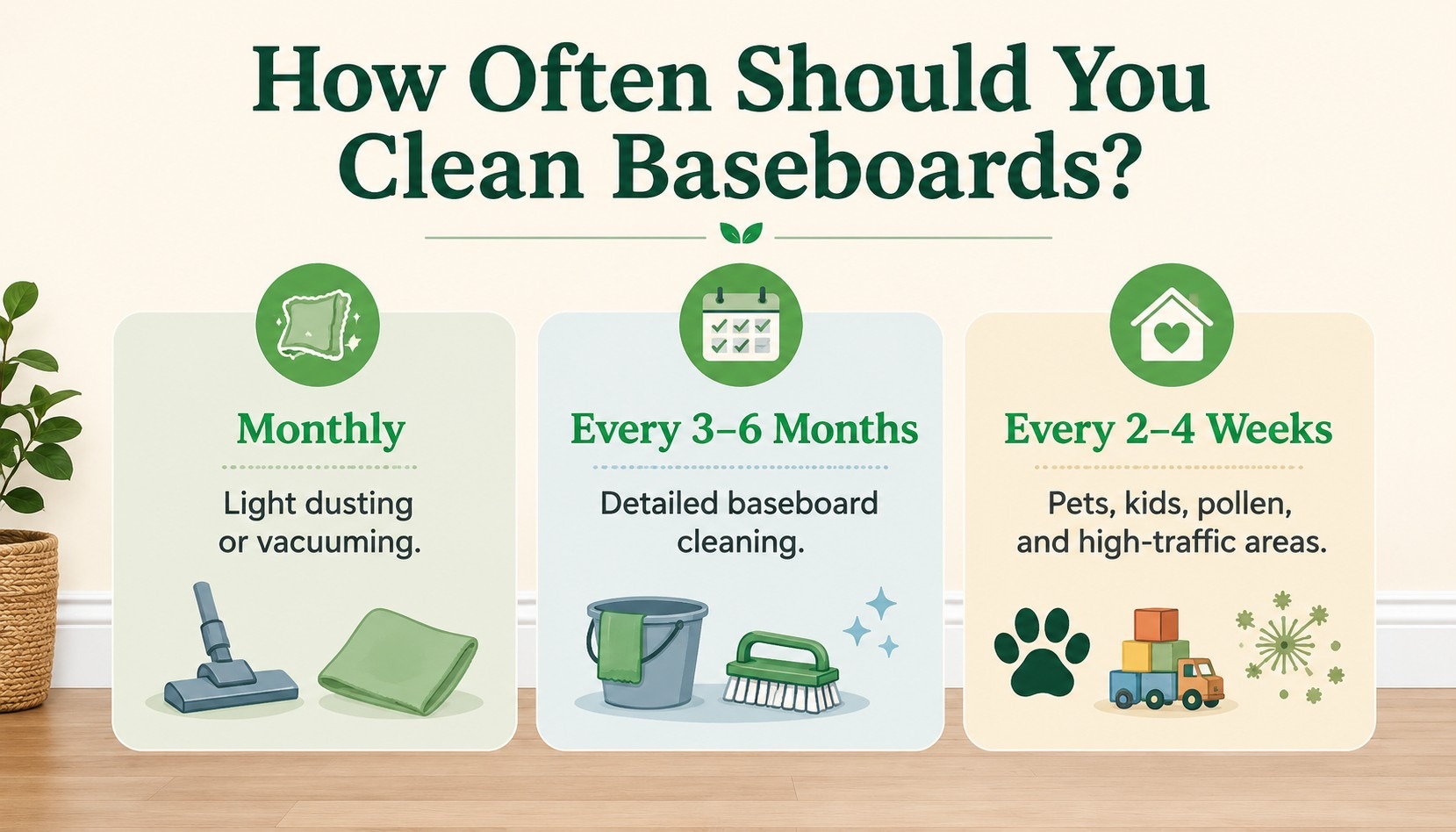
Most Charlotte homes should have baseboards:
- Lightly dusted or vacuumed about once a month
- Detailed cleaned every three to six months
- Cleaned every two to four weeks in busy areas with pets, children, heavy foot traffic, or frequent pollen exposure
You may need to clean them sooner if you notice visible dust, pet hair, yellow pollen residue, sticky buildup, scuff marks, or dirt collecting behind furniture.
Baseboard Cleaning Schedule at a Glance
| Home Situation | Suggested Frequency |
| Low-traffic rooms | Every three to six months |
| Most family homes | Light cleaning monthly and detailed cleaning every three to six months |
| Homes with pets | Every two to four weeks in high-traffic areas |
| Entryways, kitchens, and playrooms | Every two to four weeks or when visibly dirty |
| Before guests or special events | Spot-clean visible baseboards |
| Before starting recurring cleaning | Include baseboards in a deep cleaning or select them as an add-on |
This schedule is a helpful starting point. Your home may need more or less attention depending on pets, children, foot traffic, seasonal pollen, and how often you vacuum and mop.
Why Do Baseboards Get Dirty So Quickly?
Baseboards sit directly above the floor, which makes them a natural collection point for dust and debris moving throughout the home.
Common buildup includes:
- Dust from floors, furniture, and air vents
- Pollen entering through doors and windows
- Pet hair and dander
- Dirt carried inside on shoes
- Food crumbs in kitchens and dining areas
- Moisture and residue in bathrooms
- Scuff marks from shoes, toys, bags, and vacuum cleaners
- Fingerprints from children
- Cobwebs in corners and behind furniture
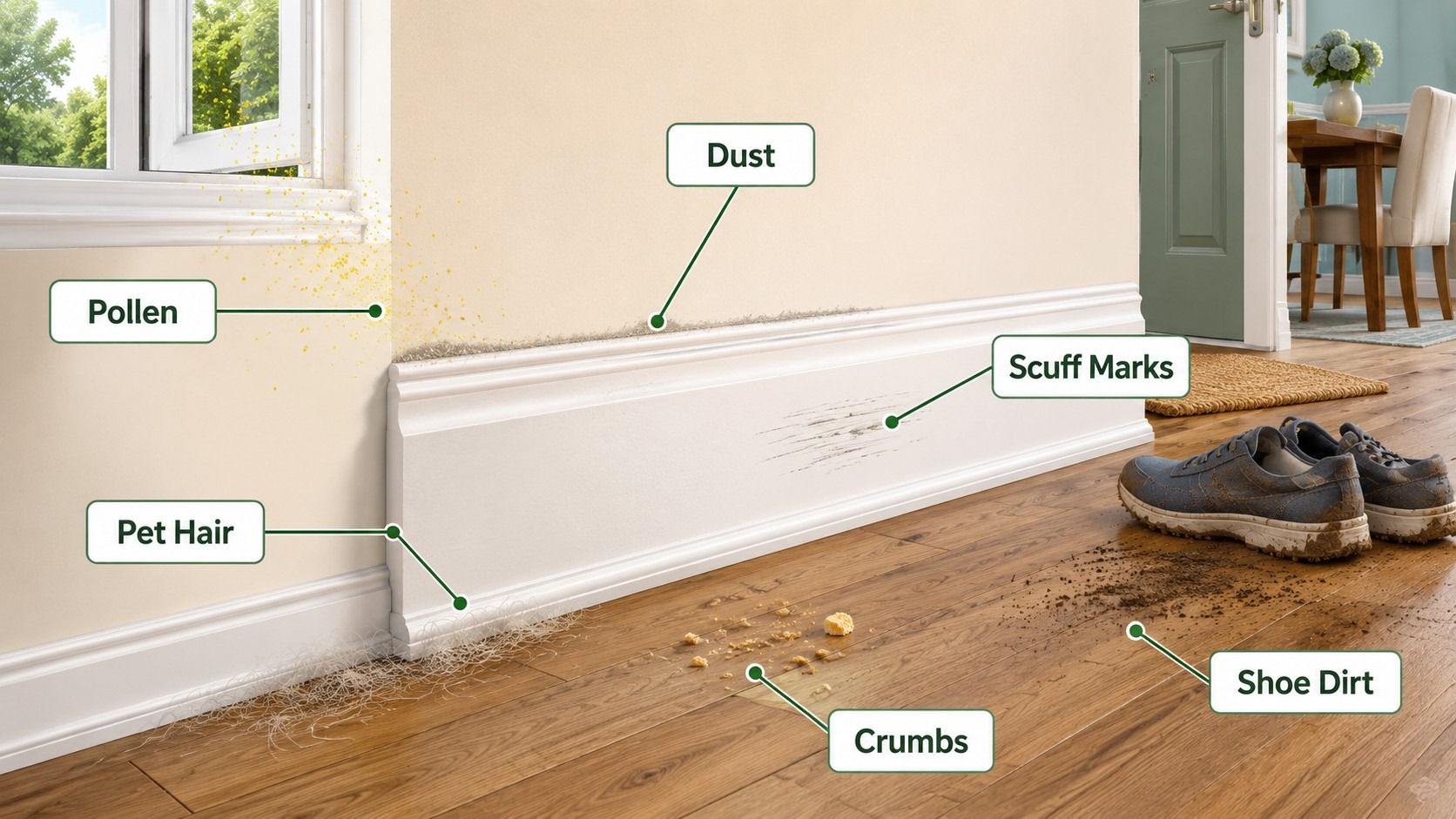
Even when floors are cleaned regularly, dust can settle along the top edges and decorative grooves of the baseboards.
White baseboards tend to show buildup quickly. Darker trim or natural wood may hide dust longer, but that does not mean it is not collecting there.
Light Baseboard Cleaning: About Once a Month
A quick monthly cleaning can prevent dust, pollen, and pet hair from turning into heavier buildup.
Light baseboard cleaning may include:
- Dusting the top edge
- Vacuuming along the trim
- Removing visible pet hair
- Wiping fresh fingerprints
- Spot-cleaning small marks
- Checking corners for cobwebs
Monthly maintenance is usually enough for lower-traffic areas such as guest bedrooms, formal dining rooms, and home offices.
High-use areas may need attention more often.
Detailed Baseboard Cleaning: Every Three to Six Months
Detailed baseboard cleaning goes beyond removing loose dust.
It may include:
- Wiping the entire baseboard surface
- Cleaning decorative grooves and ledges
- Removing stuck-on dirt
- Spot-cleaning scuff marks
- Cleaning corners and floor edges
- Reaching behind movable furniture
- Removing buildup around doors and entryways
Many Charlotte families schedule this type of cleaning seasonally or include it when booking a professional deep cleaning.

Charlotte Pollen Can Make Baseboards Dirtier
Charlotte pollen does not stay outside.
It enters homes through open doors, windows, clothing, shoes, pets, and ventilation systems. Once inside, fine pollen particles settle on:
- Floors
- Window sills
- Furniture
- Ceiling fans
- Air vents
- Baseboards
During heavier pollen seasons, you may notice a faint yellow or dusty film forming along the edges of your floors and trim.
Homes where windows are frequently opened or family members spend a lot of time outdoors may need more frequent baseboard cleaning during spring.
To help reduce indoor pollen:
- Remove shoes near the entrance
- Wipe pets’ paws after outdoor time
- Vacuum entryways regularly
- Change HVAC filters as recommended
- Keep windows closed on high-pollen days
- Wash pet bedding and frequently used blankets
- Dust baseboards before buildup becomes noticeable
These habits will not eliminate pollen completely, but they can slow down how quickly it accumulates.
Homes With Pets May Need More Frequent Cleaning
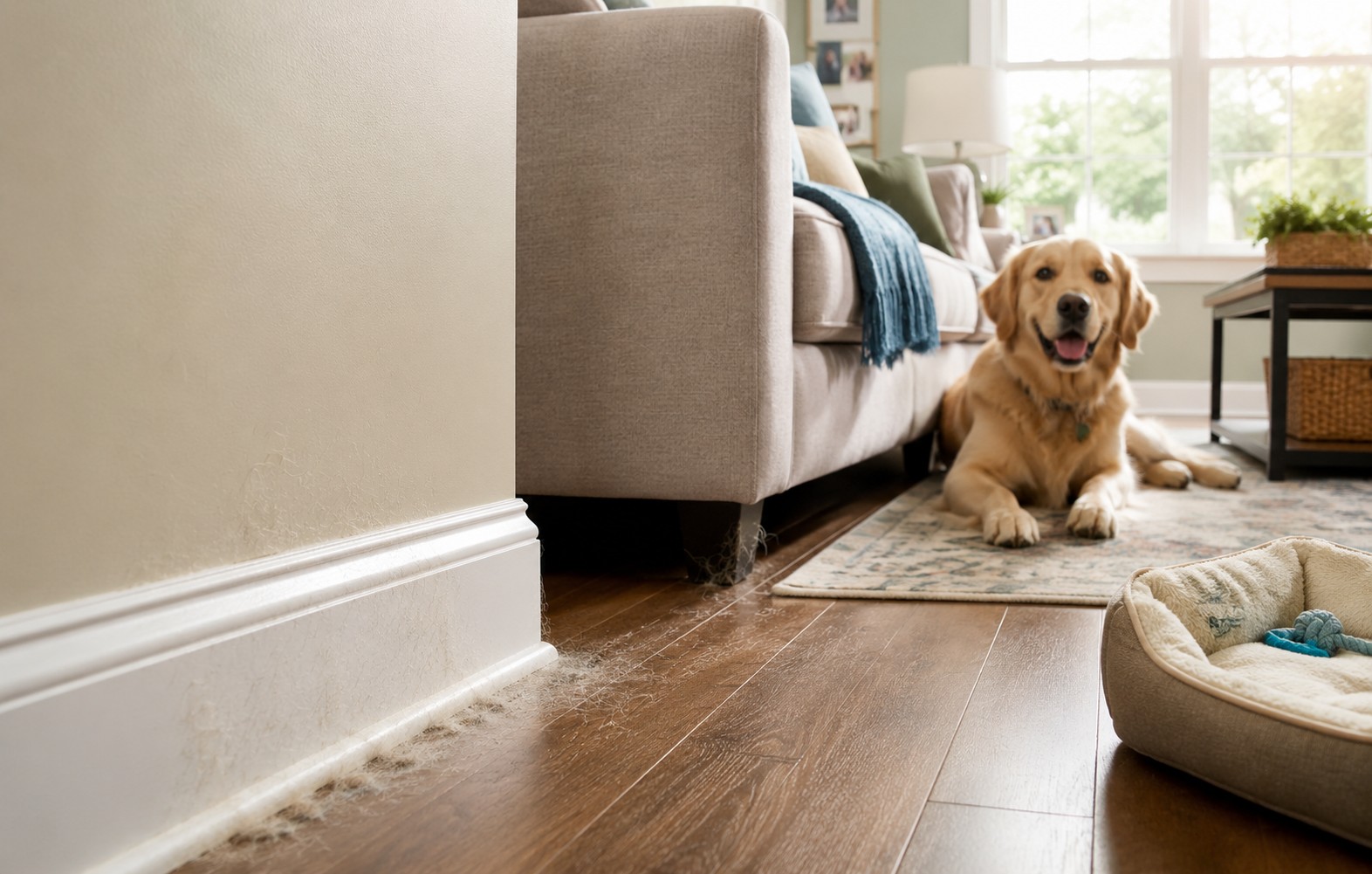
Pet hair tends to collect along walls, underneath furniture, around doorways, and beside baseboards because household air movement pushes loose hair toward the edges of a room.
Families with dogs or cats may notice pet hair collecting in:
- Hallways
- Living rooms
- Bedrooms
- Around pet beds
- Near food and water bowls
- Under sofas
- Behind doors
- Along staircases
Homes with shedding pets may benefit from light baseboard cleaning every two to four weeks in frequently used areas.
Vacuuming helps remove loose hair, but occasional wiping is still needed to remove pet dander, dust, and marks that cling to the trim
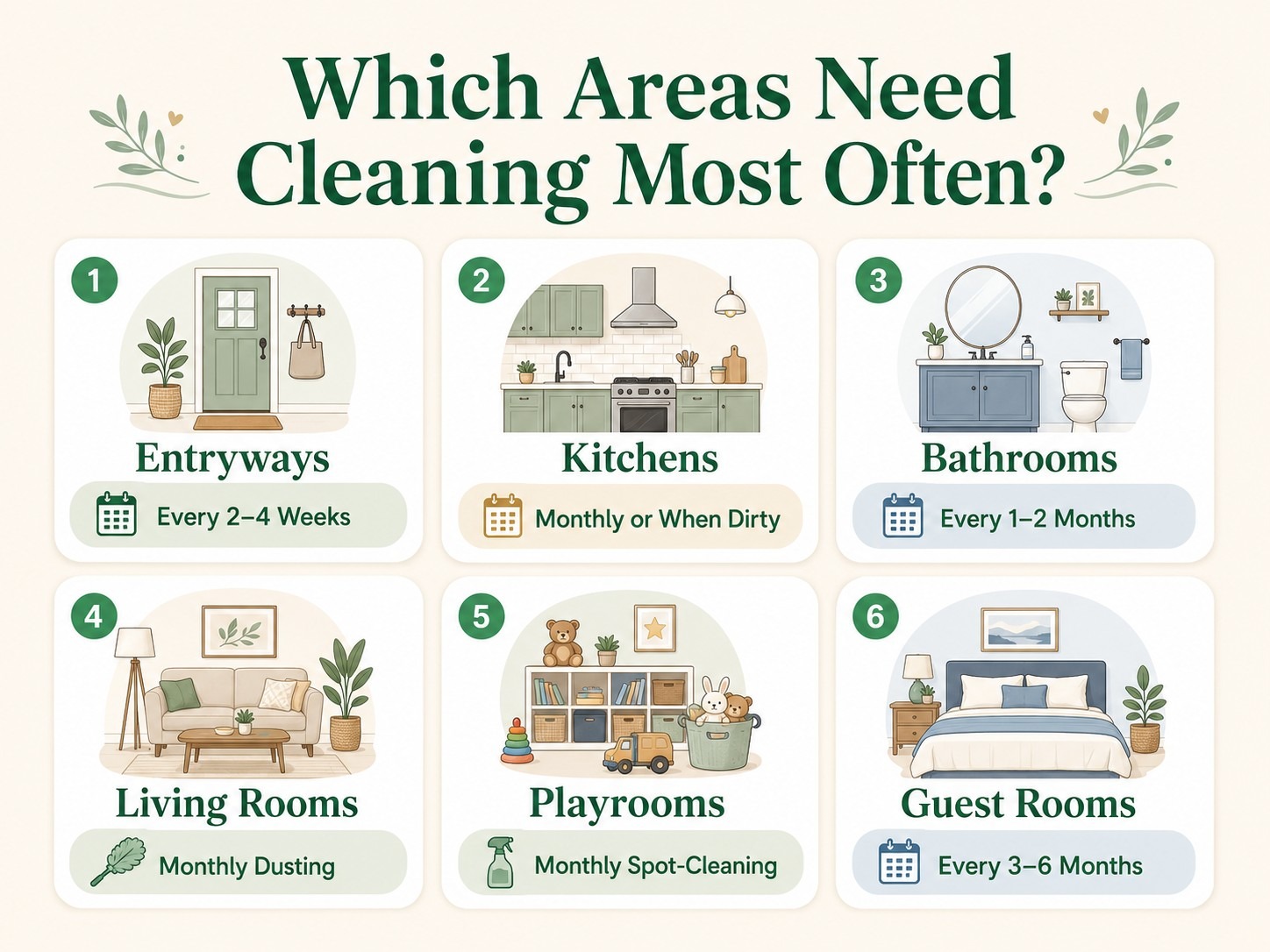
Which Rooms Need Baseboard Cleaning Most Often?
Not every room needs the same cleaning schedule.
| Room | Cleaning Frequency |
| Entryways and Mudrooms | Entryways collect dirt, grass, pollen, and moisture from shoes, bags, strollers, and pets. These areas may need cleaning every two to four weeks, especially during rainy weather or heavy pollen season. |
| Kitchens and Dining Areas | Kitchen and dining-room baseboards can collect: Food crumbs Grease residue Splashes Pet hair Sticky marks These spaces should generally be checked monthly and cleaned whenever visible buildup appears. |
| Bathrooms | Bathroom baseboards may develop a combination of dust, moisture, hair, and product residue. Cleaning them every one to two months can help prevent buildup around toilets, vanities, showers, and bathtubs. |
| Living Rooms | Living-room baseboards often collect dust, pet hair, and scuff marks, especially behind sofas and near entertainment areas. A monthly dusting and detailed seasonal cleaning usually work well. |
| Children’s Bedrooms and Playrooms | Children’s spaces often see more fingerprints, toy marks, crumbs, and scuffs than other rooms. Spot-clean these areas monthly and schedule a more detailed cleaning every few months. |
| Guest Rooms and Low-Traffic Areas | Guest bedrooms and formal spaces may only need baseboard cleaning every three to six months if they remain mostly unused. |
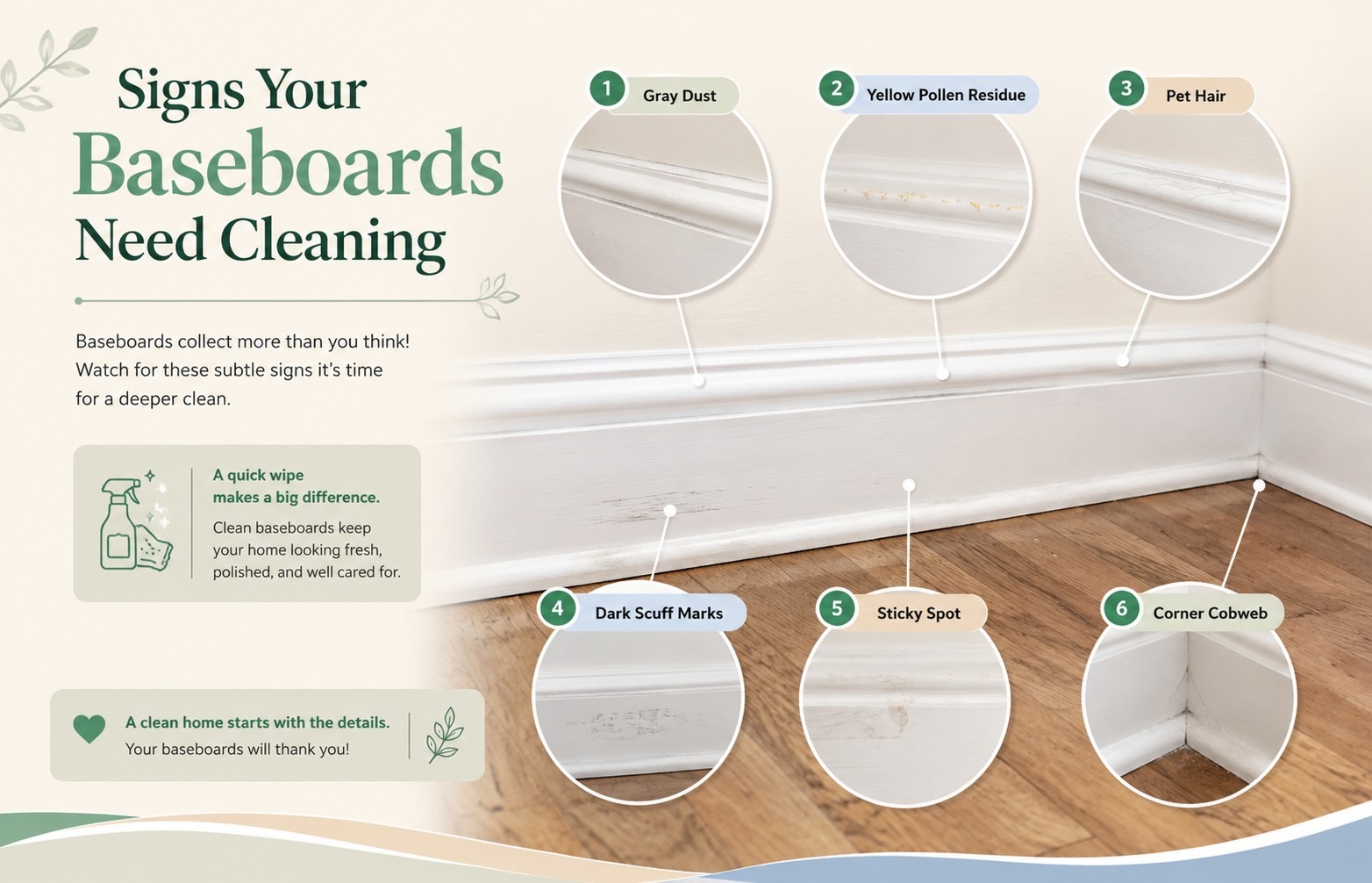
Signs Your Baseboards Need Cleaning
You do not always need to follow a strict calendar. Sometimes your home will show you that it is time.
Your baseboards may need attention when you notice:
- A visible gray layer of dust
- Yellow pollen residue
- Pet hair gathered along the walls
- Dark marks near doors
- Sticky or greasy spots
- Cobwebs in corners
- Dirt behind furniture
- Moisture-related buildup in bathrooms
- Trim that looks dull instead of bright
If dust returns shortly after cleaning, check nearby floors, vents, filters, and furniture. These areas may be contributing to the buildup.
Is Baseboard Cleaning Included in Regular Cleaning?
Cleaning checklists vary by company and service level.
Regular cleaning is typically designed to maintain the main surfaces of a home, including:
- Countertops
- Sinks
- Toilets
- Showers and tubs
- Mirrors
- Floors
- Accessible dusting surfaces
- Trash removal
Detailed baseboard cleaning often requires additional time. The cleaning professional may need to work around furniture, clean close to the floor, address each section individually, and treat scuff marks or stuck-on buildup.
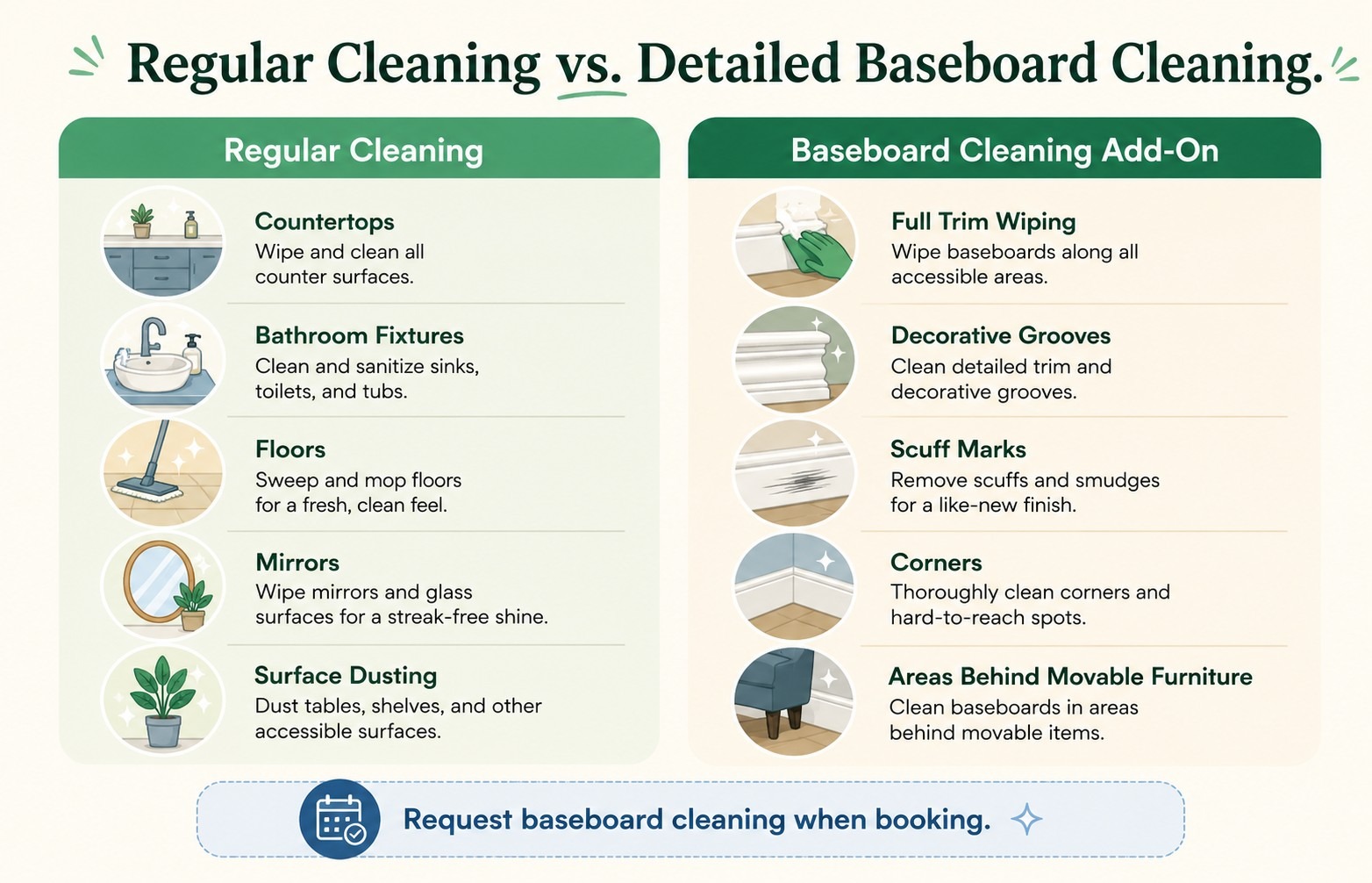
For this reason, detailed baseboard cleaning may be included in certain deep cleaning packages or offered as an add-on.
Before booking, ask whether the selected service includes:
- Dusting baseboard ledges
- Wiping the full surface
- Removing scuff marks
- Cleaning behind furniture
- Cleaning stair trim
- Treating heavy buildup
Knowing what is included helps ensure enough time is reserved for the service.
When Should You Add Baseboard Cleaning to Your Service?
Baseboard cleaning is a useful add-on when your home needs more attention than a standard maintenance visit provides.
Consider adding it when:
- You are preparing for guests
- You are hosting a holiday or family gathering
- You are starting recurring cleaning
- Your home has multiple pets
- Pollen has built up throughout the house
- You are preparing to sell your home
- You recently completed repairs or renovations
- You are moving into or out of a property
- The baseboards have not been cleaned in several months
- You want the home to feel fully refreshed
Fresh baseboards can make an entire room look brighter, especially when paired with clean floors, dusted furniture, and polished surfaces.
How to Clean Baseboards at Home
For light buildup, you can maintain your baseboards with a few basic tools.
You may need:
- A vacuum with a brush attachment
- Microfiber cloths
- Warm water
- Mild dish soap
- A soft sponge
- A small detailing brush
- A dry towel
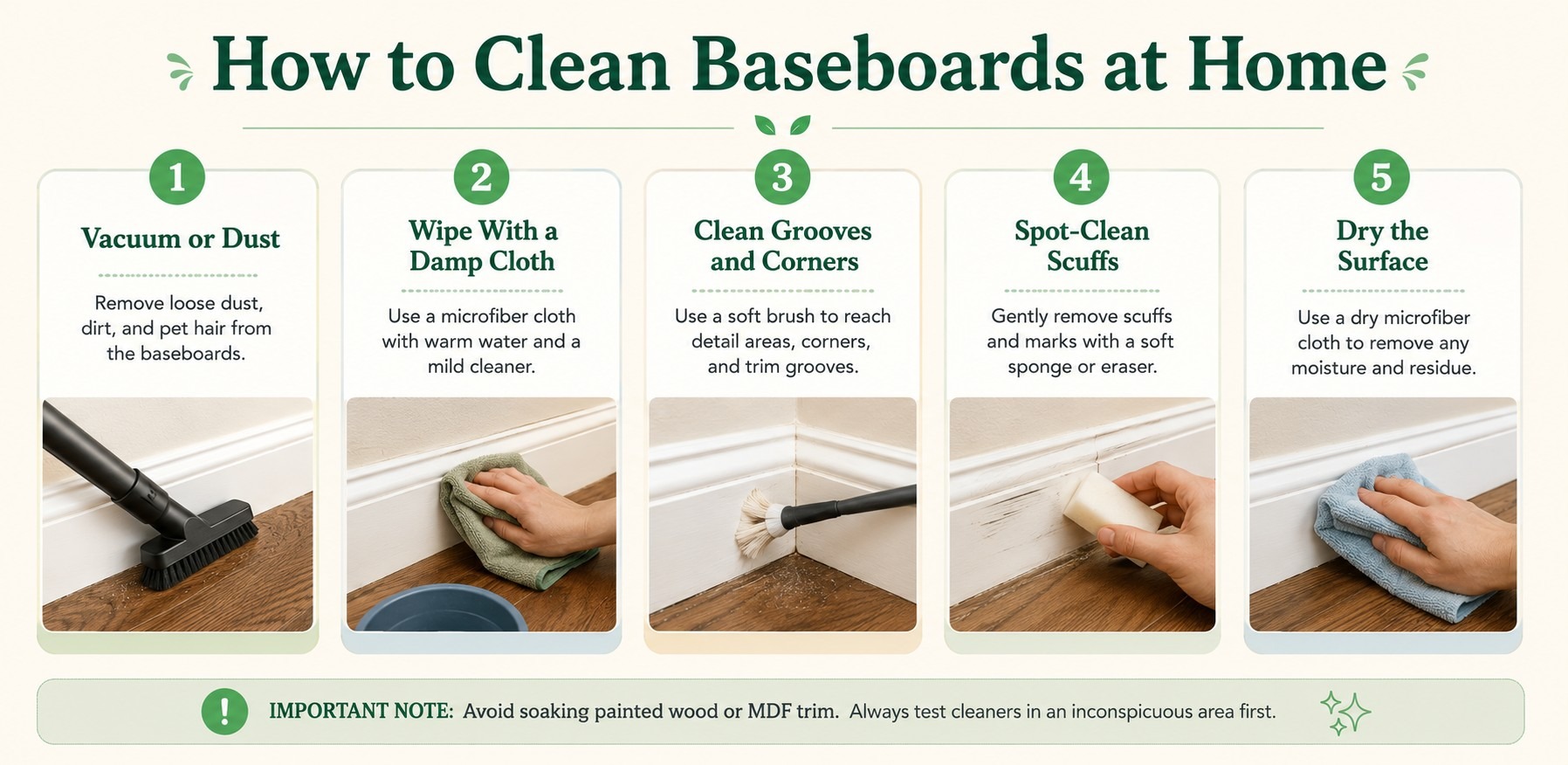
Step 1: Vacuum or Dust First
Remove loose dust, pollen, and pet hair before using water.
Wiping dusty baseboards with a wet cloth can create muddy streaks and spread debris across the trim.
Step 2: Wipe With a Damp Microfiber Cloth
Use a lightly damp microfiber cloth with a small amount of mild soap.
Avoid soaking the baseboards, especially if they are made from painted wood, MDF, or another material that may be sensitive to moisture.
Step 3: Clean Grooves and Corners
Use a small, soft brush or a cloth-wrapped tool to reach decorative grooves and tight corners.
Avoid using sharp tools that could scratch the paint or trim.
Step 4: Spot-Clean Scuffs
Treat fingerprints and scuff marks gently.
Do not scrub aggressively, as this may remove paint or damage the finish. Test any unfamiliar cleaning product in a hidden area first.
Step 5: Dry the Surface
Finish with a clean, dry towel to remove excess moisture and prevent streaks.
Clean the floors afterward so any loose dust or debris that falls from the baseboards is removed.
Why Baseboard Cleaning Can Take Longer Than Expected
Cleaning baseboards throughout an entire home can be more time-consuming than many families expect.
A detailed cleaning may involve:
- Multiple bedrooms
- Long hallways
- Living areas
- Bathrooms
- Kitchens
- Closets
- Staircases
- Areas behind furniture
Each section must be addressed close to the floor, and heavy buildup or detailed molding may require extra attention.
In larger Charlotte homes, cleaning all baseboards can add significant time to a service. Furniture, decorative trim, pet hair, pollen, and scuff marks can increase the amount of work involved.
That is why it is best to request detailed baseboard cleaning when booking rather than adding it after the cleaning team arrives.
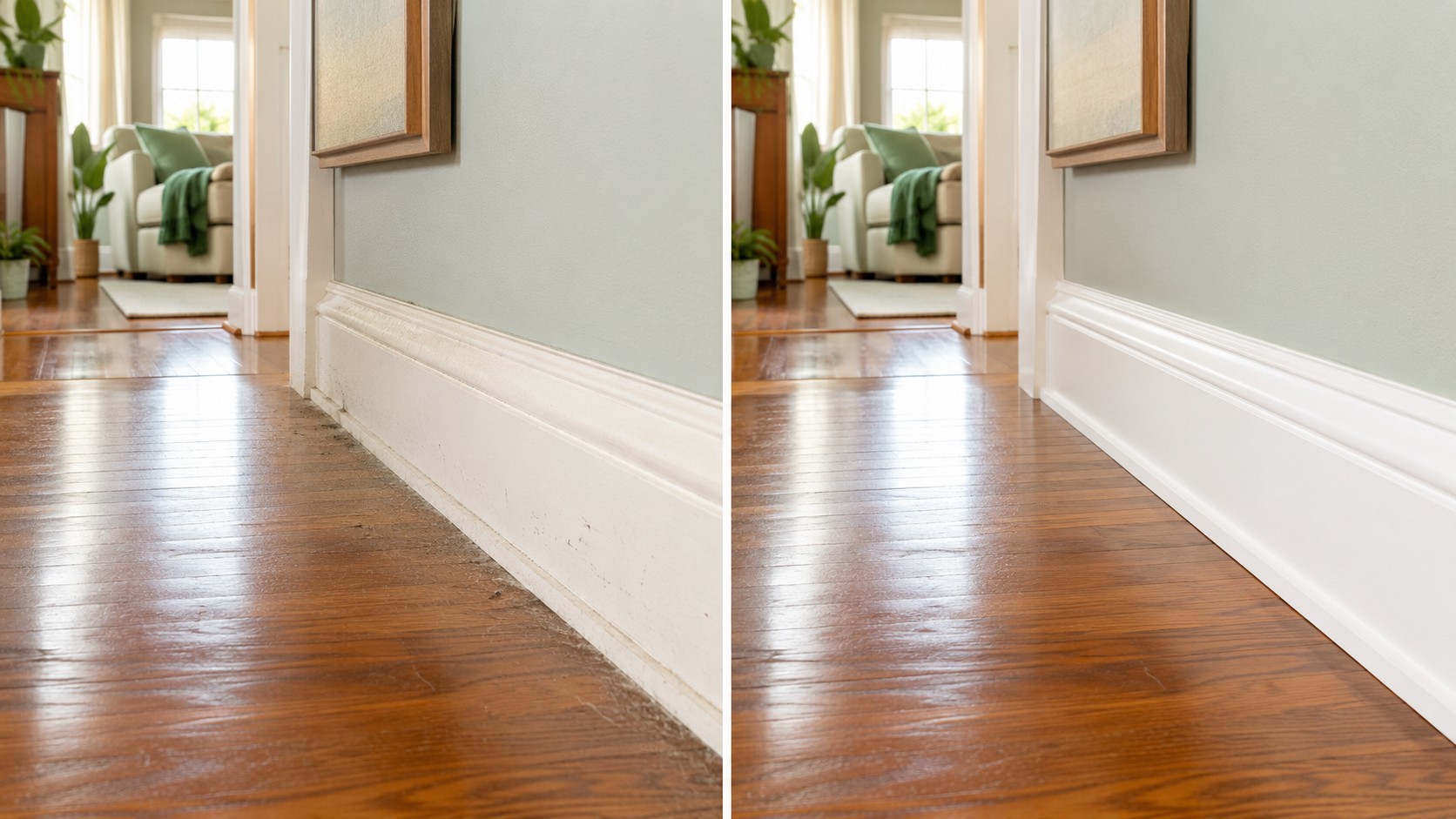
When Is Deep Cleaning the Better Choice?
Dirty baseboards are sometimes a sign that other detailed areas of the home also need attention.
A deep cleaning may be the better option when you notice buildup on:
- Baseboards
- Doors and door frames
- Window sills
- Ceiling fans
- Light fixtures
- Bathroom fixtures
- Kitchen surfaces
- Cabinet fronts
- Corners and edges
- Areas behind furniture
Deep cleaning focuses on buildup that routine maintenance may not fully address.
If baseboards are dusty, dull, or marked throughout the home, other overlooked areas may need attention too. A professional deep cleaning can help reset bathrooms, kitchen surfaces, cabinet fronts, corners, fixtures, and other detailed areas at the same time.
Detailed baseboard cleaning can then be selected as an add-on when your trim needs extra care.
How to Keep Baseboards Cleaner Between Visits
A few simple habits can reduce how quickly dust, pollen, and pet hair return.
Try to:
- Vacuum along wall edges regularly
- Place doormats at each entrance
- Remove shoes inside the home
- Wipe pets’ paws after walks
- Groom shedding pets consistently
- Replace HVAC filters as recommended
- Dust before vacuuming
- Clean spills and fresh marks promptly
- Keep furniture slightly away from walls when possible
- Schedule detailed cleaning seasonally
These habits will not eliminate buildup completely, but they can make ongoing maintenance easier.
Frequently Asked Questions About Baseboard Cleaning
How often should baseboards be cleaned?
Most homes should have baseboards lightly cleaned about once a month and detailed cleaned every three to six months.
Homes with pets, children, heavy foot traffic, or pollen exposure may need more frequent attention.
Do homes with pets need more baseboard cleaning?
Yes. Pet hair and dander commonly collect along walls, corners, stairways, and underneath furniture.
Homes with shedding pets may need light baseboard cleaning every two to four weeks in high-use areas.
Is baseboard cleaning included in regular cleaning?
It depends on the cleaning company and the service checklist selected.
Standard cleaning usually focuses on main household surfaces. Detailed baseboard cleaning may be included in a deep cleaning package or offered as an add-on.
Should baseboards be cleaned before or after floors?
Baseboards should be cleaned before vacuuming or mopping the floors.
Dust, pollen, and pet hair may fall from the trim during cleaning, so cleaning the floors afterward helps remove any remaining debris.
When should I book professional baseboard cleaning?
Professional baseboard cleaning may be helpful when you notice visible dust, pollen, pet hair, sticky residue, scuff marks, or buildup that has been present for several months.
It can also be useful before hosting guests, moving, selling a property, or beginning recurring cleaning.
Professional Baseboard Cleaning in Charlotte, NC
Baseboard cleaning can make a noticeable difference, but cleaning every room by hand can take hours—especially in a busy household with children, pets, or heavy seasonal pollen.
My Clean Charlotte Maids helps local Charlotte families refresh the detailed areas that are often overlooked during everyday cleaning.
Our deep cleaning services address built-up dust and grime throughout the home. Detailed baseboard cleaning can also be selected as an add-on when your trim needs extra attention.
We proudly serve Charlotte and nearby communities, including Ballantyne, South Charlotte, Pineville, Matthews, Huntersville, Concord, Gastonia, Fort Mill, Rock Hill, and surrounding areas.

Ready for a More Detailed Home Cleaning?
When your baseboards, bathrooms, kitchen surfaces, corners, and other overlooked areas need more than routine maintenance, it may be time for a professional Deep Cleaning.
My Clean Charlotte Maids can help create a cleaner starting point for your home while giving busy Charlotte families more time to focus on what matters most.
Get your Deep Cleaning quote today.
Call or text: (980) 888-8541
Written by My Clean Charlotte Maids
Serving Charlotte, Fort Mill, Rock Hill, Gastonia, Pinehurst, Lake Norman, Fayetteville & surrounding areas.



Stay Updated
Fresh cleaning tips, home-care hacks, and smart living ideas — delivered weekly from My Clean Charlotte Maids.