
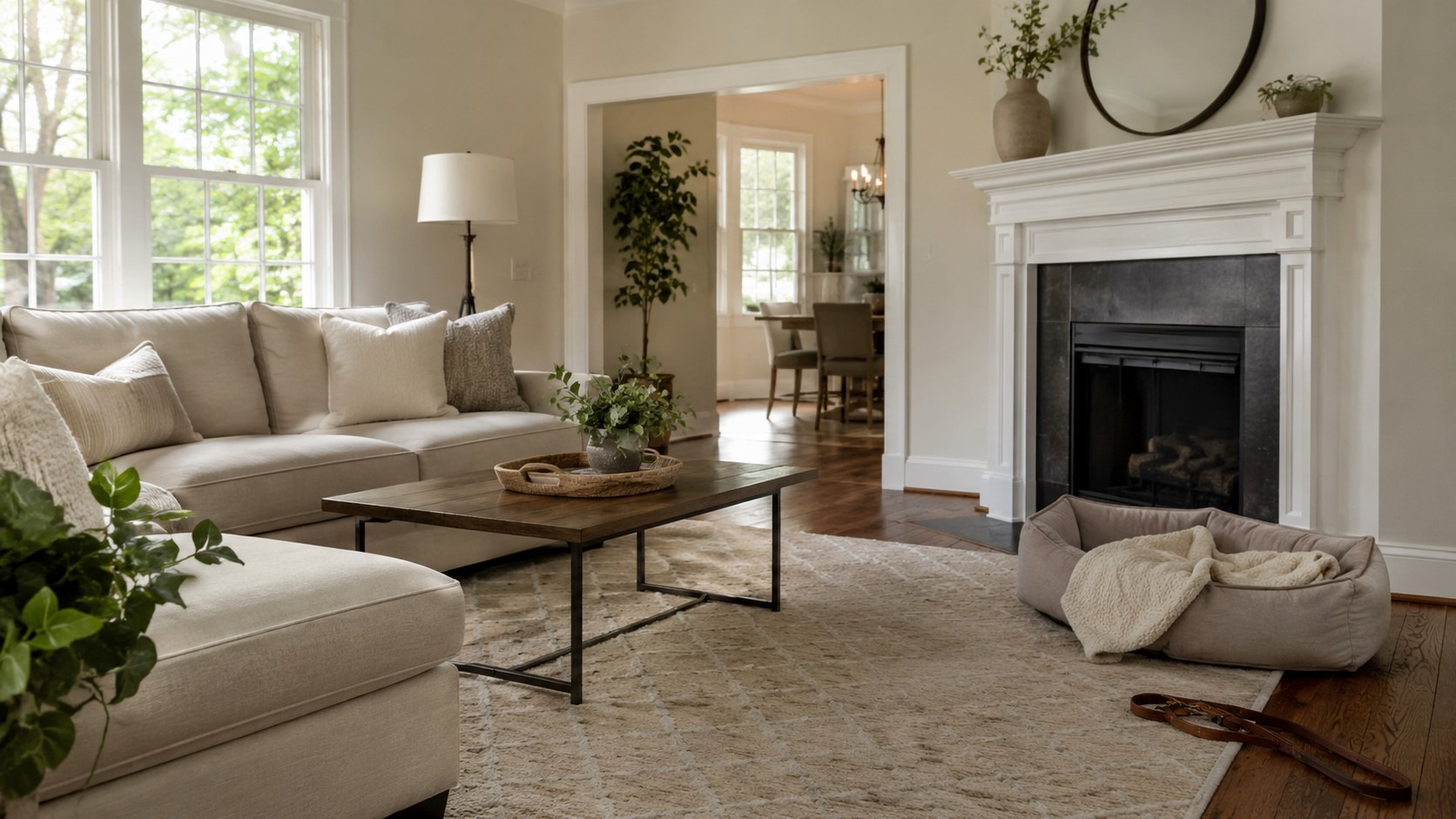
Pet makes a house like home. They bring comfort, personality, laughter, and a lot of love.
They also bring hair.
If you have a dog or cat in your Charlotte home, you already know how quickly pet hair can show up on floors, furniture, rugs, baseboards, stairs, bedding, and even freshly cleaned surfaces. One day the house feels clean, and the next day there is dog hair in the house again.
For many pet owners, the goal is not a perfect home with no pet hair at all. The goal is a home that feels cleaners, fresher, easier to maintain, and more comfortable for everyone who lives there.
The good news is that pet hair can be managed with the right routine. A few smart habits, combined with occasional detailed cleaning, can make a big difference in how your home looks, feels, and smells.
If youa re searching for pet hair cleaning in Charlotte, dealing with dog hair in the house, or trying to stay ahead of pet odor cleaning, this guide will walk you through where pet hair collects, why it builds up so fast, and what actually helps keep it under control.
For a broader room-by-room approach, you can also read our pet-friendly house cleaning guide for Charlotte homes.
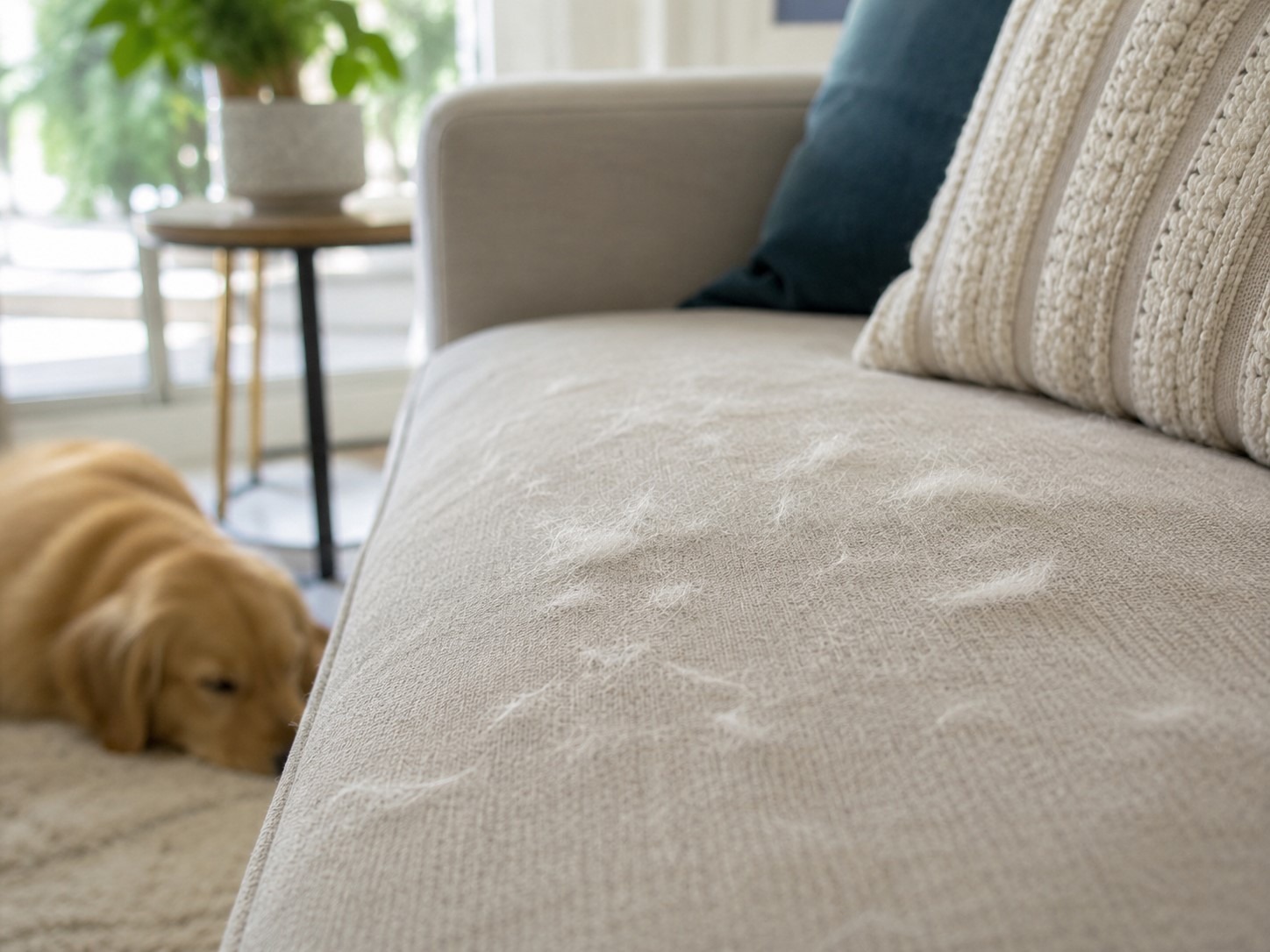
Quick Answer: How Do You Keep Pet Hair Under Control?
The best way to keep pet hair under control is to focus on the areas where hair collects most: floors, rugs, sofas, pet beds, baseboards, corners, stairs, entryways, and under furniture.
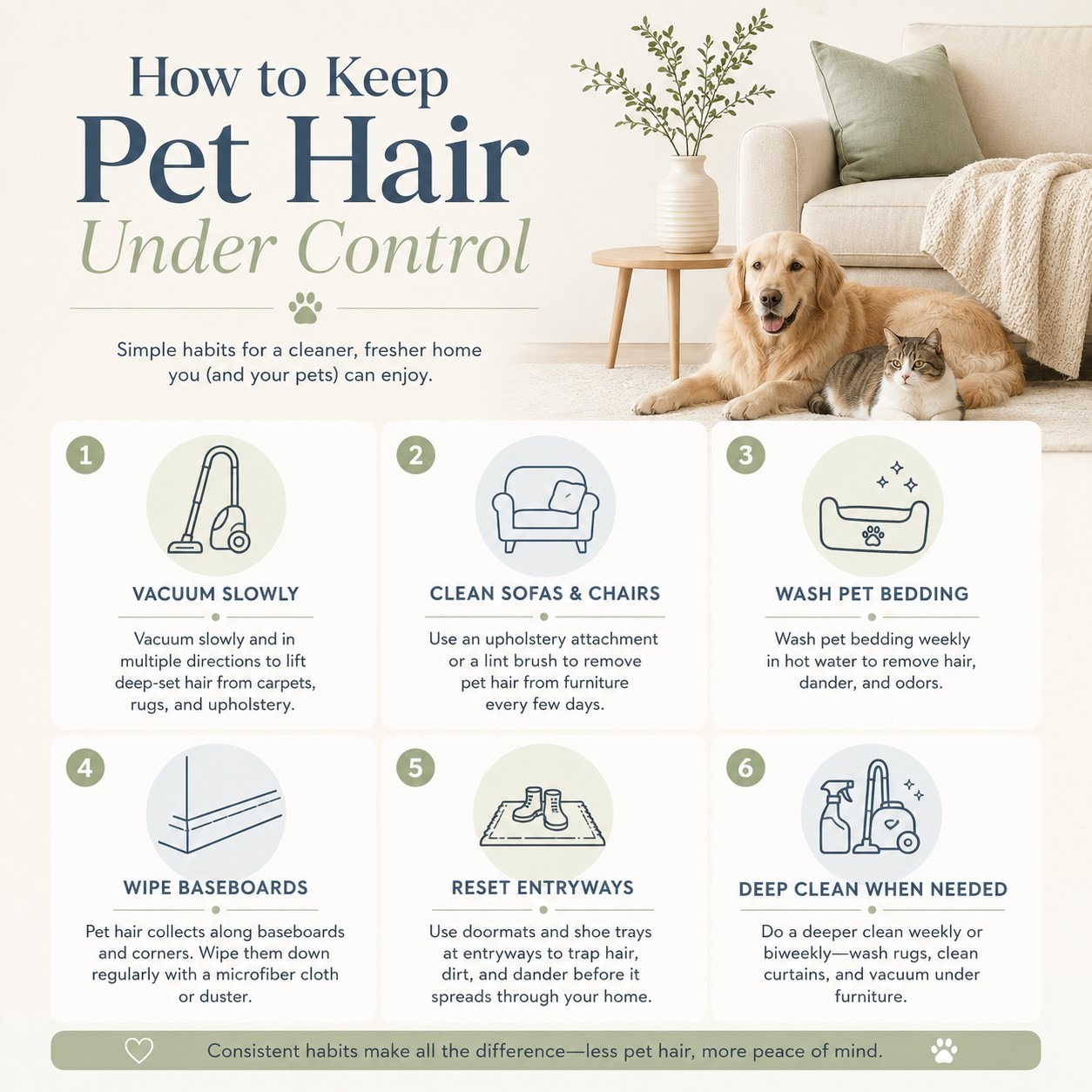
Vacuum slowly, use attachments, wash pet bedding, wipe baseboards, clean food and water bowl areas, remove hair from furniture, and stay consistent with weekly resets.
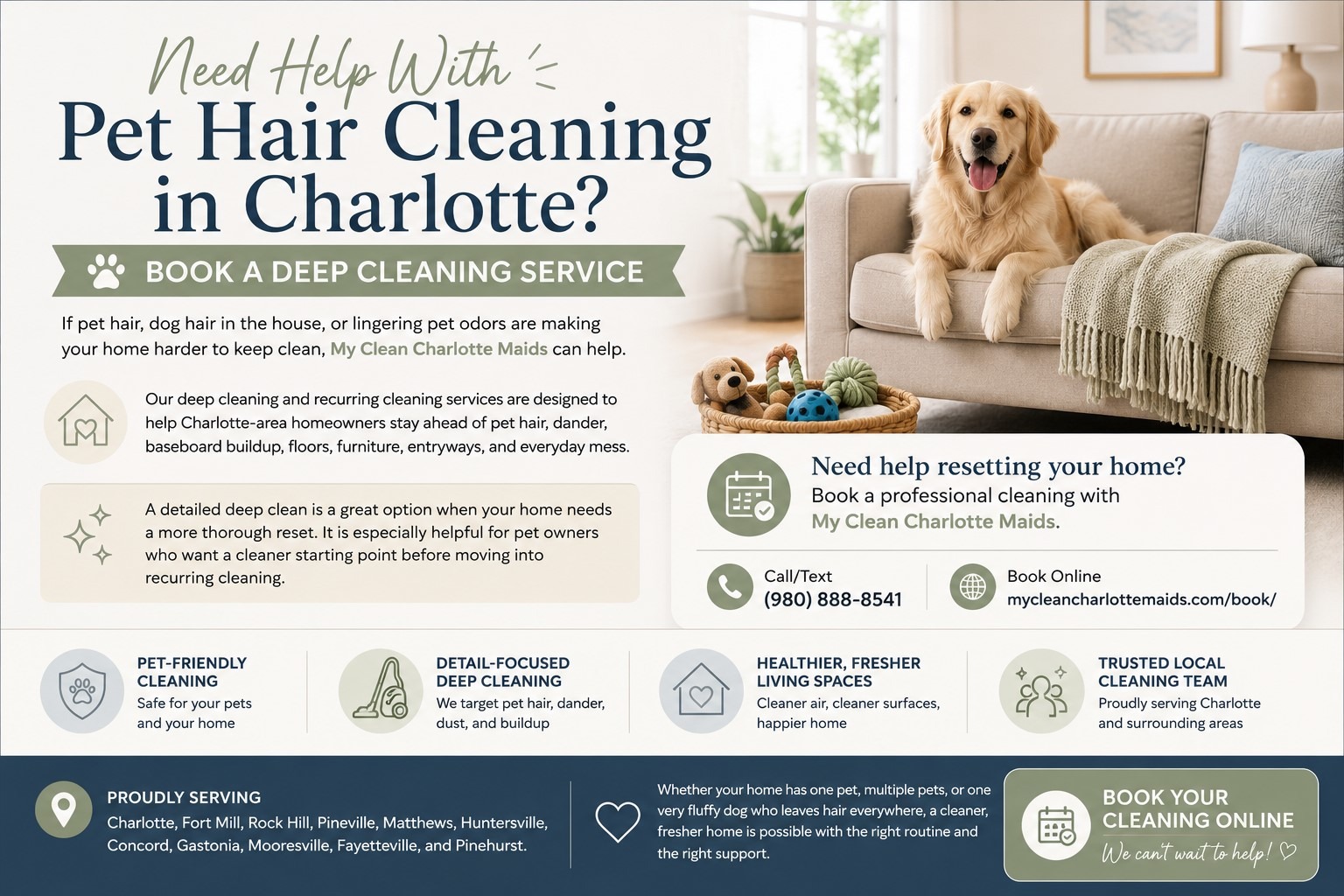
For Charlotte homes with pets, pollen, humidity, and busy routines can make pet hair feel harder to manage. A professional deep clean can help reset built-up hair and odor, while recurring cleaning helps keep the home fresher over time.
Why Pet Hair Builds Up So Quickly in Charlotte Homes
Pet hair does not stay in one place. It moves through the home with everyday activity, air circulation, shoes, clothing, blankets, furniture, and HVAC airflow.
In Charlotte homes, pet hair can feel even harder to control because many homes deal with a mix of pet shedding, pollen, dust, humidity, and busy family routines. During heavier pollen months, pet hair can mix with dust and outdoor particles, then settle into corners, along baseboards, under furniture, and on soft surfaces faster than many homeowners expect.
Homes with hardwood floors, vinyl plank, tile, rugs, carpeted stairs, upholstered furniture, and open floor plans can all collect pet hair in different ways.
Even if you vacuum often, hair can still collect in hidden or easy-to-miss areas like:
- Under sofas and beds
- Along baseboards
- Behind doors
- Around pet beds
- On stair edges
- Around dining chair legs
- Under rugs
- Near vents
- In laundry areas
- Around entryways
This is why pet hair cleaning is not just about vacuuming the middle of the room. It is about creating a routine that targets the places where hair actually settles.
Start With the Main Pet Hair Zones
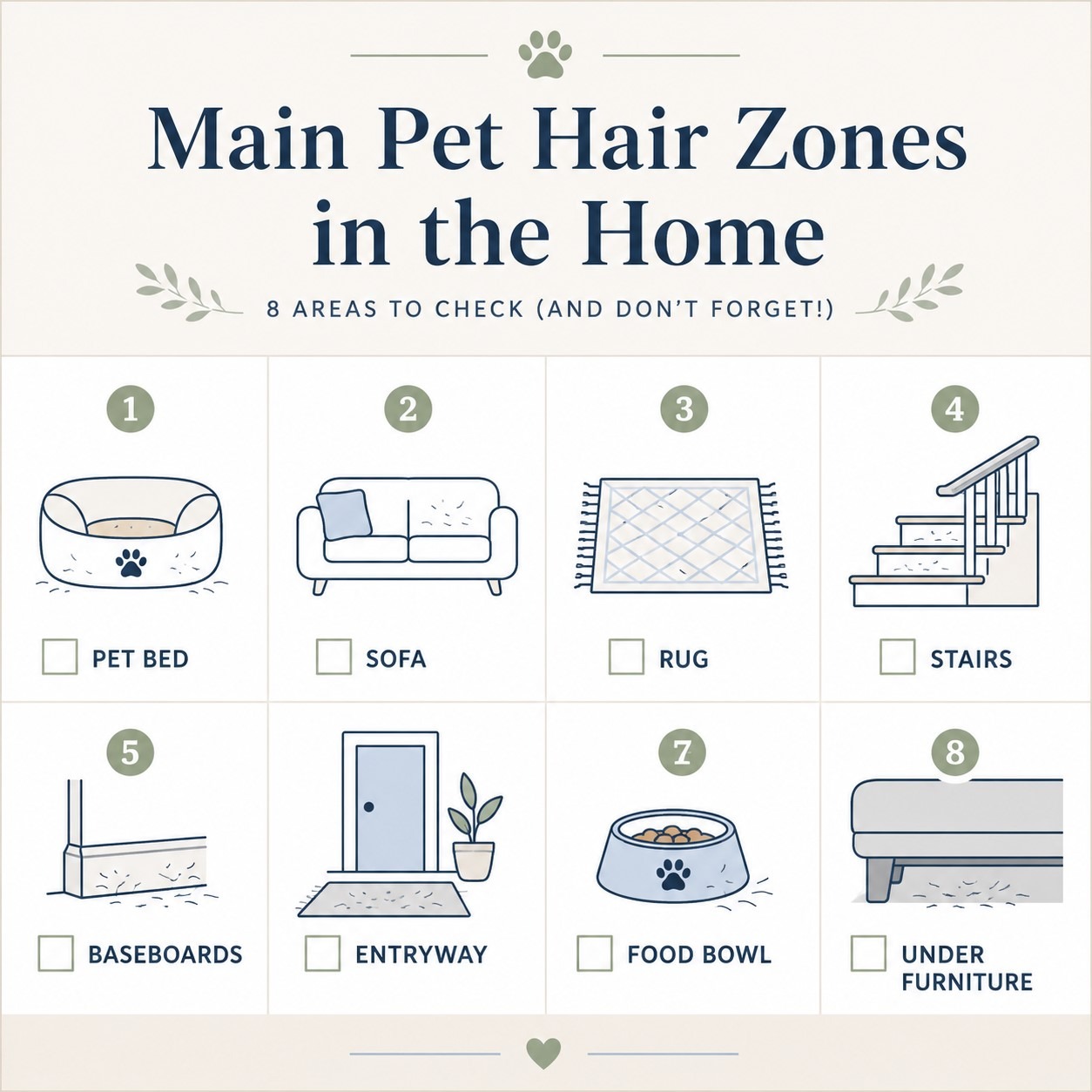
Every pet-friendly home has “hair zones.” These are the areas where your dog or cat spends the most time or where hair naturally gathers.
For many Charlotte homeowners, these areas include the living room, bedroom, pet bed area, entryway, stairs, kitchen corners, and favorite furniture spots.
Before trying to clean the whole house at once, focus on the highest-impact areas first.
Look for:
- Where your pet sleeps
- Where your pet lays during the day
- Where your pet enters the home
- Where blankets and pillows collect hair
- Where hair gathers around floor edges
- Where airflow pushes hair into corners
- Where food, water, toys, and leashes are kept
Once you know where the pet hair is coming from and where it is settling, your cleaning routine becomes much easier.
Vacuum More Strategically, Not Just More Often
Vacuuming is one of the most important steps for controlling dog hair in the house, but the way you vacuum matters.
A quick pass through the main walkway may make the home look better temporarily, but it usually does not remove the hair that settles along edges, corners, rugs, furniture bases, and stairs.
For better results, slow down and vacuum in sections. Go over high-shed areas more than once, especially rugs, carpets, and upholstery. Use attachments for corners, baseboards, stairs, and furniture.
Pay close attention to:
- Rug edges
- Sofa cushions
- Under furniture
- Around pet beds
- Stair corners
- Bedroom floors
- Hallways
- Entry mats
- Baseboard lines
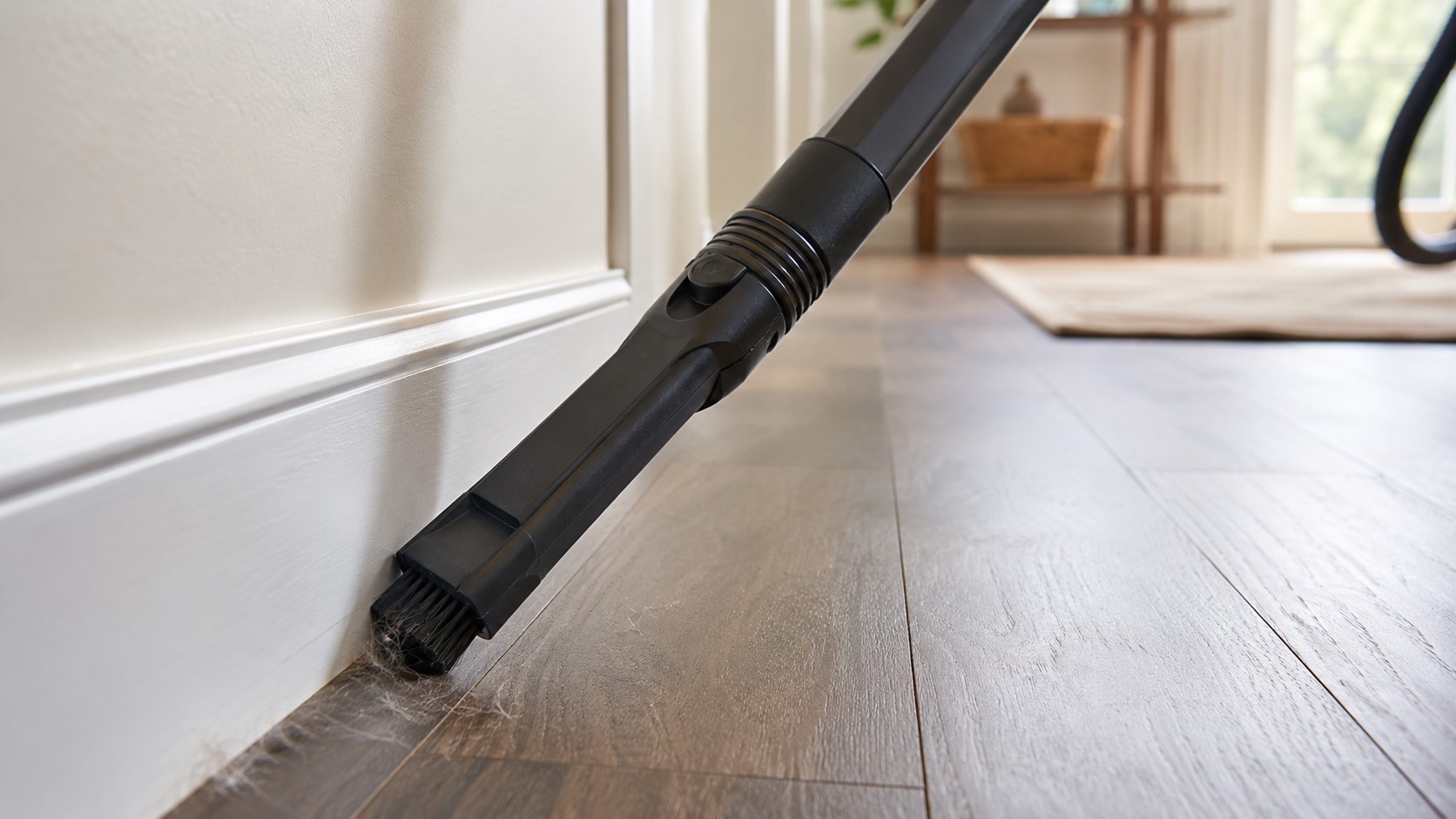
If your home has mostly hard floors, vacuum before mopping. Sweeping can move pet hair around and push it into corners, while a good vacuum can capture more hair before it spreads.
For homes with pets, vacuuming high-traffic areas several times per week can help. But even with regular vacuuming, detailed cleaning is still important because pet hair often collects where everyday cleaning does not reach.
Do Not Forget Baseboards and Corners
Pet hair loves baseboards.
Even when floors look clean from a distance, hair and dust can collect along wall edges, behind furniture, and in room corners. This is especially common in homes with open layouts, ceiling fans, HVAC airflow, and pets that shed regularly.
Baseboards can also collect dander, dust, and small debris that make the home feel less fresh over time.
A simple weekly wipe along visible baseboards can help, especially in rooms where your pet spends the most time. For deeper buildup, baseboards may need more detailed hand wiping.
Focus on:
- Living room baseboards
- Bedroom baseboards
- Hallway edges
- Stair trim
- Kitchen corners
- Laundry room edges
- Areas around pet bowls
- Areas behind doors
- Corners near vents
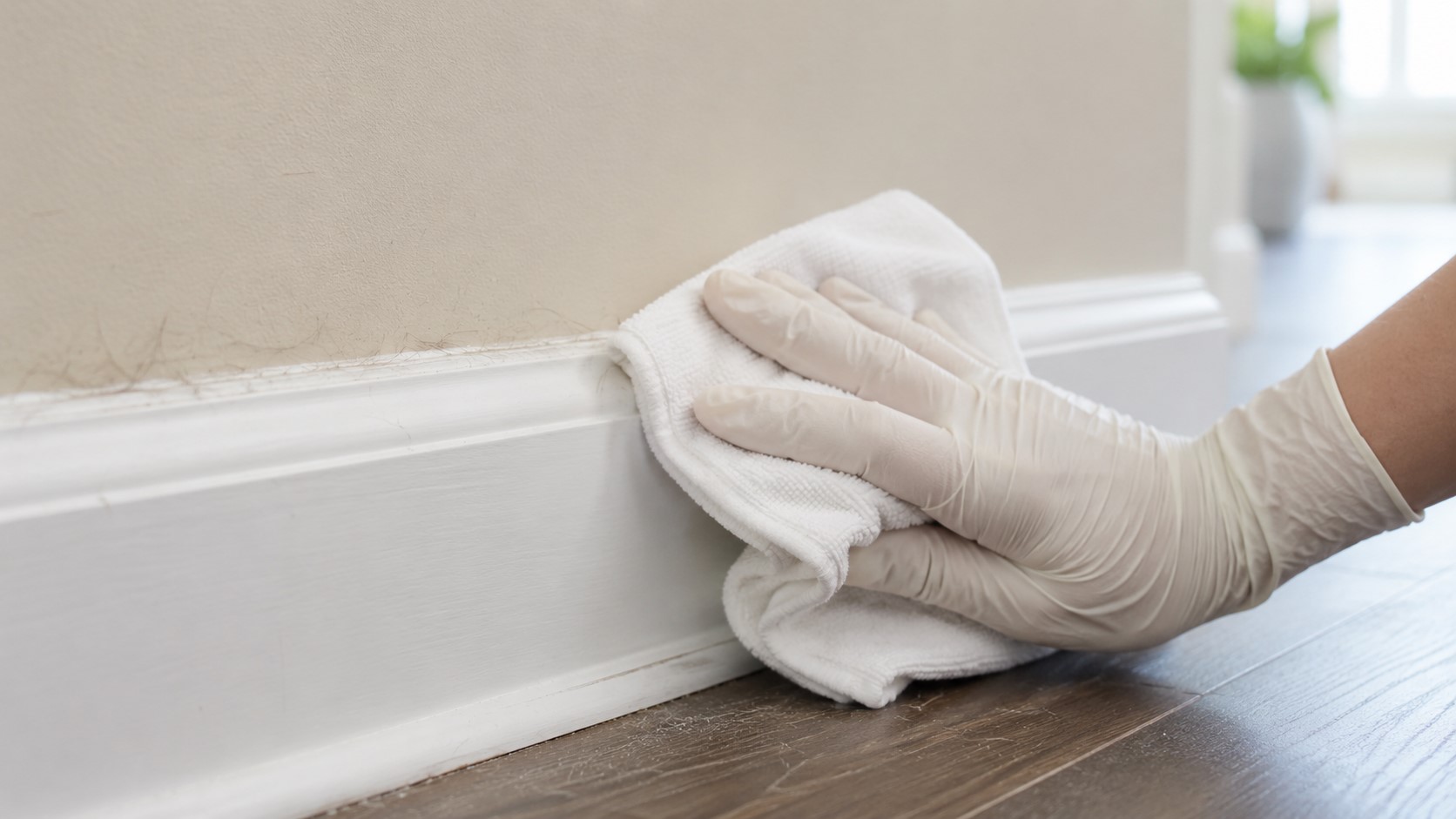
This is one of the reasons a more detailed reset can be so helpful. It goes beyond surface cleaning and targets the details that make a home feel truly cleaner.
Wash Pet Bedding and Blankets Often
Pet bedding can hold hair, dander, oils, and odors. If the rest of the house is clean but the pet bed has not been washed recently, the home may still smell less fresh than you want.
Wash pet bedding, washable blankets, and removable covers regularly. If your pet has a favorite throw blanket on the sofa or bed, treat that blanket as part of your cleaning routine.
Before washing heavily covered items, shake them outside if possible or remove excess hair with a lint roller or pet hair tool. This helps reduce the amount of hair going into the washing machine.
Pet bedding is one of the biggest sources of pet odor in the home, so keeping it clean can support both pet hair control and pet odor cleaning.
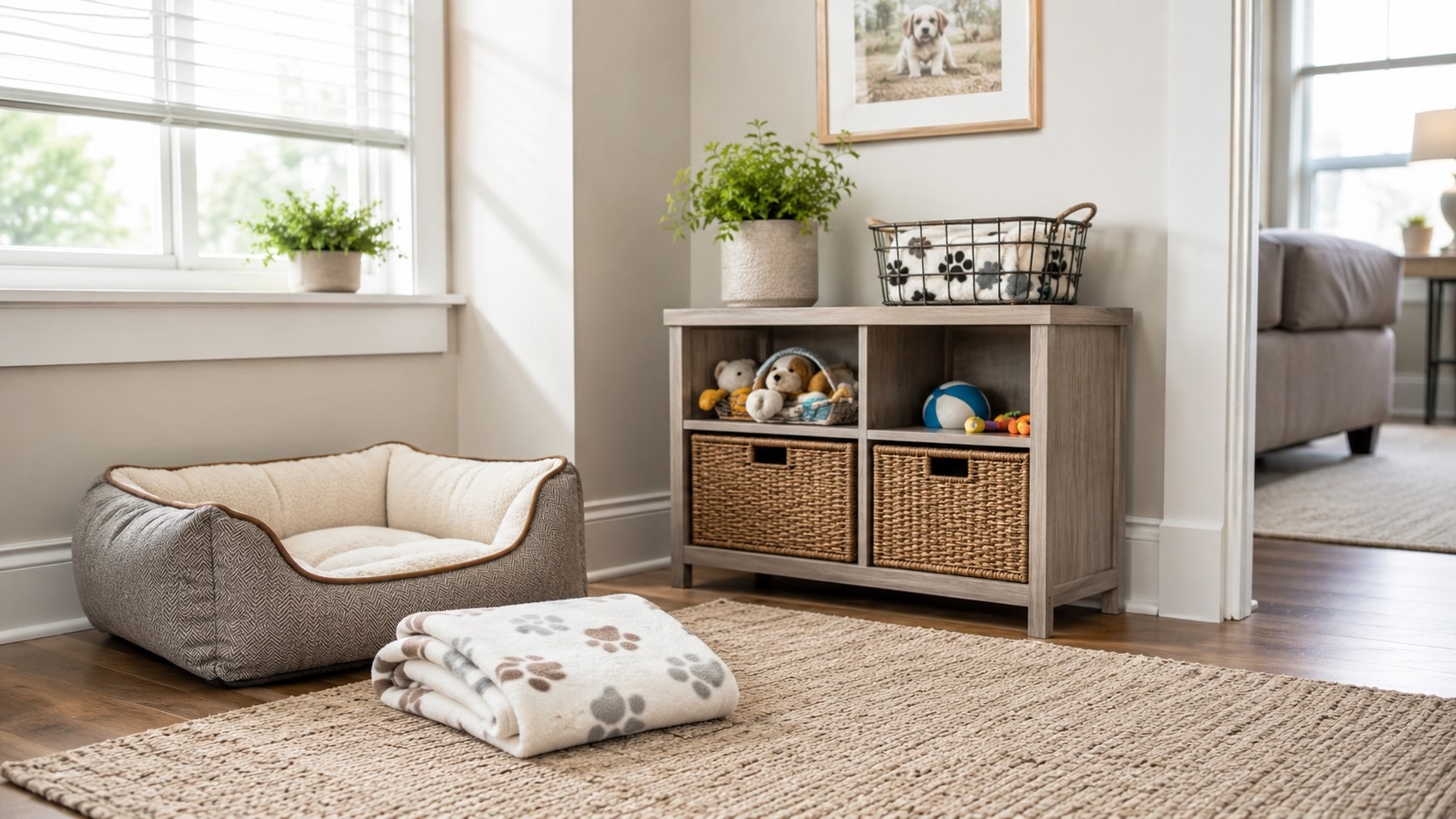
Use Entryway Habits to Reduce Hair, Dirt, and Pollen
Pet hair is not the only thing pets bring into the home. Dirt, pollen, grass, moisture, and outdoor debris can also come in on paws and fur.
Charlotte homes can deal with seasonal pollen, rainy days, muddy yards, and busy neighborhood walks. A simple entryway routine can help reduce what gets tracked through the house.
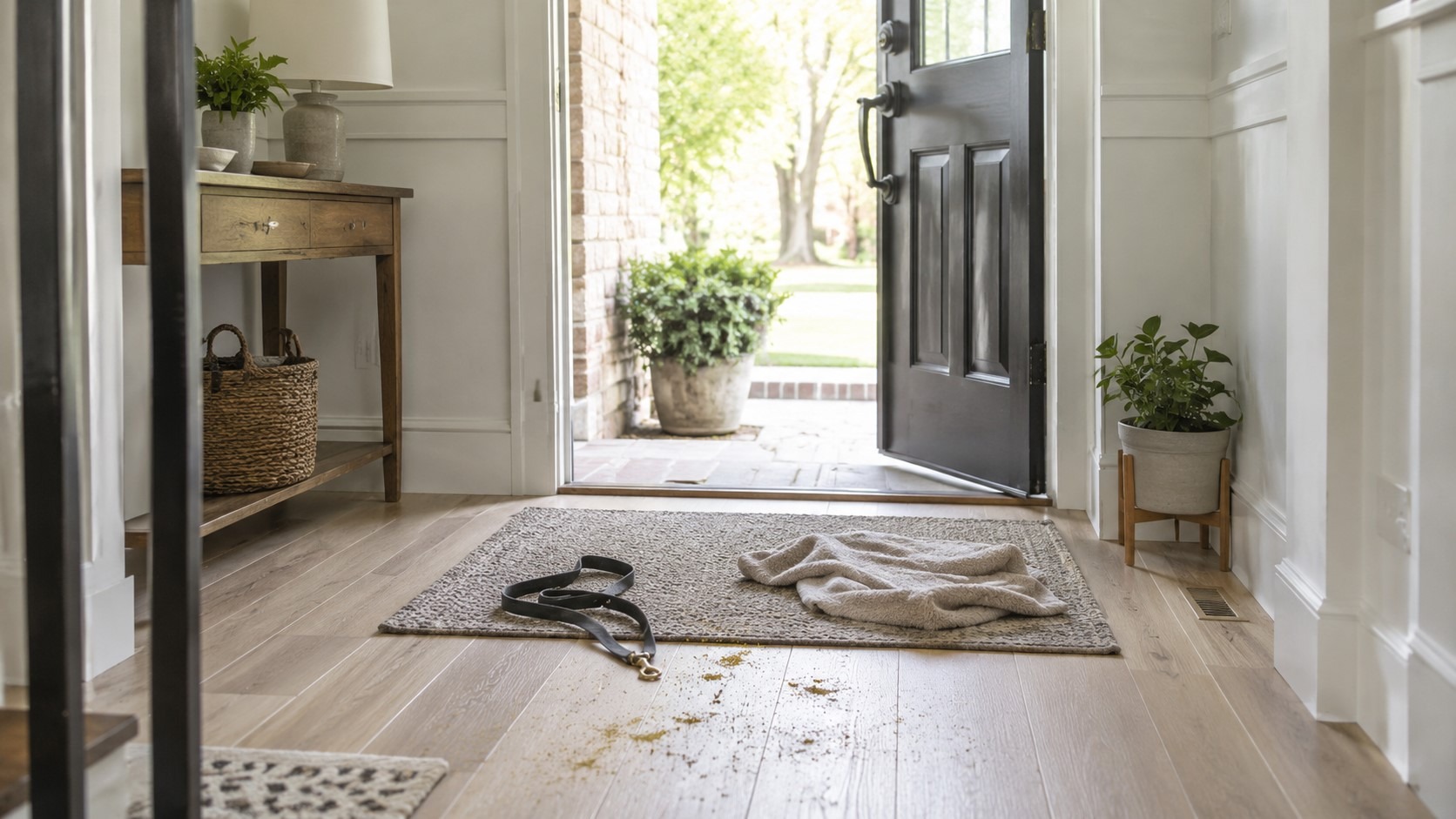
Keep a towel, washable mat, or small cleaning basket near the door your pet uses most. Wipe paws when needed, especially after rain, yard time, or long walks.
A good pet-friendly entryway setup may include:
- A washable mat
- A towel for paws
- A small brush
- A place for leashes
- A nearby trash bin for waste bags
- A quick vacuum or broom for the area
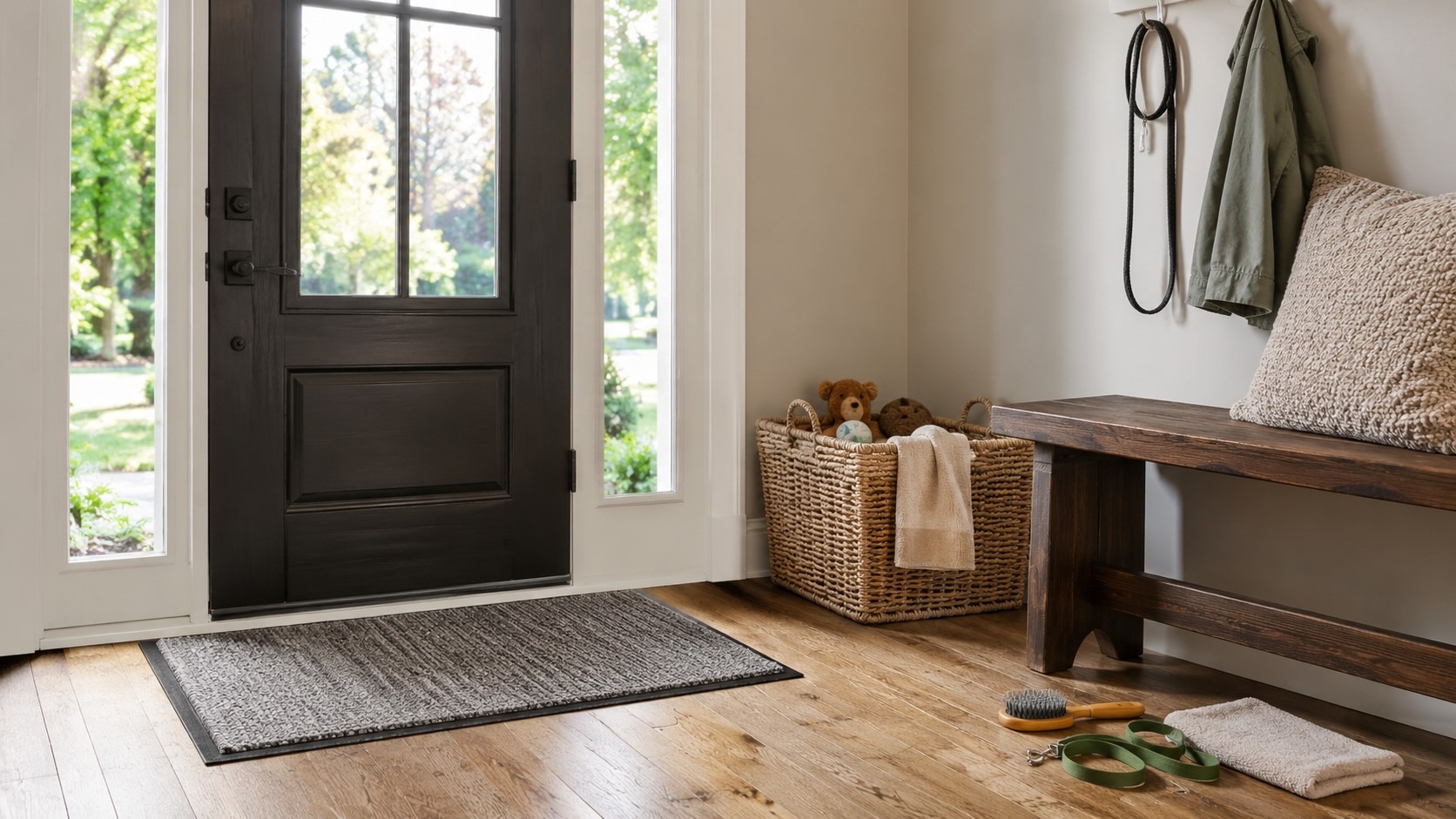
This small habit can reduce the amount of hair, dirt, pollen, and outdoor debris that spreads into the rest of the home.
Keep Furniture Hair From Taking Over
Furniture is one of the most frustrating places for pet hair to collect. Sofas, chairs, pillows, blankets, and upholstered headboards can hold hair even when the floors are clean.
If your pet is allowed on furniture, choose washable covers or designated pet blankets when possible. These are much easier to clean than the entire sofa.
For routine upkeep, use a lint roller, upholstery vacuum attachment, or reusable pet hair remover. Do this before gusts come over or before your regular cleaning day so loose hair does not transfer back onto clean floors.
Do not forget:
- Between sofa cushions
- Under cushions
- Throw pillows
- Chair backs
- Upholstered dining chairs
- Bedroom benches
- Pet-favorite corners of furniture
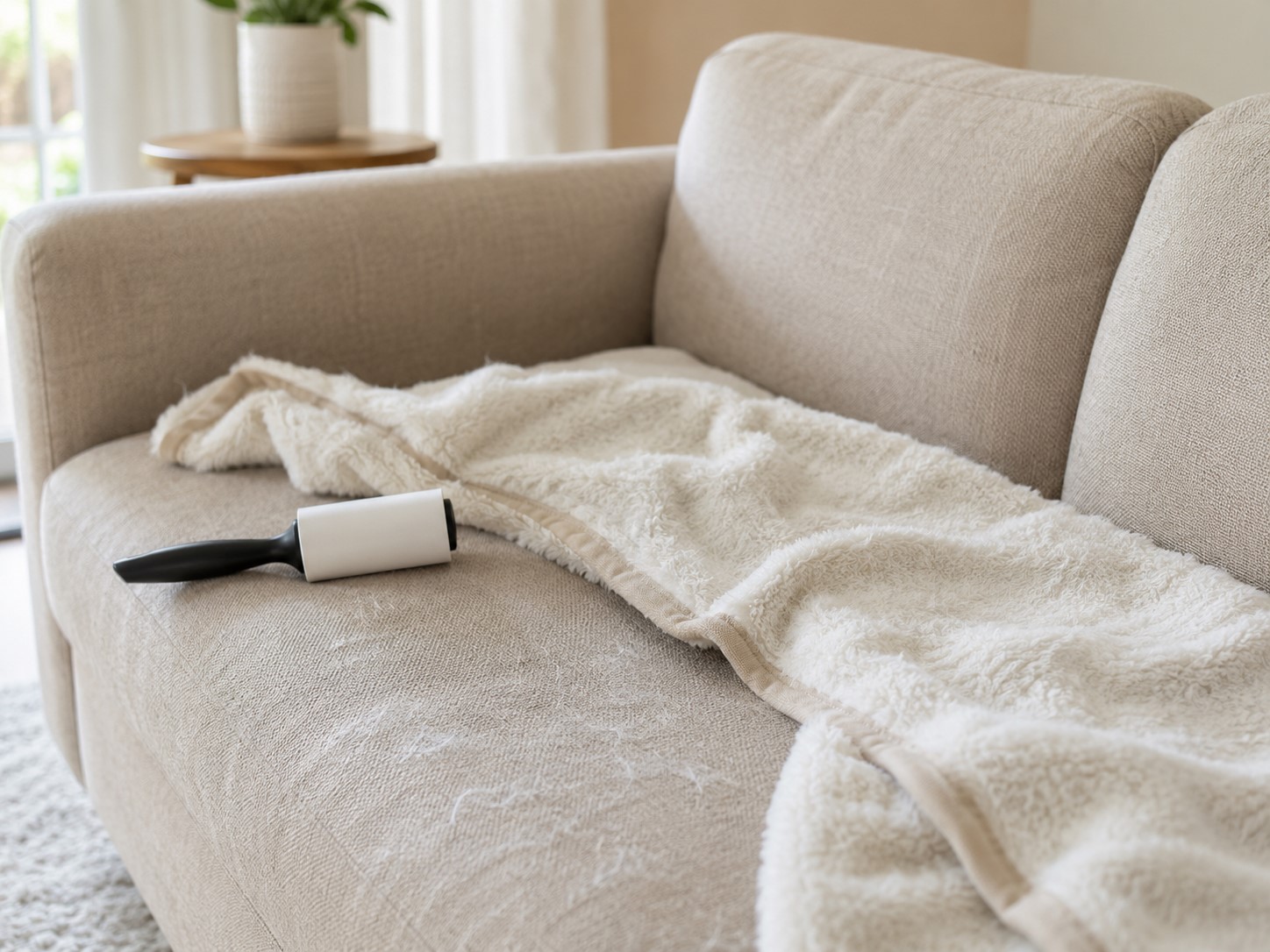
Soft surfaces hold both hair and odor, so they are an important part of pet odor cleaning too.
Manage Pet Odors Before They Settle In
Pet odor cleaning is not just about spraying something that smells nice. In many cases, odor comes from hair, dander, bedding, soft surfaces, accidents, food areas, litter areas, or moisture.
The best way to reduce pet odor is to clean the source.
Start with the basics:
- Wash pet beds and blankets
- Clean food and water bowl areas
- Vacuum rugs and upholstery
- Wipe nearby baseboards
- Keep litter areas clean
- Remove hair from furniture
- Mop hard floors after vacuuming
- Empty vacuum canisters frequently
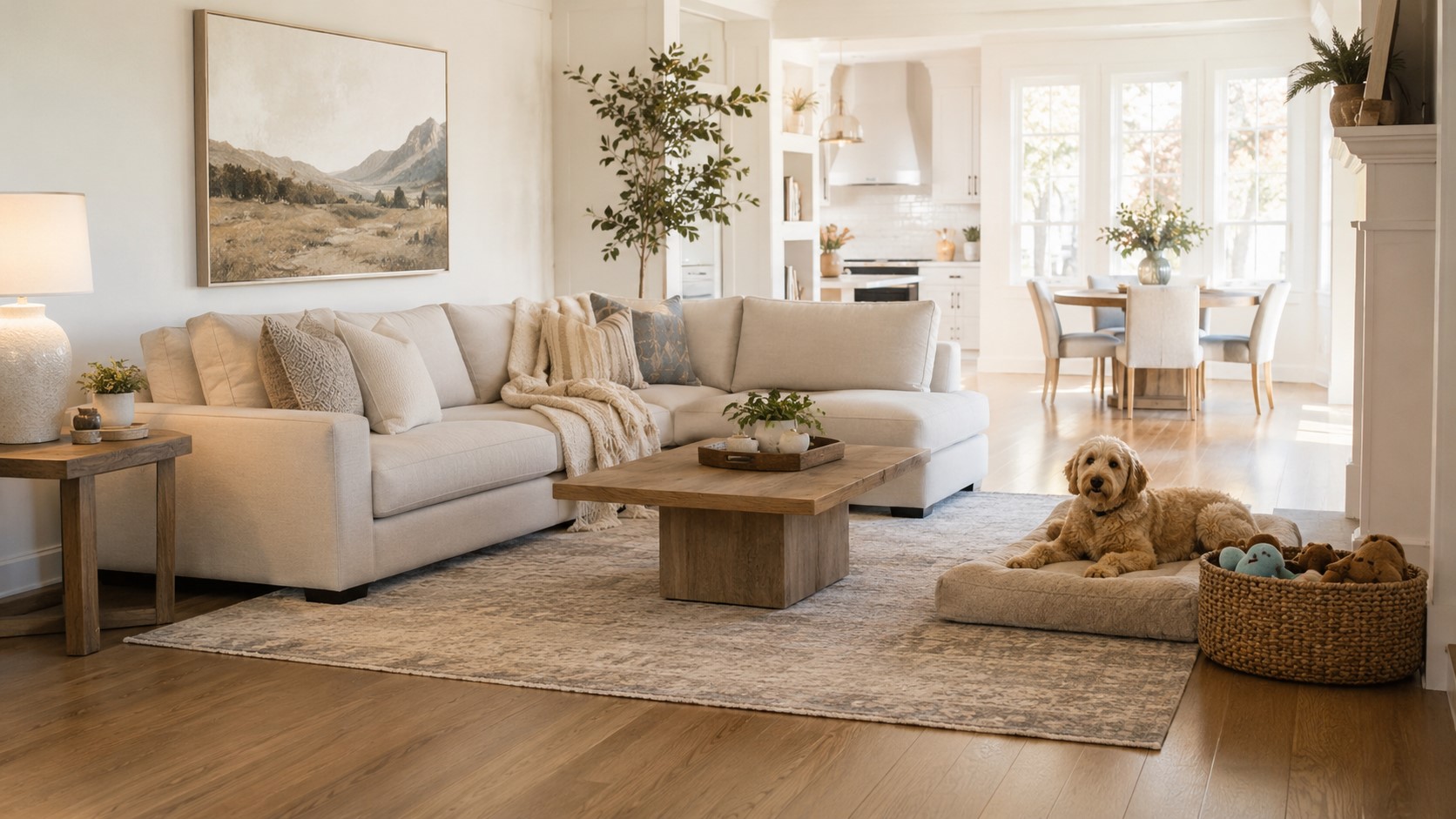
Be careful with strong fragrances. Heavy scents may temporarily cover odors, but they do not remove buildup. A clean home should smell fresh because the source of the odor has been addressed, not because it has been covered up.
If your home has lingering pet odors, a detailed deep clean can help reset the spaces where hair, dust, and odor tend to collect.
Clean Around Food and Water Bowls
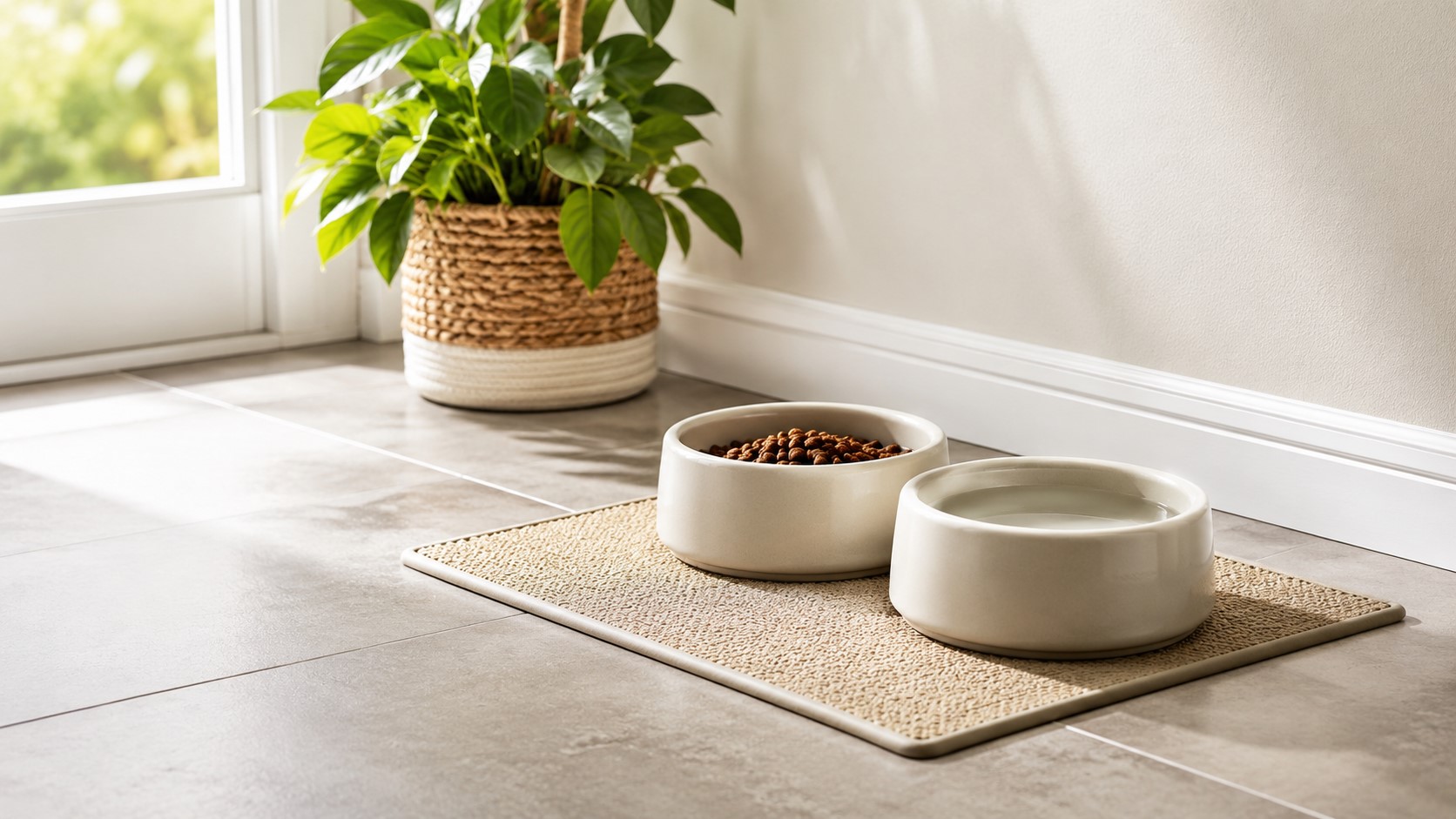
Food and water bowl areas are easy to overlook, but they can quickly collect hair, crumbs, water spots, and residue.
This area is especially important if your pet eats in the kitchen, laundry room, mudroom, or breakfast nook.
Lift bowls regularly and clean underneath them. Wipe the floor, wall, baseboard, and any nearby cabinet edges if needed. Wash mats often, especially if water spills or food crumbs collect there.
This small detail can make the kitchen or feeding area feel much cleaner.
Pet Hair Cleaning Checklist for Charlotte Homes
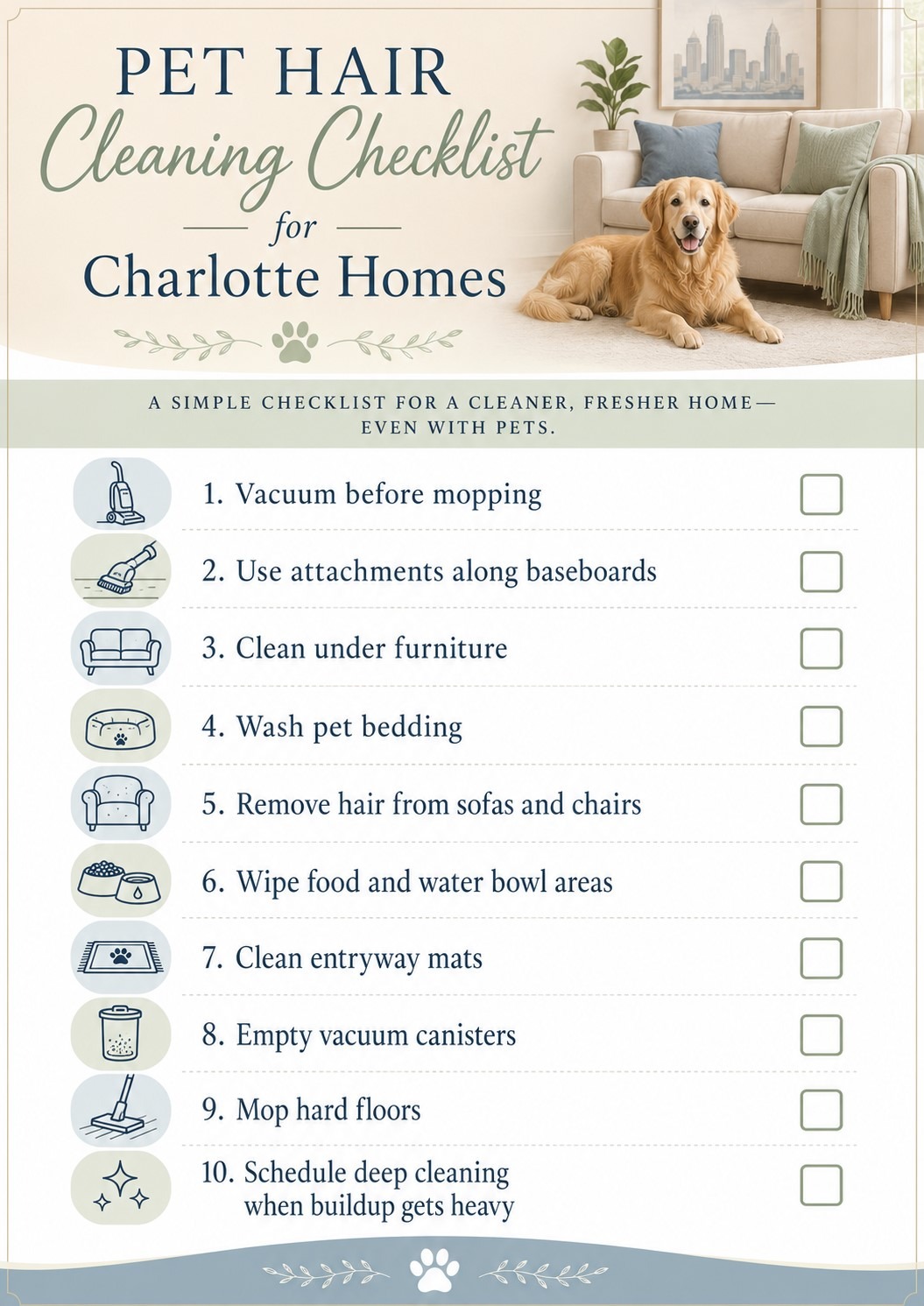
Use this checklist when your home starts to feel covered in pet hair again:
- Vacuum floors before mopping
- Use attachments along baseboards and stairs
- Vacuum under sofas, beds, and furniture edges
- Wash pet beds, blankets, and washable covers
- Remove hair from sofas, chairs, and pillows
- Wipe food and water bowl areas
- Clean entryway mats and pet paw zones
- Empty vacuum canisters frequently
- Mop hard floors after vacuuming
- Schedule deep cleaning when buildup feels hard to manage
For homes with multiple pets, heavy sheddersm children, or frequent guests, this routine may need to happen more often.
When Regular Cleaning Is Not Enough
Sometimes regular cleaning helps, but the home stills feels like it needs a bigger reset.
This is common when pet hair has built up over time or when hair and odor have settled into corners, baseboards, rugs, upholstery, and hidden areas.
You may need a more detailed cleaning if:
- Dog hair keeps reappearing right after vacuuming
- Pet odor lingers after basic cleaning
- Hair is collecting along baseboards and corners
- Furniture feels covered no matter how often you clean
- Guests are coming and you want the home to feel fresher
- You are starting recurring cleaning and want a reset first
- You are moving in or moving out with pets
- Your home has multiple pets or heavy shedding
A professional deep clean can help reset the hime more thoroughly so regular upkeep becomes easier afterward.
How a Deep Cleaning Service Helps Pet Owners
A deep cleaning service focuses on the details that everyday cleaning often misses.
Instead of only cleaning visible surfaces, a deeper service can help address the buildup that collects around floors, edges, bathrooms, kitchens, pet areas, and high-touch spaces.
For pet owners, this can be especially helpful because hair and dander do not stay neatly in one place. They settle into the edges of rooms, around furniture, near vents, in corners, and around the spaces pets use most.
A detailed deep clean can help with:
- Built-up pet hair
- Dust and dander on surfaces
- Hair along baseboards
- Kitchen and bathroom refreshes
- Floors that need more detailed attention
- Pet-related odor sources
- High-traffic living areas
- Entryways and pet zones
- A cleaner starting point for recurring service
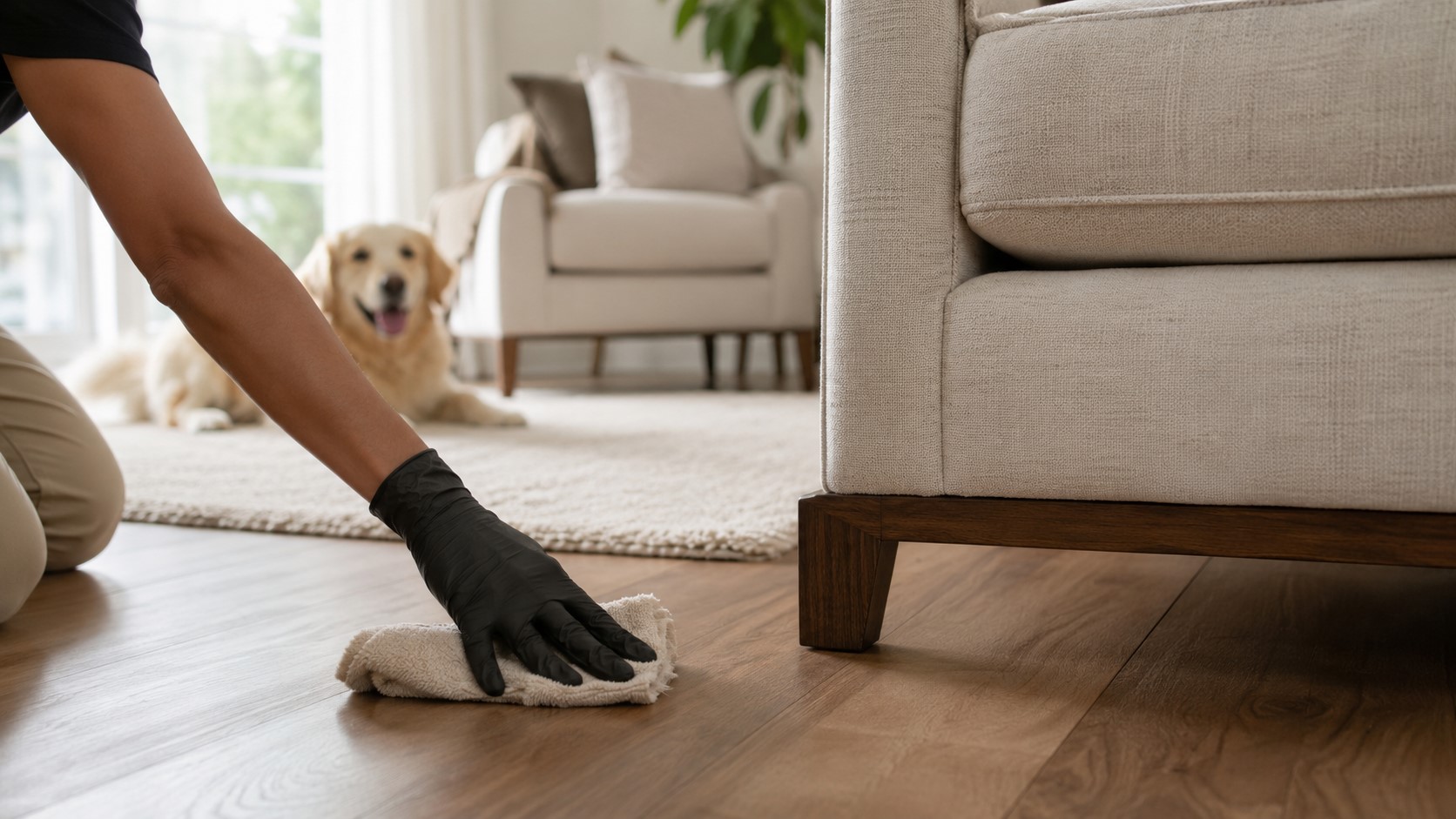
If your home feels like it needs a reset, deep cleaning is usually the best place to start. Once the buildup is reduced, recurring cleaning can help maintain the home more consistently.
Choosing the Right Cleaning Service for Pet Hair
Different pet-friendly homes need different levels of cleaning support. The right option depends on how much buildup you have, how oftern your pet sheds, and how much help you want with ongoing maintenance.
| Cleaning Option | Best For | When to Choose It |
| Deep Cleaning Service | Built-up hair, odors,baseboards, corners, pet zones, and hidden buildup | Choose this when the home needs a full reset |
| Recurring Cleaning | Weekly, biweekly, or monthly upkeep | Choose this when pet hair keeps coming back quickly |
| One-Time Cleaning | Guests, events, holidays, or seasonal refreshes | Choose this when you need short-term cleaning help |
| Move-In/Move-Out Cleaning | Pet-friendly transitions | Choose this when moving into or out of a home with pets |
For many pet owners, the best plan is to start with a detailed deep clean when buildup feels heavy, then maintain the home with recurring cleaning.
Pet Hair Cleaning Tips for Charlotte Homeowners
Keeping pet hair under control is easier when you combine daily habits with weekly resets and occasional deeper cleaning.
Here are a few practical tips for Charlotte homes with pets:
- Brush pets regularly, especially during heavier shedding seasons
- Vacuum before mopping hard floors so hair does not spread
- Use attachments around edges, stairs, vents, and furniture
- Wash pet bedding often to reduce hair and odor
- Clean entryways regularly during pollen season and rainy weeks
- Wipe baseboards in pet-heavy rooms
- Clean food and water bowl areas before residue builds up
- Address odors at the source instead of covering them with fragrance
- Schedule a deep clean when buildup feels hard to manage
A consistent routine can help your home feel fresher, even if your pet sheds year-round.
Pet Hair, Busy Homes, and Recurring Cleaning
Pet hair control is not a one-time task. It is ongoing maintenance.
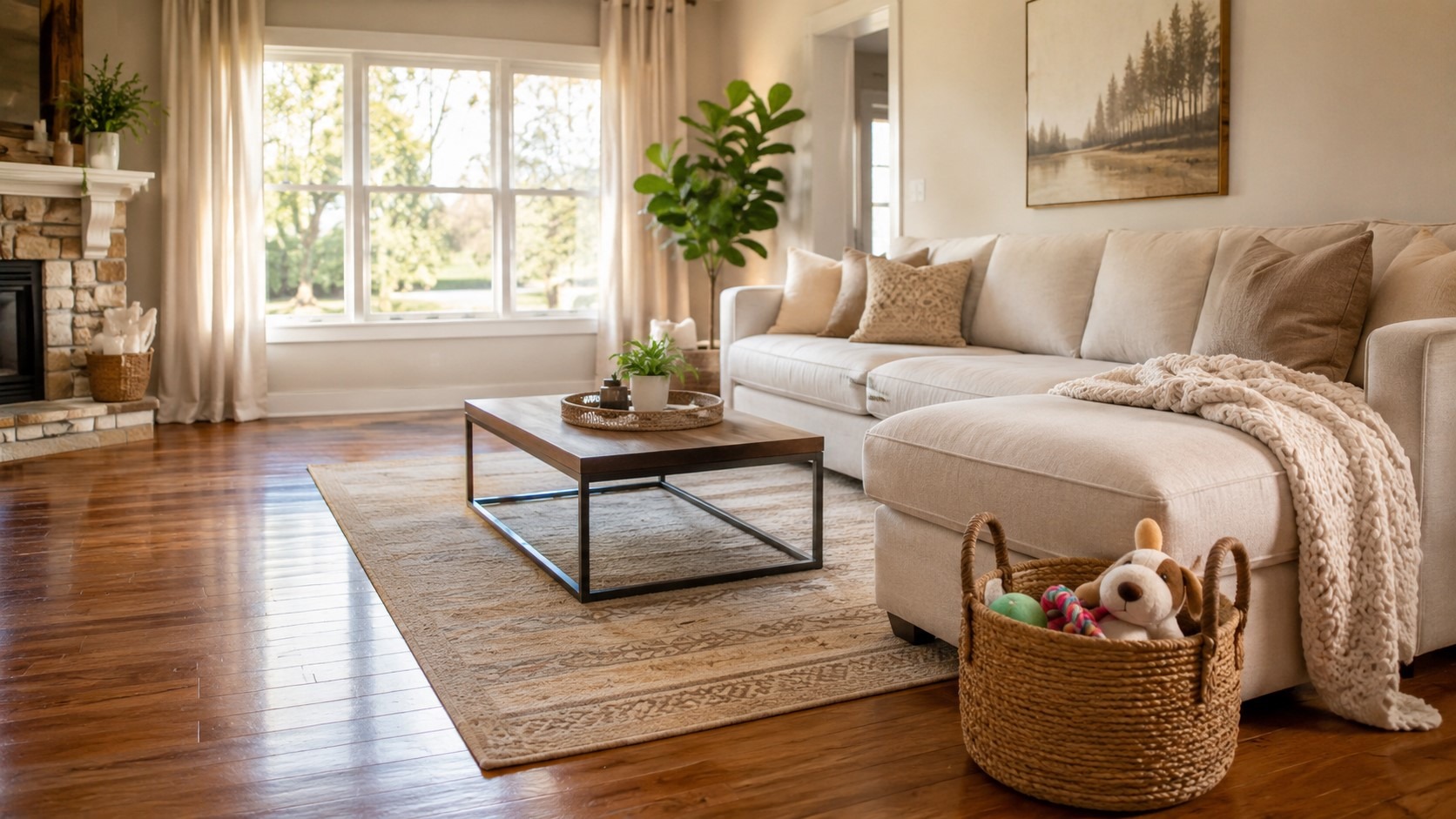
For busy Charlotte families, professionals, pet owners, and homeowners with fulls schedules, recurring cleaning can help keep pet hair and dust from building up week after week.
Weekly or biweekly cleaning can be especially helpful for homes with:
- Dogs that shed often
- Multiple pets
- Kids and pets
- Guests or family visits
- Allergy-sensitive family members
- Busy work schedules
- High-traffic floors
- Open living spaces
- Carpeted stairs or rugs
A deep clean can help reset the home first. Then recurring cleaning can help keep things more manageable.
How do I reduce dog hair in my house?
Vacuum slowly, use attachments around baseboards and furniture, wash pet bedding often, remove hair from sofas and rugs, and clean the areas where your dog spends the most time.
For better results, focus on high-hair zones like pet beds, entryways, favorite furniture spots, stair edges, and under furniture.
Why does pet hair come back so quickly after cleaning?
Pet hair moves through the home with HVAC airflow, foot traffic, furniture, blankets, clothing, and daily pet activity. It often settles along baseboards, corners, under furniture, stairs, and rugs.
In Charlotte homes, pollen, humidity, dust, and outdoor debris can also mix wiht pet hair and make buildup feel more noticeable.
How often should homes with pets be professionally cleaned?
Many pet-friendly home benefit from weekly or biweekly recurring cleaning, especially if there are multiple pets, heavy shedding, kids, guests, or allergy-sensitive family members.
If the home has built-up hair, dust, or odor, starting with a detailed deep clean can create a better reset before recurring service begins.
Can deep cleaning help with pet odors?
Yes. A deep clean can help reduce odor sources by cleaning pet areas, floors, baseboards, kitchens, bathrooms, and high-traffic spaces.
Strong fragrances may cover odors temporarily, but cleaning the source is more effective.
What areas should I clean most often if I have pets?
Focus on pet beds, sofas, rugs, entryways, stair edges, baseboards, food and water bowl areas, laundry rooms, and under furniture.
These are the areas where pet hair, dander, crumbs, dirt, and odor sources tend to collect fastest.
Is recurring cleaning worth it for pet owners?
Yes. Recurring cleaning can help keep pet hair, dust, dander, and everyday buildup from taking over the home.
It is especially helpful for busy households, homes with multiple pets, and families that want a cleaner home without spending every weekend catching up.
Final Thoughts
Pet hair is part of life with pets, but it does not have to take over your home.
By focusing on the areas where hair collects most, washing pet bedding, vacuuming strategically, cleaning baseboards, and addressing odors at the source, you can keep your Charlotte home feeling fresher between cleanings.

And when the buildup feels like too much, a professional deep clean can help reset the space so your home feels more comfortable, more manageable, and easier to enjoy.
Written by My Clean Charlotte Maids
Serving Charlotte, Fort Mill, Rock Hill, Gastonia, Pinehurst, Lake Norman, Fayetteville & surrounding areas.


Stay Updated
Fresh cleaning tips, home-care hacks, and smart living ideas — delivered weekly from My Clean Charlotte Maids.